
Lieferung heute & morgen

Qualitätsgarantie

Willkommens-Angebote freischalten: KOSTENLOSE Lieferung | Bis zu 80 % RABATT | Kostenlose 30-Tage-JoyPlus-Testphase
App herunterladen
Solar garden lights are quick to install, require no power cable and can add decorative accents to paths, lawns and flower beds. However, not every solar light is right for every garden. The best choice often depends not on design alone, but on the combination of light colour, charging conditions, ingress protection rating, battery and mounting type.
Many products are described as weatherproof solar lights. However, the specific IP protection rating is what really matters. A light with IP44 is protected against solid foreign objects measuring 1 mm or more, as well as splashing water from different directions. It should not, however, be placed in water or left permanently submerged.
IP44 may be sufficient for sheltered paths, flower beds and lawns. For locations that are permanently exposed, areas subject to heavy rain or places where water tends to collect, it is worth checking the manufacturer’s specifications carefully and positioning the light higher up.
Claims such as 8 to 12 hours generally apply under suitable charging conditions. In the shade of trees, buildings or walls, the solar panel receives less energy. Short winter days, dirt and low temperatures can also affect operating time.
Solar lights should therefore receive as much direct sunlight as possible during the day. The panel must not be covered by leaves, decorations or garden furniture. Depending on the model, the light may need to charge for around 4 to 6 hours in suitable sunlight before first use.
A set of three or six solar lights may be enough for a short flower-bed border, but not necessarily for a long driveway. Before buying, plan the spacing between the lights. Solar path lights positioned too far apart create dark sections, while lights placed too close together can look cluttered.
The installation height is also important for solar ground lights. Models with a ground spike need firm but not rock-hard soil. On a patio, freestanding versions or lights with a stable base are more practical.
Warm-white solar lights in the region of 2700 Kelvin create a soft, yellowish and inviting glow. They are suitable for seating areas, flower beds, entrances and decorative garden lighting. By contrast, a model with 6500 Kelvin produces a noticeably cooler, whiter light. This colour can be suitable for clearer orientation along paths, but looks less subtle next to plants.
RGB solar lights switch between different colours or create coloured lighting effects, depending on the model. They are primarily suitable for decorative accents. For consistent path lighting, check whether a specific colour can be selected permanently or whether the colours change automatically.
Pay attention to the battery type and capacity, where this information is provided. Product specifications may include Ni-MH batteries rated at 40 mAh, 200 mAh or 600 mAh, for example. These figures are not the only deciding factor, but they do provide an indication of the technical specification of the particular model.
Actual operating time also depends on the panel size, sunlight, temperature and battery age. A dirty solar panel can reduce charging performance. A soft, slightly damp cloth is usually sufficient for regular cleaning; abrasive cleaning products should be avoided.
Plastic housings are often lightweight and easy to position using a ground spike. A stainless-steel look or stainless-steel elements can complement modern outdoor spaces. Even so, check whether the product is actually made from stainless steel or is a plastic version with a stainless-steel-style finish.
Compact solar LED garden lights measuring around 19 to 37 cm in height are suitable for narrow flower beds. Taller models, measuring approximately 51.6 cm, create a much more visible accent in lawns or alongside paths. The ground spike should be fully and securely positioned in the soil. If the ground is very hard, prepare a suitable location rather than forcing the light into the ground.
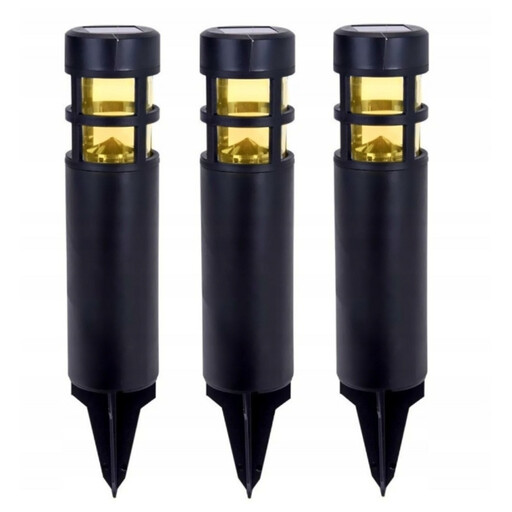
Why this product suits this profile: This set of three solar lights is an easy way to start lighting small paths, flower beds or areas around your property. Installation requires no external power supply.
The number of lights is clearly stated, making it easier to decide before buying whether three lights will be enough for the planned area.
Three lights, automatic activation at dusk and easy placement outdoors.
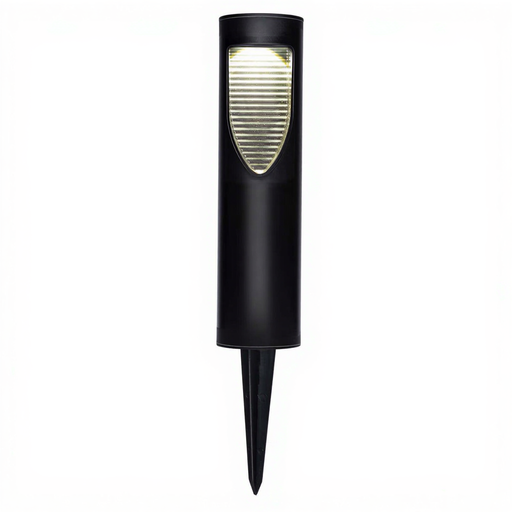
Why this product suits this profile: This light combines a contemporary black plastic design with warm-white SMD LED illumination. Measuring 8 cm in diameter and 31 cm in height, it suits many narrow paths and flower beds.
The integrated 600 mAh Ni-MH battery is clearly specified. The product information also expressly states that the light should not be left permanently submerged in water.
Warm-white SMD LED light, 600 mAh Ni-MH battery and automatic control from dusk until dawn.
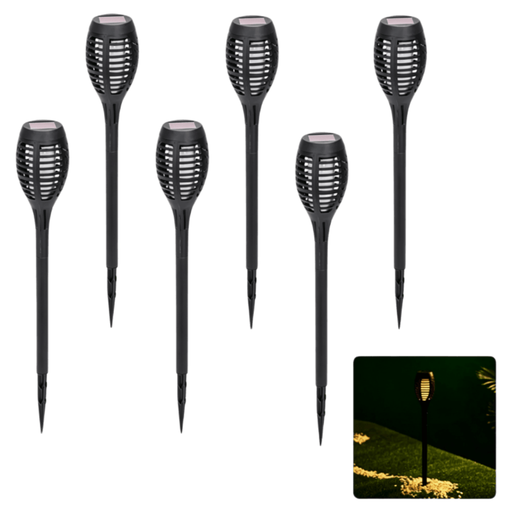
Why this product suits this profile: The 6-pack is suitable for longer paths, lawn edges and several flower beds. The flame effect at 2700 Kelvin is designed for decorative garden lighting.
The IP44 rating makes the limits of use clear: the lights are protected against splashing water, but are not designed to be immersed in water.
Six lights, 2700K light colour, stated charging time of 4–6 hours and operating time of 8–12 hours under suitable conditions.
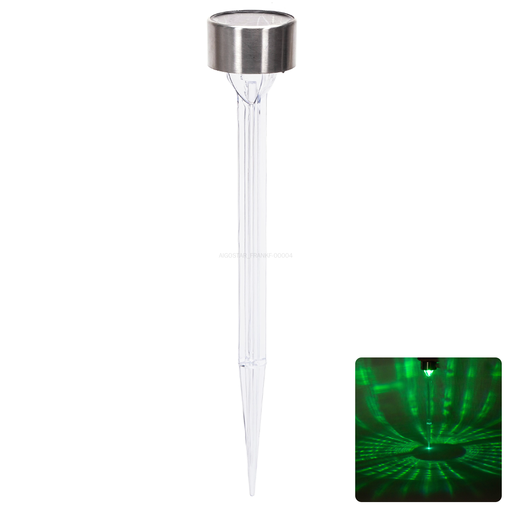
Why this product suits this profile: The RGB function adds colourful accents to garden paths, lawns or flower beds. The ground spike allows flexible positioning without electrical installation.
The product specifications state IP44, a charging time of 4–6 hours and an operating time of 8–12 hours. This makes it easier to compare marketing claims with specific parameters.
RGB light, stated operating time of 8–12 hours under suitable conditions and ground-spike installation.
We have put together a complete, regularly updated list of products that fully meet these strict selection criteria and the safety regulations applicable in the EU.
Choose a location with as much direct sunlight as possible. The solar panel should face upwards and not be shaded by trees, buildings or garden furniture. Solar lights with ground spikes should be pushed into soft, stable soil. Before first use, the product should be charged in accordance with the instructions.
Service life depends on the battery, LED, materials, weather conditions and care. For several of the models described, the LED has a stated service life of up to 15,000 hours. This does not automatically mean that the entire light will continue to work unchanged for that long. The battery is a wearing component and can be affected by charging cycles, cold weather and harsh conditions.
Solar garden lights do not need to be connected to the mains while operating. They charge their integrated battery via the solar panel. This means they do not incur ongoing costs through a standard electricity connection, as mains-powered lights do. A reduction in operating time may, however, indicate that the battery has aged or that the panel is receiving too little sunlight.