
Lieferung heute & morgen

Qualitätsgarantie

Willkommens-Angebote freischalten: KOSTENLOSE Lieferung | Bis zu 80 % RABATT | Kostenlose 30-Tage-JoyPlus-Testphase
App herunterladen
Solar lights for the garden promise hassle-free illumination without power cables. In practice, however, satisfaction depends heavily on the installation location, the solar panel and protection from the weather. If you only consider wattage, design or an especially long operating time, you could end up with a light that barely charges in the shade or shines for considerably less time after rainy days.
The most common buying misconceptions are easy to avoid:
For paths, entrances or areas where you need clear visibility, outdoor LED solar lights with a clearer light are suitable. A colour temperature of 6500 Kelvin creates a cool white light that highlights contours clearly. Warm white light at around 2700 Kelvin, on the other hand, is ideal for patios, flowerbeds and seating areas when you want a more understated atmosphere.
RGB solar lights switch between different colours and are primarily decorative. For even illumination, you should instead consider luminous flux, beam angle and installation height. A solar floodlight with a separate panel can be positioned more flexibly, as the panel can be installed in a sunny location while the light head is mounted elsewhere.
The IP rating consists of two digits. The first describes protection against solid foreign objects, while the second describes protection against water:
The IP rating alone does not mean that a light should be left permanently in a puddle. Place solar lights on firm, well-drained surfaces and follow the manufacturer’s instructions. A stainless-steel look can be decorative, but the decisive factors are the housing construction, seals and the specific IP rating.
A solar panel needs as much direct sunlight as possible. Shade from trees, walls or roof overhangs reduces charging performance. For solar garden lighting, you should therefore observe the location before installation.
Pay attention to:
A separate panel is practical for solar floodlights, while integrated panels simplify installation for solar path lights. At low temperatures or after several cloudy days, the operating time may decrease. This is an inherent feature of solar-powered outdoor lighting and is not a reliable indication of a fault.
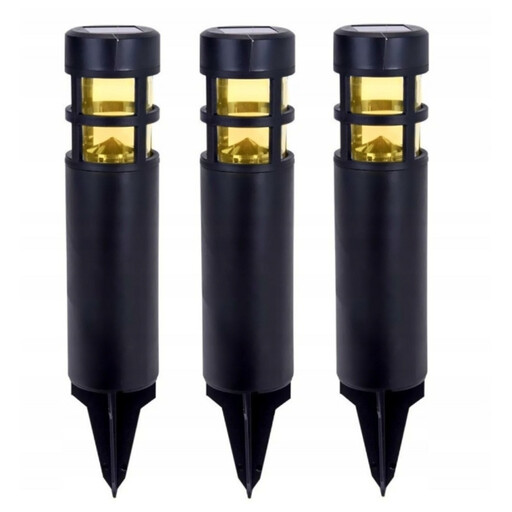
Why this product suits this profile: This set of three is ideal for trying out garden lighting around flowerbeds, paths or property boundaries. It can be installed without permanent wiring.
The simple set solution reduces the risk of buying individual lights that are unsuitable for their intended locations. A sunny position is still required for sufficient charging.
Three lights in one set; automatic illumination at dusk according to the product description.
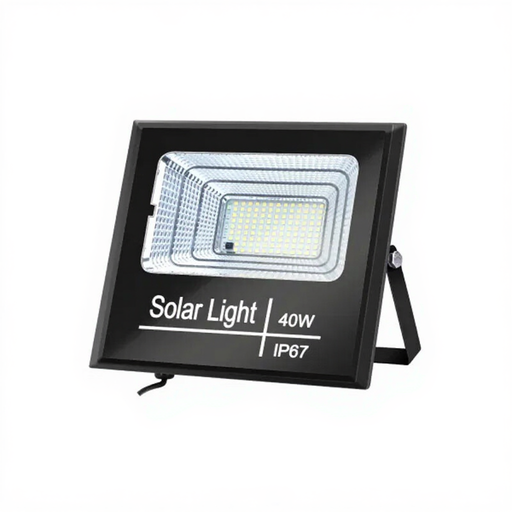
Why this product suits this profile: This solar floodlight is designed for larger outdoor areas, driveways or façades where directional, cool white light is required.
The separate panel makes it easier to position the light towards the sun. Before buying, check the IP rating in the full product details, as IP65 is stated in the title and IP67 in the description.
10,000-mAh battery; up to 12 hours of operating time under suitable conditions, according to the product description.
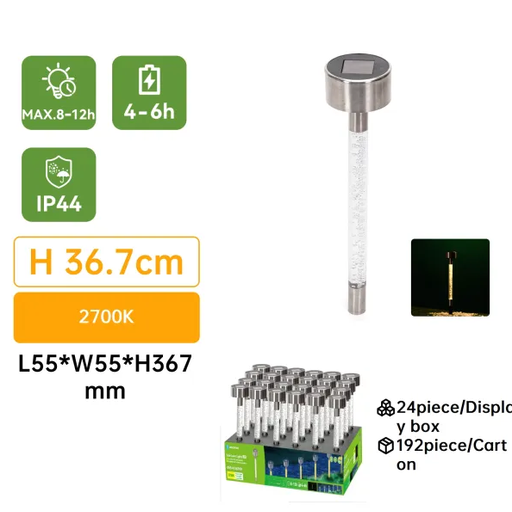
Why this product suits this profile: Standing 36.7 centimetres tall, this bubble light adds warm white accents to lawns, flowerbeds and the edges of patios.
The stated IP44 rating makes the intended use clear: splashing water is covered, but permanent immersion is not.
2700-Kelvin warm white light; integrated NiMH battery with a stated operating time of 8 to 12 hours.
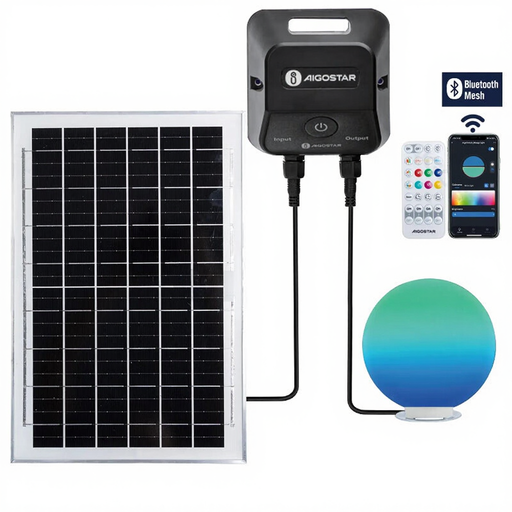
Why this product suits this profile: For patios and larger outdoor areas, this floor lamp offers RGB, warm white and daylight options, as well as Bluetooth Mesh control.
The control options and 8,000-mAh battery are clearly specified. To establish a connection, you should check the range, installation position and smartphone compatibility.
IP65; 350 lumens; RGB plus 2700 to 6500 Kelvin and up to 24 hours of battery life according to the product specifications.
We have put together a complete, regularly updated list of products that fully meet these strict selection criteria and the safety regulations applicable in the EU.
Solar lights with ground stakes can be installed in soft soil or lawns without electrical work. The stake should be firmly secured and should not be pushed directly into very wet or permanently compacted soil. For rented properties, these garden lights are practical because no cables need to be laid and no walls need to be drilled.
For reliable, consistent operation:
Solar ground lights should be positioned so that they do not create trip hazards and rainwater can drain away. On frequently used paths, secure, level installation is more important than purely decorative positioning.
Operating time depends on sunlight, battery capacity, temperature, LED output and operating mode. Manufacturer claims such as 8 to 12 hours should be understood as guidelines under suitable charging conditions. In winter or after several cloudy days, the operating time may be shorter.
This depends on the specific IP rating, temperature range and the manufacturer’s instructions. IP44 lights are designed for outdoor use and splashing water, but should not be left standing in water. In freezing conditions, heavy snowfall or prolonged periods of rain, storing the lights in a sheltered location can reduce strain on the electronics and battery.
While operating, they draw energy from the battery charged during the day. No mains connection is required. With normal use, their ongoing mains electricity consumption is therefore not comparable with that of wired outdoor lighting. Replaceable batteries, where provided, must be replaced at the end of their service life and disposed of correctly.