
Lieferung heute & morgen

Qualitätsgarantie

Willkommens-Angebote freischalten: KOSTENLOSE Lieferung | Bis zu 80 % RABATT | Kostenlose 30-Tage-JoyPlus-Testphase
App herunterladen
Solar garden lights illuminate flower beds, paths, lawns and patios without permanently installed power cables. However, not every solar light is suitable for every outdoor space. In many cases, it is not the design or price that determines whether a light performs reliably in everyday use, but sunlight, IP rating, colour temperature and battery capacity.
Claims such as “up to 8–12 hours” refer to suitable charging conditions. A solar panel in the shade, short winter days or dirt can reduce the available charging energy. With solar ground lights and solar spike lights, you should therefore check whether the panel receives several hours of direct sunlight.
“Waterproof” does not automatically mean that solar lights are “suitable for every type of weather”. The IP44 rating, for example, protects against splashing water, while a product with IP65 or IP67 offers a higher level of protection against dust and water. Even lights with a high IP rating should not be left standing in water permanently unless the manufacturer expressly states that this is permitted.
Cool white light at around 6,500 K can make paths clearly visible, but it may look more functional in seating areas or beside plants. Warm white solar lights at around 2,700 K create a more understated lighting effect. RGB solar lights offer changing colours, but are primarily intended for decorative accents rather than providing consistent pathway lighting.
Solar garden lamps need a location with as much direct sunlight as possible. Trees, house walls, balcony railings or tall hedges can limit charging performance. For many models, the stated charging time under suitable conditions is around 4–6 hours. Before installation, you should therefore check:
A separate panel can be useful for solar garden lights when the desired lighting point is in the shade but a nearby area receives sufficient sunlight.
Solar lights store the energy generated during the day in a battery. Product specifications may include Ni-MH batteries or lithium batteries. The actual operating time depends on battery capacity, light intensity, temperature and charge level.
For decorative solar ground lights with low power consumption, accent lighting is often the main priority. A model with a larger lithium battery and separate panel, on the other hand, may be designed for longer operating times or brighter illumination. The manufacturer's stated figure should be regarded as a guide for suitable charging conditions, not as a guaranteed duration for every season.
For paths and entrances, evenly positioned solar pathway lights with neutral or cool white light are practical. Warm white solar lights are suitable for flower beds, patios and decorative areas. RGB models can change colour and, in some cases, be controlled via an app.
The installation method also matters:
The IP rating should be appropriate for the location. IP44 means protection against solid foreign objects measuring 1 mm or more, as well as splashing water from various directions. A light with IP67 is additionally protected against temporary immersion under the conditions specified by the manufacturer. This does not replace checking the installation and maintenance instructions.
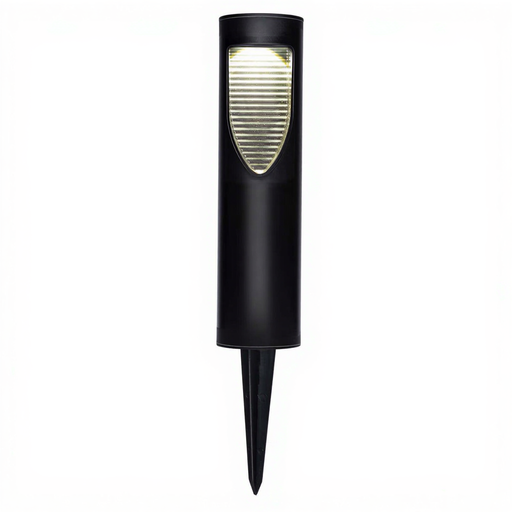
Why this product suits this profile: This freestanding solar light requires no wall mounting and provides warm white light for smaller paths, flower beds or patio areas.
The product data specifies the light colour, dimensions of 8 × 31 cm and an integrated 600 mAh Ni-MH battery. This makes it easier to assess the basic specifications before buying.
Warm white SMD LED, automatic switch-on at dusk and easy placement without professional electrical installation.
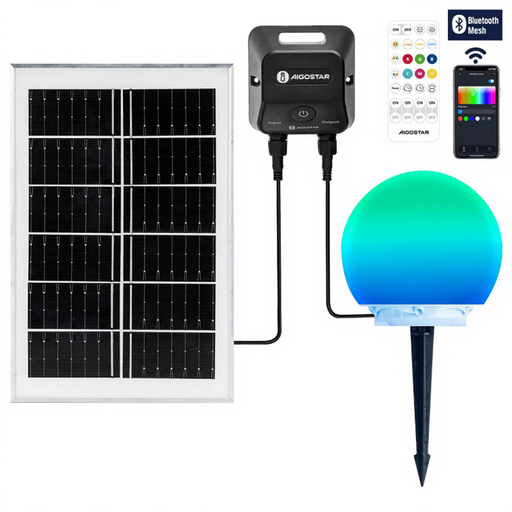
Why this product suits this profile: This light is aimed at users who want to coordinate the light colour, colour changes and multiple lights digitally.
The separate solar unit can be positioned more flexibly towards the sun. The stated IP67 rating is easier to assess when planning the installation site than a general description such as “weatherproof”.
RGB+CCT with a range from 2,700 to 6,500 K, Bluetooth Mesh control and an integrated 4,000 mAh lithium battery according to the product description.
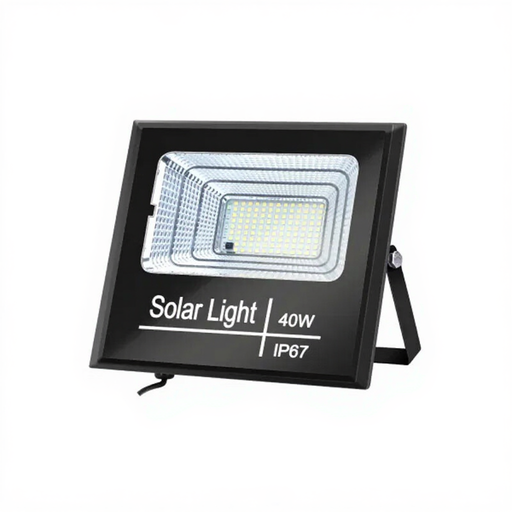
Why this product suits this profile: For larger outdoor areas, façades or more targeted illumination, a floodlight has a different design from decorative spike lights.
The separate panel makes it easier to position the light towards the sun. The product description states a battery capacity of 10,000 mAh and an IP rating of IP67; installation should be carried out according to the instructions.
40 W version with 6,500 K, separate solar panel and a stated operating time of up to 12 hours under suitable conditions.
We have put together a complete, regularly updated list of products that fully meet these strict selection criteria and the safety regulations applicable in the EU.
To help outdoor LED solar lights work reliably for as long as possible, the panel should be cleaned regularly with a soft, damp cloth. Abrasive cleaners can damage the surface. In the event of frost, unusually heavy rainfall or extended periods without use, follow the manufacturer's instructions.
Batteries must not be opened, burned or replaced incorrectly. Faulty lights should be taken out of service. Lights and batteries must be disposed of in accordance with local requirements for waste electrical equipment and batteries. When installing lights in the ground, the ground spike should only be inserted into suitable, soft ground; hard materials can damage the housing or spike.
Operating time depends on sunlight, charging time, battery condition, temperature and the selected light output. Many decorative models state around 8–12 hours under suitable conditions. In winter or during prolonged periods of cloudy weather, the operating time may be shorter.
The ideal location receives several hours of direct sunlight and as little shade as possible. The panel should not be positioned beneath leaves, roof overhangs or dense vegetation. With a separate panel, the light can also be installed in a less sunny location, provided that the cable length and installation position are sufficient.
During operation, solar lights draw their energy from the battery charged during the day. Charging via the integrated panel does not require a connection to the mains. However, costs and maintenance still arise from the purchase, possible battery replacement and proper disposal.