
Lieferung heute & morgen

Qualitätsgarantie

Willkommens-Angebote freischalten: KOSTENLOSE Lieferung | Bis zu 80 % RABATT | Kostenlose 30-Tage-JoyPlus-Testphase
App herunterladen
Solar lights for the garden don’t need a fixed mains connection and can be used in many different places. However, not every model will automatically provide the right garden lighting. The best choice depends on where you plan to use it, its IP rating, light colour and the quality of its integrated power supply.
This buying guide from the Joybuy Product Recommendation Officer explains what shoppers in the UK should look for and which solar garden lights are suited to different needs.
Figures such as ‘up to 8–12 hours’ generally assume suitable charging conditions. Shady locations, short winter days, dirty solar panels or several overcast days can reduce the actual running time. That’s why the panel should get as much direct daylight as possible.
An IP44 solar light is protected against solid objects 1 millimetre or larger, as well as splashing water from different directions. It’s suitable for sheltered flower beds, lawns and paths, for example, but shouldn’t be left standing in water.
According to its rating, IP67 solar lights offer greater protection against dust and temporary immersion under specified conditions. However, this doesn’t mean every light should be installed permanently in a puddle or pond. Always follow the installation instructions for the product in question.
RGB solar lights and colour-changing garden lights are mainly suited to decorative use. Warm white or white light can make it easier to find your way around steps, driveways and frequently used paths. So, don’t choose a coloured light on looks alone: consider your specific lighting and safety needs.
First, check that the light is suitable for the outdoor area where you plan to use it. IP44 may be sufficient for covered patios or sheltered flower beds. A higher IP rating may be a better choice for exposed areas, ground-level installation and changeable weather.
With solar ground lights and recessed models, it’s also important to check whether they’re designed to be installed in the ground. A simple solar stake light is pushed into soft soil or lawn. Hard surfaces, compacted soil and areas where water tends to collect can make installation more difficult.
Check the battery type and capacity, along with the stated charging and running times. Integrated Ni-MH batteries are common in many decorative solar lights. A larger battery can store more energy, provided the solar panel supplies enough power.
According to the product information, the Aigostar Bubble-Stick light takes around 4–6 hours to charge and runs for 8–12 hours, depending on conditions. Treat these figures as a guide: they can vary with the time of year and the location. With solar lights with rechargeable batteries, don’t open the battery yourself or replace it with a type that isn’t specified for the product.
Size matters, too. A light that’s too low may be hard to see along a path, while tall models can dominate a small flower bed.
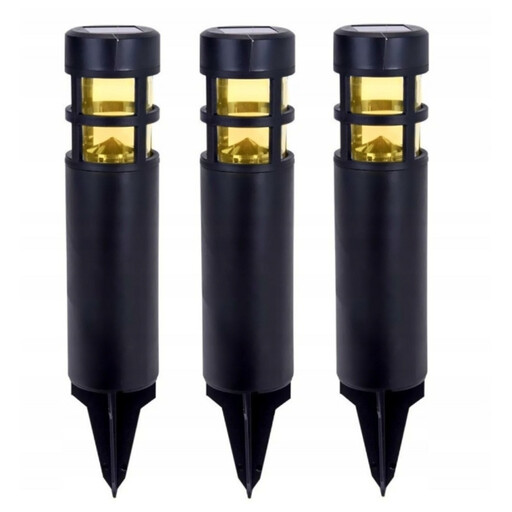
Why this product suits you: This set of three solar lights is a good choice if you want to light several small areas, such as flower beds, lawn edges or a short garden path, without complicated wiring.
The pack size is clearly stated, making it easier to work out what you need before buying rather than comparing the price and quantity of individual lights afterwards.
Three lights in one set; solar-powered, with automatic dusk activation according to the product description.
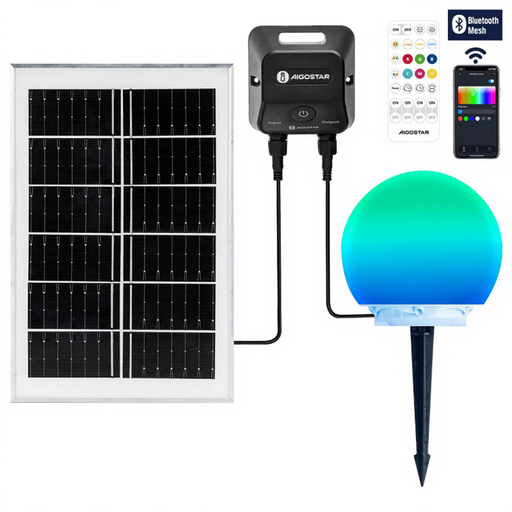
Why this product suits you: This model is for buyers looking for recessed lighting with a higher IP rating and adjustable light colours for garden paths, patios or larger outdoor areas.
The stated IP67 rating and separate solar panel make it easier to plan where to install the light. You can position the panel to get better sunlight, independently of the light itself.
According to the product information: 4000-mAh lithium battery, 5-W solar panel, RGB and adjustable white light from 2700 to 6500 Kelvin, plus Bluetooth Mesh control.
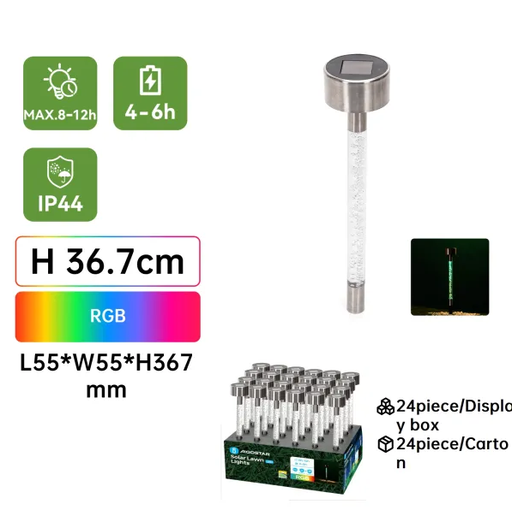
Why this product suits you: This solar stake light is a good fit for decorative flower beds, lawns and garden paths where a splash of colour matters more than even illumination.
The product information clearly states the charging time, running time and IP44 rating. This helps you distinguish decorative lighting from practical safety lighting.
RGB light, 36.7 centimetres tall, 40 mAh Ni-MH battery and, according to the product information, 8–12 hours of light when charged in suitable conditions.
Solar lights work most reliably when the panel isn’t shaded by walls, trees or large plants. Before installing a light, check its position at different times of day. Push stake lights into soft soil; if the ground is stony, you may need to choose another spot.
Clean the solar panel regularly with a soft, slightly damp cloth. Abrasive cleaners can damage its surface. If you won’t be using the light for a long time, follow the manufacturer’s instructions for storage and battery care. Don’t immerse IP44 lights in water.
We’ve put together a complete, regularly updated range of products that meet these strict selection criteria and fully comply with the safety regulations in force in the EU.
It depends on the panel, battery, time of year and amount of sunlight. The product information for several of the models mentioned states a charging time of around 4–6 hours. In winter or on very overcast days, they may store less energy.
Lifespan depends on the LED, battery, casing, weather and care. The Aigostar models mentioned have a stated LED lifespan of up to 15,000 hours. The battery is a separate part that wears out and may lose capacity sooner. Always refer to the specific manufacturer’s information.
Solar lights get their energy from the solar panel while in use and store it in the battery. This means there are no ongoing mains electricity costs. However, how long they stay lit depends on the energy stored, which in turn depends on how much sunlight they get each day.