
Lieferung heute & morgen

Qualitätsgarantie

Willkommens-Angebote freischalten: KOSTENLOSE Lieferung | Bis zu 80 % RABATT | Kostenlose 30-Tage-JoyPlus-Testphase
App herunterladen
Solar lights for the garden don’t need a permanent mains connection and can usually be set up without tools. However, solar garden lights vary considerably in their light colour, battery, materials, IP rating and intended use. A decorative solar light that looks impressive in the shop can quickly disappoint in your garden if its solar panel is in the shade or its stated run time is only achievable in ideal conditions.
Claims such as ‘up to 8–12 hours’ generally assume sufficient sunlight and a fully charged battery. In winter, in heavy cloud or beneath trees, the actual run time may be shorter. So, as well as checking the run time, buyers should consider charging time, battery type and where the light will be placed.
A rating such as IP44 generally protects against splashes and solid objects above a certain size. However, it doesn’t mean the light can be left underwater or in a puddle. A higher IP rating may be a good choice for exposed areas with more moisture, such as for recessed solar ground lights.
Warm white solar lights at around 2700 Kelvin create a subtle, yellowish glow and are often suitable for patios, balconies and flower beds. Cool white light at around 6500 Kelvin looks much brighter and creates stronger contrasts. RGB solar lights change colour and are mainly used for decorative effect. For even solar lighting along a garden path, check whether the light will genuinely help you find your way or simply create individual pools of light.
Polycrystalline and amorphous solar panels convert daylight into electrical energy. The specific design and location matter more than the type alone. Ideally, the panel should face upwards with nothing blocking it, such as house walls, plants or trees.
The lights featured here include NiMH batteries. Figures such as 40 mAh, 200 mAh or 600 mAh describe battery capacity, but can’t be used on their own as a reliable guide to run time. LED power, the solar panel and the control system also affect how long the light stays on.
The IP rating is an important point of comparison for outdoor use. IP44 is designed for many sheltered garden areas and typical splashing. A light rated IP67 is significantly better protected against temporary immersion, provided it is installed in line with the manufacturer’s instructions.
It’s also worth checking the materials carefully: a silver finish may look like stainless steel, while the housing is actually made of plastic. This affects the weight, care requirements and resistance to impact. For solar lights with ground stakes, push the stake into soft but firm soil. Don’t force it into hard ground, as the plastic parts may break.
Many solar garden lights switch on automatically at dusk and off at dawn. Before using one for the first time, you’ll often need to switch it on (if it has a switch) and charge the battery for several hours.
When choosing a light, consider the following:
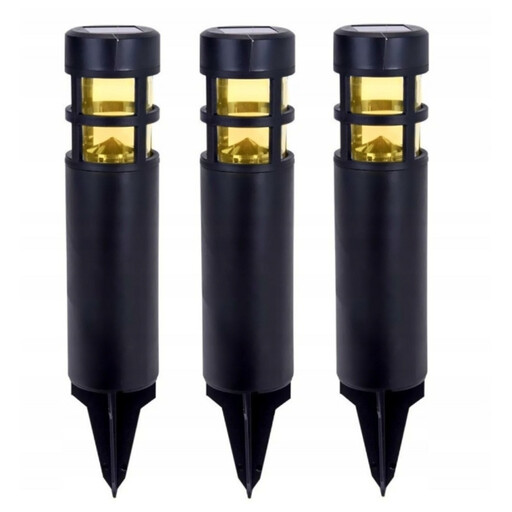
Why this product suits this profile: This set of three lights is ideal if you want to illuminate several points along a path, flower bed or lawn without complicated planning.
The simple set makes it easier to position the lights evenly. Before buying, however, check the product page for details of the IP rating, battery and run time.
Three lights, solar charging and automatic dusk activation, according to the product description.
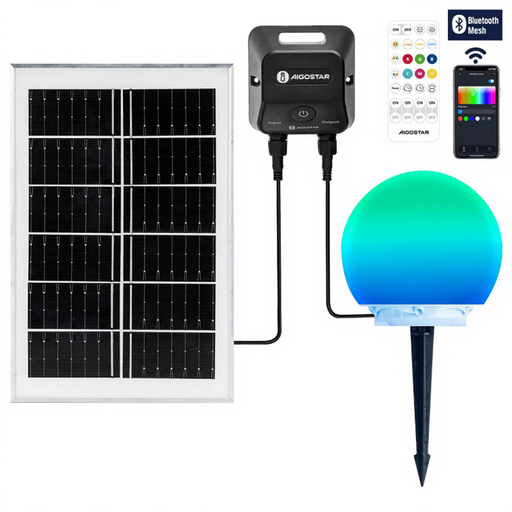
Why this product suits this profile: This light is designed for those looking for a recessed option with adjustable light colour, Bluetooth Mesh functionality and a separate solar panel.
The stated IP67 rating is useful for more demanding installation positions. The separate solar panel can be angled towards the sun more flexibly.
RGBCCT light from 2700 to 6500 Kelvin, a 4000-mAh lithium battery and Bluetooth Mesh control, according to the product description.
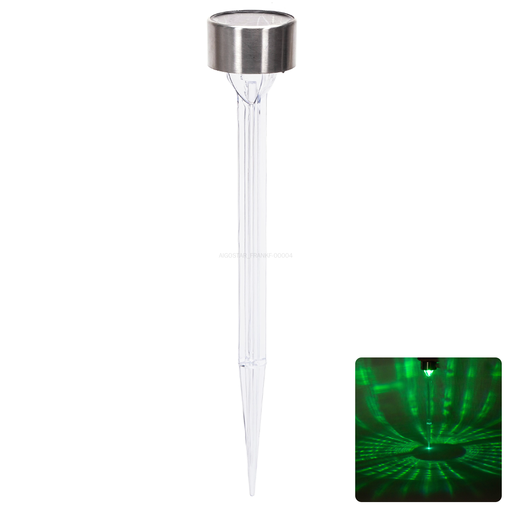
Why this product suits this profile: This solar stake light is designed for garden paths, lawns and flower beds where you want colourful accents and straightforward installation in the ground.
The specifications list the battery, charging time, IP rating and temperature range. Even so, don’t mistake IP44 for suitability for permanent immersion.
RGB light, a 200-mAh NiMH battery, a charging time of 4–6 hours and a stated run time of 8–12 hours in suitable conditions.
We’ve put together a complete, regularly updated list of products that meet these strict selection criteria and fully comply with the safety regulations in force in the EU.
Place solar lights where the panel can receive several hours of direct daylight, if possible. Leave enough space between lights to avoid their beams overlapping unnecessarily. Solar lights with ground stakes are best placed in loose soil without waterlogging.
Clean the solar panel regularly with a soft, slightly damp cloth. Harsh or abrasive cleaning products can damage its surface. Follow the manufacturer’s instructions in frosty weather, exceptionally heavy rain or during long periods when the light isn’t in use. At the end of their useful life, batteries and lights should be disposed of in accordance with local regulations for electrical equipment and batteries.
It depends on the model and the amount of sunlight. Several of the Aigostar lights featured here have a stated charging time of around 4–6 hours. Before first use, position the solar panel where it can receive direct sunlight without obstruction.
Their lifespan depends on the battery, LED, weather conditions, care and how they’re used. Some product specifications state an LED lifespan of up to 15,000 hours. This figure doesn’t necessarily reflect the lifespan of the entire light or its battery.
They don’t need to be connected to the mains while in use. The solar panel charges the built-in battery using daylight. However, the actual run time depends on sunlight, the time of year, the battery’s condition and the product’s design.