
Lieferung heute & morgen

Qualitätsgarantie

Willkommens-Angebote freischalten: KOSTENLOSE Lieferung | Bis zu 80 % RABATT | Kostenlose 30-Tage-JoyPlus-Testphase
App herunterladen
Solar garden lights promise cable-free lighting without a fixed power supply. In practice, however, suitability depends greatly on location, IP rating, battery capacity and the lighting effect you want. If you only focus on design or a high wattage, you may end up with a light that barely charges in the shade or isn’t protected well enough in the rain.
Statements such as “up to 12 hours” generally apply only with sufficient sunlight, a clean solar panel and a fully charged battery. In autumn, under heavy cloud cover or in a shaded position, the actual run time can be shorter. So pay attention to the combination of charging time, battery type and stated run time.
A light with IP44 is protected against solid foreign objects and splashing water from various directions. It shouldn’t stand in water permanently or be submerged. IP67 offers greater protection against temporary immersion, provided the manufacturer’s instructions and installation guidance are followed. The IP rating is no substitute for careful positioning on an area that is frequently flooded.
Many decorative solar lights create a gentle ambience but are not automatically bright enough to fully illuminate a path. Warm white light at around 2700 Kelvin is subtle and suits seating areas or beds. Cool white light at around 6500 Kelvin delivers crisper contrast. For wayfinding on paths, also consider light distribution, mounting height and the spacing between lights.
First check whether the light is suitable for the intended outdoor area. Covered patios have different requirements to open lawns. With solar ground lights and solar path lights, it’s also important that water can drain away after rain. An IP44 light shouldn’t be installed in a dip where water regularly collects.
A solar panel only charges reliably when it gets enough daylight. Direct sun is usually better than a permanently shaded spot under trees or near a tall exterior wall. Products with a separate panel let you position the charging surface more flexibly.
The battery deserves attention too. Product data often list Ni-MH batteries and lithium batteries with different capacities. Capacity alone doesn’t precisely predict how long an outdoor LED solar light will run, as light colour, brightness, control and temperature also play a role.
With smart solar lights, check whether control is via Bluetooth directly or if an additional gateway is required. Bluetooth Mesh can enable group control with multiple lights, but isn’t automatically compatible with every smart home platform.
The following solar garden lighting products are arranged by specific use cases. Technical information refers to the respective product descriptions.
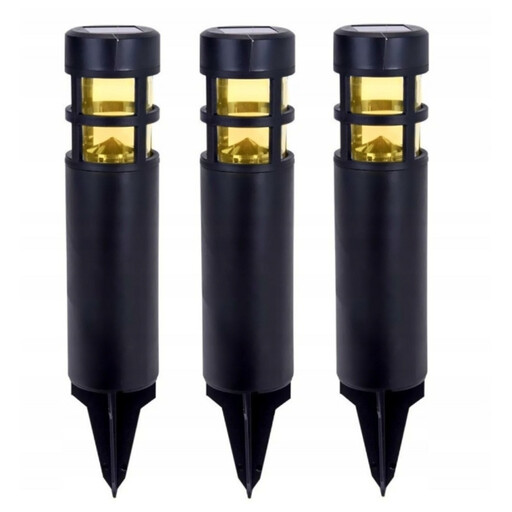
Why this product suits this profile: This set of three solar lights suits buyers who want to light paths, bed edges or small outdoor areas to begin with, without major planning effort.
Automatic dusk activation and simple placement keep basic operation straightforward. A sunny location is still required for effective charging.
Three lights in one set; solar-powered, cable-free operation with automatic switching on and off.
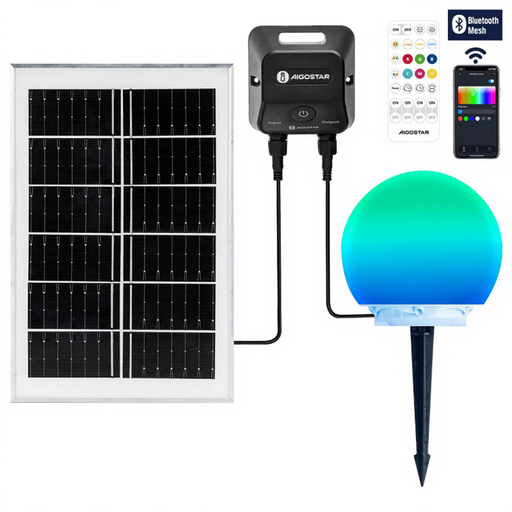
Why this product suits this profile: This smart solar light is aimed at users who want to group lighting across several areas via Bluetooth Mesh and switch between RGB and adjustable white light.
The stated IP67 rating is relevant for selection in changeable outdoor weather. Even so, installation, cable connections and drainage must follow the specified guidance.
RGB+CCT from 2700 to 6500 Kelvin; 4000 mAh lithium battery and separate 5 W solar panel according to the product description.
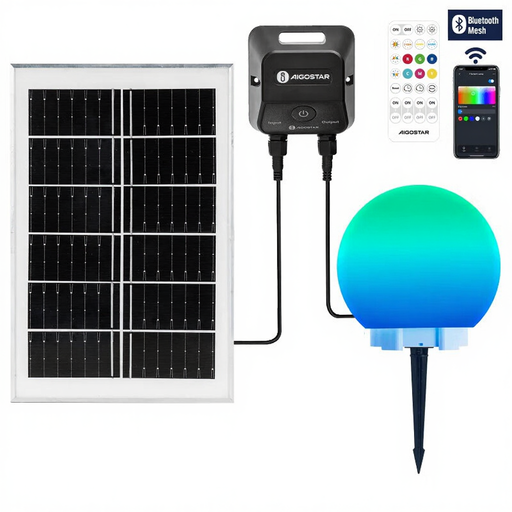
Why this product suits this profile: For larger gardens, patios or festive scenarios, app control is attractive when several lights need to be managed together.
Control via app, schedules and groups reduces manual individual adjustments. Before buying, check the required AigoSmart app compatibility.
Bluetooth Mesh control plus RGB+CCT light with adjustable colour temperature from 2700 to 6500 Kelvin.
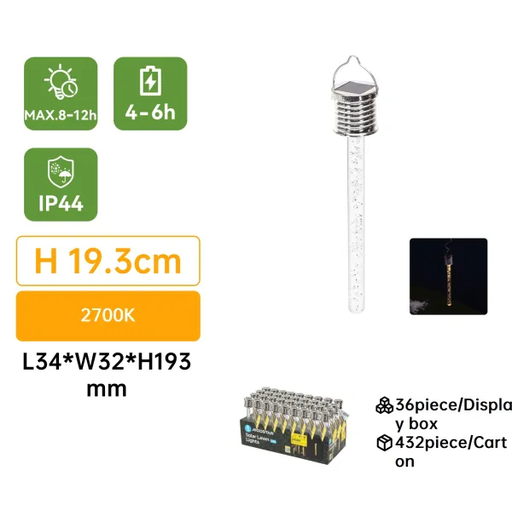
Why this product suits this profile: The compact bubble stick shape and warm white light suit beds, lawns and sheltered decorative areas where strong illumination isn’t required.
The product data explicitly state IP44. This allows you to distinguish it from models with a higher IP rating and position it appropriately at a site that isn’t flooded.
Warm white light at 2700 Kelvin; stated charging time of about 4 to 6 hours and run time of about 8 to 12 hours under suitable conditions.
Insert solar spike lights or other solar-powered garden lamps into loose, stable soil wherever possible, and not directly into permanently wet spots. The panel should be kept free of leaves, dust and twigs. A soft, slightly damp cloth is sufficient for regular cleaning; harsh cleaning agents can damage surfaces and seals.
In frost, during prolonged rain or with very short sunshine hours, performance can drop. Observe the specified temperature range and do not open integrated batteries yourself. Dispose of faulty lights and batteries separately in accordance with local regulations for electrical equipment and batteries.
We’ve compiled a complete, continuously updated list of products that fully meet these strict selection criteria and the safety regulations applicable in the EU.
Run time depends on sunlight, state of charge, battery capacity, temperature and the brightness you’ve set. Product indications of 8 to 12 hours are guidelines under suitable charging conditions, not a guaranteed duration for every weather situation.
Choose a location with as many hours of direct daylight as possible. Avoid shade from exterior walls, trees and shrubs. With solar path lights, spacing should be set so the path provides orientation without individual light points needing to flood the entire area.
Solar lights don’t require a connection to the mains during operation. Possible follow-on costs come from replacement batteries, damaged components or eventually replacing the entire light. Check details on battery type, replaceability and care before you buy.