
Lieferung heute & morgen

Qualitätsgarantie

Willkommens-Angebote freischalten: KOSTENLOSE Lieferung | Bis zu 80 % RABATT | Kostenlose 30-Tage-JoyPlus-Testphase
App herunterladen
A solar light in the garden promises simple, atmospheric lighting with no electricity costs or complex wiring. But the reality is often different: many buyers are disappointed by lights that barely emit any light, fail after the first rain, or have a battery that can't even last a single summer evening. Before you invest, it's crucial to understand the typical weaknesses often hidden behind appealing product images.
This guide, created by the Joybuy Product Recommendation Officer, helps you separate the wheat from the chaff. We focus on the technical features that truly matter and show you how to identify a durable and functional solar garden light that will reliably illuminate your outdoor space.
Many products on the market fail to meet basic expectations. Pay special attention to these three points to avoid a bad purchase:
solar path light or for genuinely illuminating an area. Without clear specifications on light colour or brightness, you're often buying blind.To make an informed decision, you should be guided by verifiable technical data, not marketing promises. Three features are of central importance.
A weather-resistant garden light is essential for outdoor use. The resistance to foreign objects and water is indicated by the IP rating (Ingress Protection). This consists of two digits:
For a solar light in the garden, an IP44 rating is a solid minimum standard. This classification means the light is protected against solid foreign objects with a diameter greater than 1 mm and against splashing water from all sides. This makes it well-equipped for typical outdoor weather conditions.
The reliability of your solar light depends directly on the quality of the solar panel and the battery.
The light colour significantly determines the atmosphere a light creates.
solar garden decor for parties or for creating special visual accents. A solar-powered LED garden stake with RGB functionality can transform flowerbeds and lawns into a dynamic sea of light.Instead of making a one-size-fits-all recommendation, we have selected products tailored to specific needs and use cases.
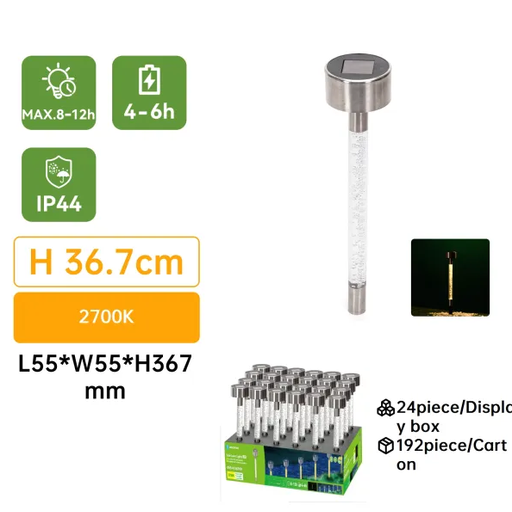
Why This Fits Their Persona: Ideal for users seeking subtle and elegant lighting for paths, flowerbeds, or lawns. The warm white light creates an inviting and calm mood without being overpowering.
With an IP44 rating, the light is protected against rain. The amorphous silicon panel ensures reliable charging even on less sunny days, enabling an illumination time of 8–12 hours.
Pleasant, warm white light colour (2700K) for a cosy atmosphere. Easy installation as a solar ground stake.
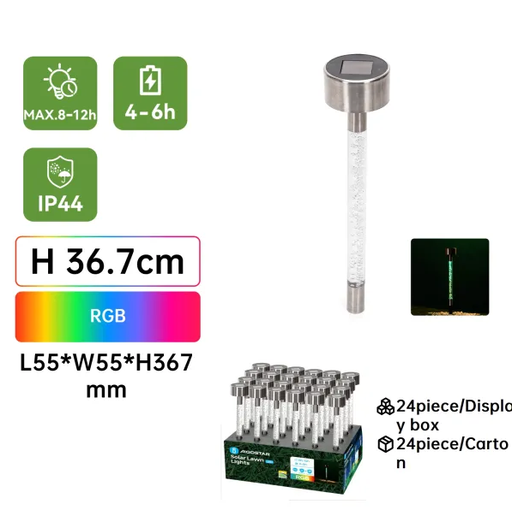
Why This Fits Their Persona: Perfect for garden owners who want to add colourful accents for parties or as an everyday highlight. The automatic colour change provides a vibrant and dynamic garden design.
Despite its decorative focus, there's no compromise on functionality. The light also offers IP44 protection and reliable charging and battery technology for a long illumination time.
Automatic RGB colour change for dynamic light effects. The bubble design within the stake ensures appealing light diffusion.
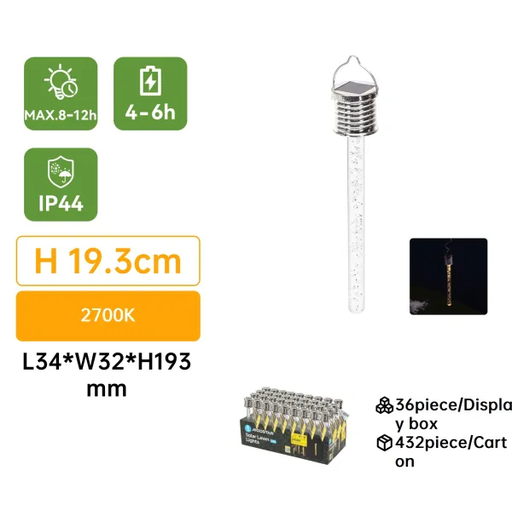
Why This Fits Their Persona: This model is for creative users who want more flexibility than a simple ground stake offers. It can be hung from branches, pergolas, balcony railings, or hooks.
The lightweight and compact design doesn't compromise on durability. With IP44 protection and solid charging performance, it avoids the trap of many purely decorative hanging lights, which are often unreliable.
Versatile hanging design for creative solar garden decor. Very lightweight (40g) and compact, it also provides a warm white light (2700K).
We have compiled a complete, up-to-date list of products that fully meet these strict selection criteria and safety regulations.
The lifespan of a solar light is determined by two main components: the LED and the battery. The LEDs themselves are very durable; a stated lifespan of 15,000 hours, as with the Aigostar models, is common and equates to many years of nightly operation. The limiting factor is usually the battery, whose capacity diminishes after several hundred charging cycles. However, on many models, the battery (often a standard Ni-MH type) can be replaced, significantly extending the light's lifespan.
Yes, but with limitations. Solar lights with amorphous silicon panels are better suited for regions with variable light conditions, as they can generate energy even on cloudy days, albeit less than in direct sunlight. In winter, the days are shorter and the sunlight is weaker, leading to a significantly reduced illumination time. Expect a few hours of light during the darker months rather than all-night illumination.
The IP44 rating is an important indicator of weather resistance. It certifies that the light's housing is protected against the ingress of solid foreign objects with a diameter greater than 1 millimetre (e.g., coarse dirt or insects) and against splashing water from all directions. This means the light can easily withstand normal rain. However, it is not suitable for submersion in water (e.g., in a garden pond)—that would require a higher rating like IP67 or IP68.