
Lieferung heute & morgen

Qualitätsgarantie

Willkommens-Angebote freischalten: KOSTENLOSE Lieferung | Bis zu 80 % RABATT | Kostenlose 30-Tage-JoyPlus-Testphase
App herunterladen
Solar garden lights promise a simple and eco-friendly way to accentuate paths, patios, and flowerbeds—all without wiring or extra electricity costs. But the market can be overwhelming, and not every product lives up to its advertising. Many buyers are quickly disappointed when their lights fail after the first heavy rain or barely provide any light in the autumn.
As your Joybuy Product Recommendation Officer, I'll help you recognise the typical pitfalls and make an informed decision. We'll focus on the technical features that truly matter, ensuring your garden lighting brings you joy for years to come.
Before we dive into the features to look for, it's important to understand the most common reasons for dissatisfaction. These three issues often lead to unnecessary expense and frustration:
To avoid the problems mentioned above, you should check three core technical specifications before buying. These will give you an objective basis for your selection.
The IP (Ingress Protection) rating is an international standard that indicates how well a housing is protected against the ingress of foreign objects (first digit) and water (second digit). For outdoor solar lights, the following values are relevant:
Therefore, look for a clear IP rating specification. It's the only way to be sure you're getting waterproof garden lamps.
The performance of a solar light depends directly on the combination of its solar panel and battery.
Light colour significantly influences the mood. It is measured in Kelvin (K):
Instead of making a one-size-fits-all recommendation, we have selected products that suit different needs and budgets.
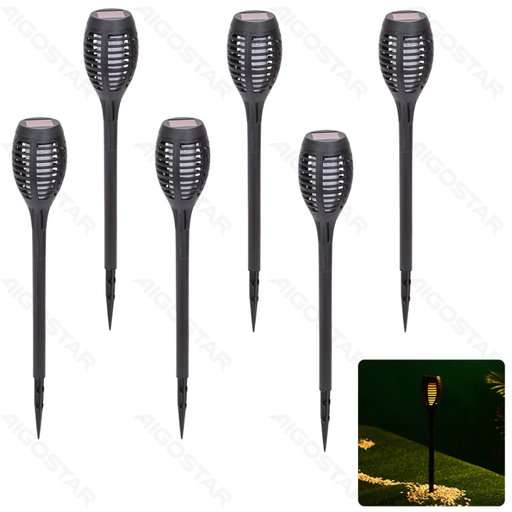
Why this product is a great fit: Ideal for users seeking atmospheric and decorative lighting. The flame effect creates a warm, inviting ambiance along paths or in flowerbeds without looking tacky.
This product avoids the trap of unsuitable light colour with a clearly defined warm white colour temperature of 2700 K. Furthermore, the IP44 certification provides a reliable specification for weather resistance.
The realistic flame effect provides a unique look. The practical solar light set of six allows for a uniform design across larger areas.
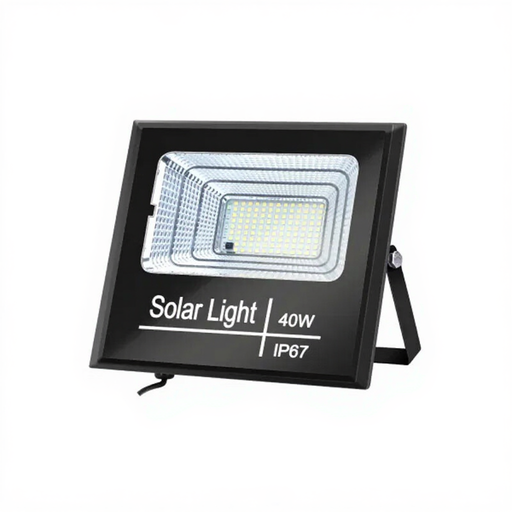
Why this product is a great fit: For anyone who needs bright, reliable illumination for driveways, home entrances, or dark corners of the garden. Here, the function as an outdoor solar spotlight is the priority.
This spotlight counters the problem of low brightness with a clear power rating of 40W and bright 6500K cool white light. The extremely high IP67 rating and the large 10,000 mAh battery address the pitfalls of weather resistance and runtime.
The separate solar panel allows for flexible installation: the panel can be placed in the sunniest spot, while the spotlight is mounted where the light is needed. This maximises charging efficiency.
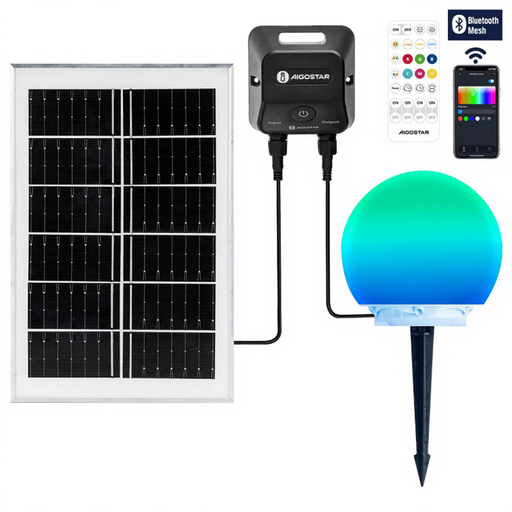
Why this product is a great fit: Perfect for tech-savvy users who want full control over their garden lighting. The app control allows for custom lighting scenes, from colourful party effects to adjustable white light.
This model solves the performance problem with a high-efficiency 5W monocrystalline solar panel and a powerful 4000mAh lithium battery. The IP65 rating ensures high durability. Full control over RGBCCT (colour and white tones) prevents any unwanted light colours.
The Bluetooth-Mesh technology allows for the simultaneous control of over 200 lights, enabling scaling throughout the entire garden. The colour temperature is infinitely adjustable from 2700K to 6500K.
We have compiled a complete, up-to-date list of products that fully meet these strict selection criteria and rigorous safety standards.
The lifespan of a solar light is determined by two main components: the LED and the battery. The LEDs themselves have a very long life, often rated at 15,000 hours or more. The limiting factor is usually the battery. NiMH batteries, used in many models, have a lifespan of about 1-3 years, depending on charging cycles and temperatures. For higher-quality models with lithium batteries, the lifespan can be longer. In many lights, the battery can be replaced.
Yes, solar lights do work in diffuse light, but with significantly reduced charging performance. On short, cloudy winter days, the lights may only stay on for a few hours or not at all. Models with high-efficiency (monocrystalline) solar panels and large batteries have a clear advantage here. To maximise performance, the panels should always be kept clean and free of snow or leaves.
That depends on the IP rating and the battery type. Lights with a high protection rating (IP65 or higher) and a robust housing can generally be left outside. However, extreme sub-zero temperatures can impair the performance and lifespan of batteries, especially NiMH types. If you want to be on the safe side, you can store the lights in a dry, frost-free location during the coldest months. This protects the battery and extends the overall lifespan of the product.