
Lieferung heute & morgen

Qualitätsgarantie

Willkommens-Angebote freischalten: KOSTENLOSE Lieferung | Bis zu 80 % RABATT | Kostenlose 30-Tage-JoyPlus-Testphase
App herunterladen
Solar lights for the garden promise simple and atmospheric lighting without cables or additional electricity costs. However, the selection is vast, and not every product delivers on its promise. Many buyers are disappointed after a short time when the lights fail after a rain shower or stop providing light after just a few hours. As your Joybuy Product Recommendation Officer, I will help you recognise the typical pitfalls and make an informed decision.
Before you invest, you should be aware of the most common problems that lead to frustration and unnecessary expenses.
To avoid the problems mentioned above, you should carefully check three technical features. These will give you an objective basis for your decision.
The IP rating (Ingress Protection) indicates how well an electrical device is protected against the ingress of foreign bodies and water. For outdoor solar lights, this is a crucial quality feature.
The performance of the battery determines how long your light will shine after dark.
The combination of the solar panel and the LED determines the charging efficiency and the light quality.
Here are some recommendations tailored to different needs and requirements.

Why This Fits Their Persona: Ideal for users looking for a straightforward and functional solution for basic garden or path lighting without a large budget.
With a clear IP44 certification, it provides the necessary splash protection. The light colour is precisely defined at 6500K (Cool White), so there are no surprises with the brightness.
Simple installation as a solar ground stake light. The plastic housing with a stainless steel look is lightweight yet robust enough for normal use.
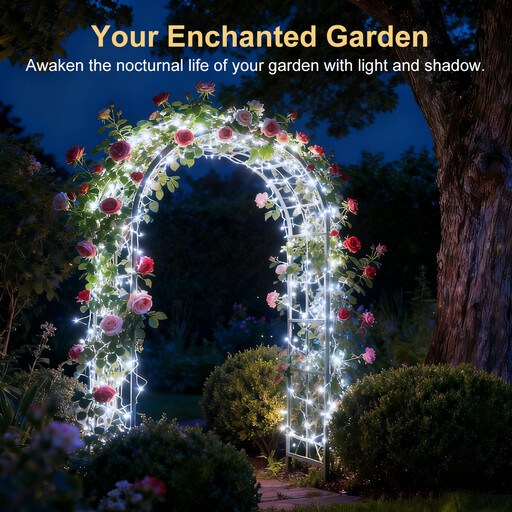
Why This Fits Their Persona: Perfect for creative minds looking for a flexible outdoor solar string light to atmospherically decorate trees, fences, balcony railings, or vases.
The enhanced IP65 waterproof rating ensures durability even in heavy rain, bypassing the pitfall of poor weather resistance. The 8 lighting modes provide full control over the atmosphere.
The flexible copper wire can be easily bent into any desired shape. The memory function remembers the last set mode, simplifying daily use.
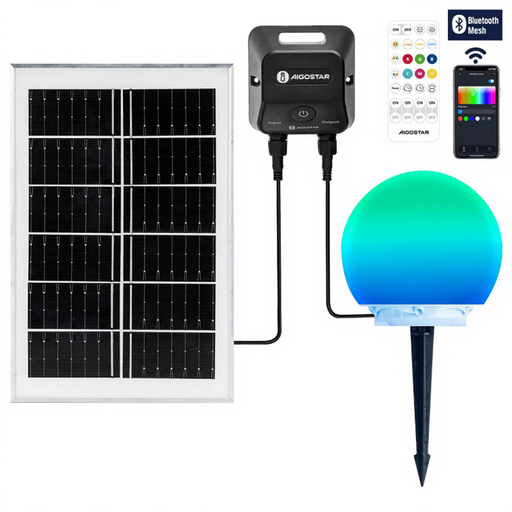
Why This Fits Their Persona: For anyone who wants maximum control, performance, and modern technology. Ideal for intelligently staging the entire garden with customisable colours and brightness.
Thanks to the separate, high-efficiency 5W monocrystalline solar panel and a powerful 4000mAh lithium battery, it bypasses the trap of unrealistic lighting duration. The IP65 rating ensures longevity.
Complete control of colour (RGBCCT) and brightness via a smartphone app over Bluetooth-Mesh. The separate panel can be optimally aligned with the sun while the light is placed in the shade.
We have compiled a complete, up-to-date list of products that fully meet these strict selection criteria and safety regulations.
The lifespan of a solar light depends on two main components. The LED solar lights themselves have a very long lifespan, often 15,000 hours or more. The limiting factor is the rechargeable battery. Depending on the quality and intensity of use, the battery's capacity can diminish after 1 to 3 years. However, on many models, the battery can be easily and inexpensively replaced.
Yes, solar lights also charge on cloudy days or in winter, but much more slowly and less efficiently than in direct sunlight. The lighting duration in the evening will be noticeably shorter as a result. Models with larger, more efficient solar panels (e.g., monocrystalline) and batteries with higher capacity are better suited for year-round use.
Installation is incredibly simple. Choose a location where the solar panel will receive at least 6 hours of direct sunlight per day. Avoid shadows from buildings, trees, or shrubs. The ground should be soft enough to insert the stake without using excessive force to prevent the plastic from breaking. Clean the solar panel occasionally with a soft cloth to maintain charging efficiency.