
Lieferung heute & morgen

Qualitätsgarantie

Willkommens-Angebote freischalten: KOSTENLOSE Lieferung | Bis zu 80 % RABATT | Kostenlose 30-Tage-JoyPlus-Testphase
App herunterladen
Solar garden lights provide illumination without a mains connection and can usually be placed outdoors without tools. However, garden solar lights vary considerably in colour temperature, design, battery capacity and weather resistance. If you focus only on the design or the stated lighting time, you may later find yourself dealing with dim light, rusting components or unsuitable locations.
Claims such as “up to 8–12 hours” usually apply under suitable conditions. In the shade, with limited sunlight or a dirty solar panel, the actual operating time may be shorter. There is also less direct sunlight available in autumn and winter.
So, look for:
An IP44 rating means protection against solid objects 1 mm or larger, as well as water splashes from different directions. It does not mean that a light can be left standing in water or used in a garden pond. IP44 solar garden lights can be used beside paths and flower beds if positioned appropriately, but you should still avoid waterlogging.
Flame effects, RGB colour-changing lights and warm white light are primarily designed to create atmosphere. For safely lighting steps or a longer path, information about light output, beam angle and mounting height is more important. Many small solar ground lights simply mark out an area; they are not a substitute for a bright outdoor light.
Solar lights with warm white light, such as those with a colour temperature of 2700 Kelvin, create a subtle effect and are ideal for seating areas, flower beds and decorative garden paths. Cool white light, at around 6500 Kelvin, looks much brighter and more defined, but may feel less inviting on a patio.
RGB solar lights switch between different colours, depending on the model. They work well as decorative accents on lawns, at garden parties or along flower-bed edges. If you want consistent guidance along a path, choose lights with a steady colour and leave enough space between them.
A housing with a stainless-steel effect may be made of plastic, so check the material details carefully. Some of the Aigostar models featured here have plastic housings with a silver or stainless-steel effect.
Ni-MH batteries are commonly used. Capacity is measured in milliampere-hours and should be considered alongside the solar panel’s output. Clean the surface regularly with a soft cloth and avoid harsh cleaning products. CE and RoHS markings relate to conformity and restrictions on certain substances; they do not provide a general indication of brightness or durability.
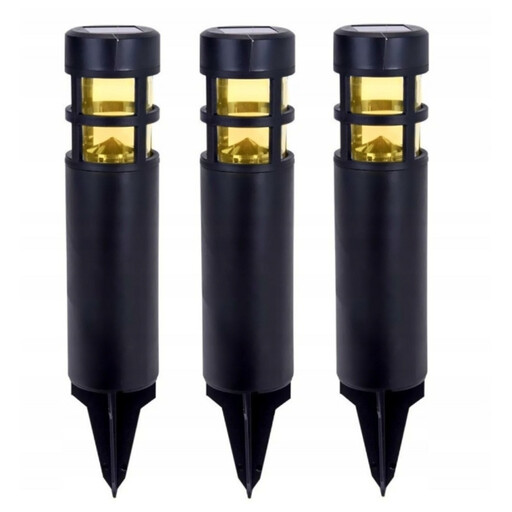
Why this product suits this profile: This set of three solar lights is an easy way to get started with lighting flower-bed edges, small paths or balcony areas. Simply place them in direct sunlight; according to the product description, they switch on automatically at dusk.
The number of lights and their basic intended use are clearly stated. This makes it easier to judge whether three points of light will be enough for the area you have in mind.
A set of three, with automatic on/off function according to the product details.
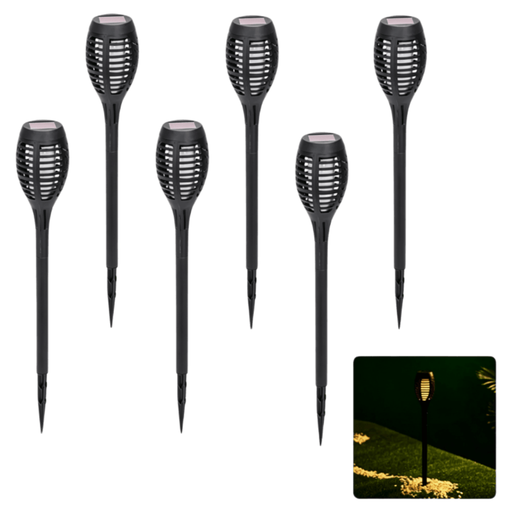
Why this product suits this profile: The six-light set is suitable for longer paths, lawns or creating a coordinated look. The stated flame effect and 2700-kelvin colour temperature give it a clear decorative focus.
The product details state a charging time of around 4–6 hours, a lighting time of around 8–12 hours and an IP44 rating. This lets you check key factors before you buy.
A set of six, with warm white 2700 K light and a 200 mAh Ni-MH battery according to the product details.
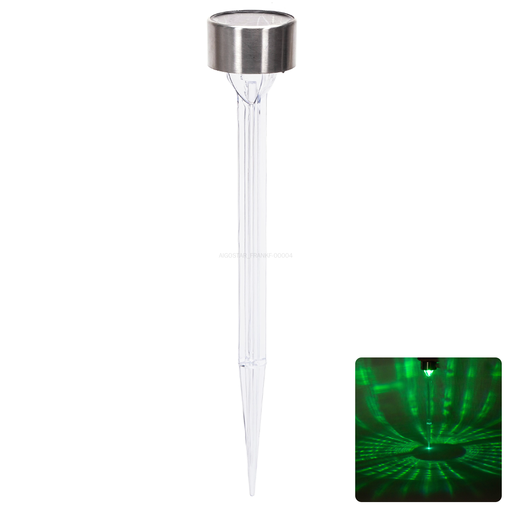
Why this product suits this profile: The RGB function is ideal if you want to add colourful accents to paths, lawns or flower beds. The ground-spike design is intended for soft soil and a sunny position.
The product description specifically highlights the need for direct sunlight, regular panel cleaning and the limitations of IP44. This helps you plan the location and care routine more effectively.
RGB light, a charging time of around 4–6 hours, a stated lighting time of 8–12 hours and IP44 rating.
We’ve put together a comprehensive, regularly updated list of products that meet these strict selection criteria and fully comply with the safety regulations in force in the EU.
Choose a location where the panel will get several hours of direct sunlight. Trees, walls and canopies can significantly reduce charging performance. Don’t push the light into hard or heavily compacted soil, as this could damage the ground spike. In frosty conditions, check the manufacturer’s guidance on the permitted temperature range.
For even solar lighting along a garden path, plan the layout in advance. Mark the positions you have in mind and check that the lights make the path easy to follow without causing glare. Paths with steps or a steep gradient may need an additional, brighter light.
Depending on the model, the stated LED lifespan could be up to 15,000 hours, for example. This doesn’t automatically mean the entire product will last as long. The battery, solar panel, seals and mechanical parts are also subject to wear and tear. Actual lifespan depends on sunlight, temperature, care and storage.
They don’t need to be connected to the mains while operating. The solar panel charges the built-in battery during the day. This makes solar lights a convenient way to illuminate your garden without a mains connection. However, light output depends on the amount of sunlight available and the condition of the battery.
Many models are designed for outdoor use and have an IP44 rating, for example. This rating provides protection against splashes, but not immersion in water or prolonged exposure to waterlogging. Position your lights on well-drained ground and always follow the manufacturer’s specific guidance.