
Lieferung heute & morgen

Qualitätsgarantie

Willkommens-Angebote freischalten: KOSTENLOSE Lieferung | Bis zu 80 % RABATT | Kostenlose 30-Tage-JoyPlus-Testphase
App herunterladen
Solar garden lights are ideal for outdoor spaces without a mains connection. They charge via a solar panel during the day, and suitable models switch on automatically at dusk. Before buying, though, it’s worth checking the details: not every light is right for every location, and some product specifications may seem clearer at first glance than they really are.
The IP44 rating means protection against solid objects larger than 1 mm and splashing water. It’s suitable for many sheltered areas of the garden, but not for permanent immersion in water. IP65 provides greater protection against dust and water jets, but still doesn’t mean a light can be installed underwater. Avoid placing solar lights in dips where rainwater can collect.
Claims such as 8 to 12 hours or up to 14 hours are based on specific charging conditions. Shade from house walls, trees or balcony railings, short winter days and dirty solar panels all reduce the energy available. A solar light on a north-facing balcony may therefore perform differently from the same light in an open lawn with direct sunlight.
Many solar lights provide decorative outdoor lighting, but they aren’t designed to replace bright security or task lighting. A small solar ground light can mark a path, but it won’t necessarily light the whole route. For paths, steps and entrances, positioning, spacing, light output and beam angle all matter.
IP44 solar lights are often suitable for sheltered flower beds, lawns and decorative use. For more exposed conditions or freestanding installations, a light with an IP65 outdoor light rating may be more suitable. The rating applies to the complete product and should match the manufacturer’s specifications.
Also check the stated operating temperature range. Some models are described as suitable for around -10 °C to 50 °C. However, charging performance and battery capacity may still vary in freezing conditions, during prolonged wet weather or in high temperatures.
Solar spike lights are pushed directly into soft soil or a lawn. The ground should be firm enough to stop the light tipping over. Solar ground lights, on the other hand, need a level surface. For solar string lights, check whether the panel can be positioned flexibly using a cable.
A larger panel or a stated charging time of 4 to 6 hours doesn’t, on its own, tell you how long the light will actually stay on in your garden. Direct sunlight, battery capacity and the selected light mode are all important.
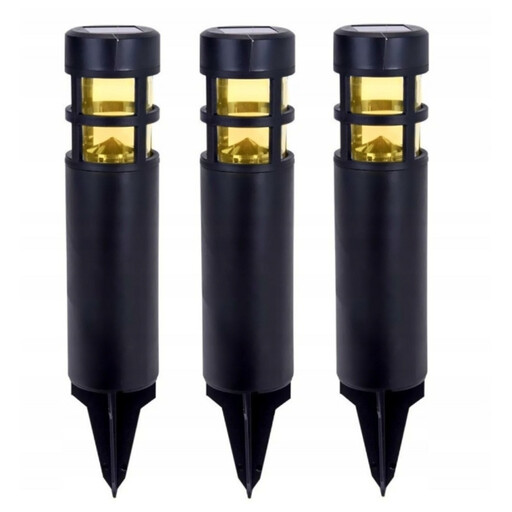
Why this product suits this need: This set of three lights is an easy way to get started, whether you’re lighting flower beds, lawn edges or short paths. There’s no wiring or need for a professional electrical connection.
The pack size is clearly stated. Before installing the lights, make sure each one gets direct sunlight so that it can switch on automatically at dusk.
Three lights per set, automatic switch-on at dusk and easy placement outdoors.
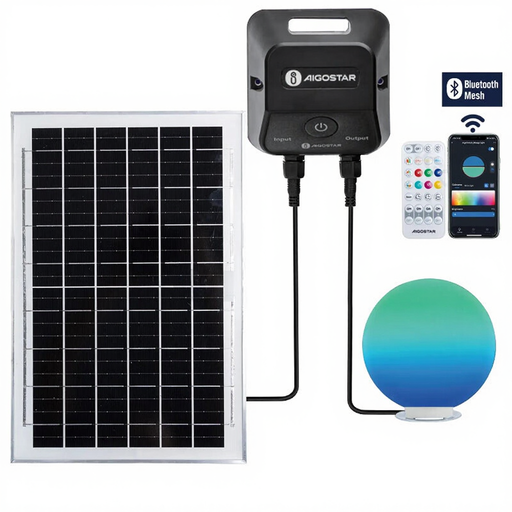
Why this product suits this need: This floor lamp combines RGB, warm white and daylight settings with Bluetooth Mesh control. It’s a good fit for patios and larger seating areas, or if you’d like to control several lights from one place.
The IP65 rating and stated light output of 350 lm give you clear points of comparison. Even so, don’t place the light in standing water.
RGB+2700–6500 K, Bluetooth Mesh for more than 200 devices according to the manufacturer, and a 12 W solar panel.
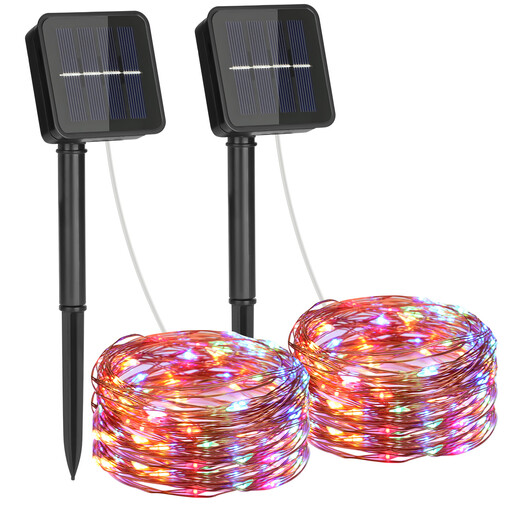
Why this product suits this need: Two 12-metre solar string lights, each with 120 LEDs, are ideal for balconies, pergolas, railings, patios and seasonal decorations.
The IP65 rating comes with a clear reminder that the components must not be immersed in water. Position the panel somewhere sunny and unobstructed.
Eight lighting modes, a memory function and multicoloured light, plus a stated run time of 8–14 hours depending on charging conditions.
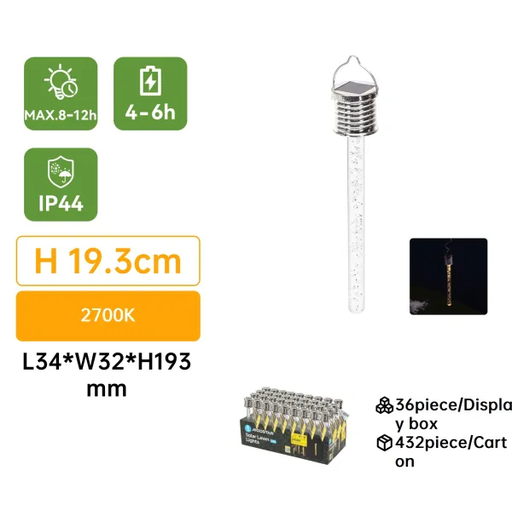
Why this product suits this need: This compact Bubble Stick light, with a colour temperature of 2700 K, is suited to flower beds, lawn edges and sheltered areas where a subtle light is all you need.
The IP44 rating makes the intended use clear: this light is designed for outdoor use, but shouldn’t be left standing in water or submerged.
2700 K warm white light, a built-in Ni-MH battery, a stated charging time of 4–6 hours and a height of 193 mm.
We’ve put together a complete, regularly updated list of products that meet these strict selection criteria and fully comply with the safety regulations in force in the EU.
It depends on the panel, battery, light mode and amount of sunlight. The products mentioned are rated for around 8 to 14 hours, depending on the model. These figures assume sufficient charging time and shouldn’t be taken as a guaranteed daily run time.
Many models can be left outdoors within their stated temperature range. However, there are fewer hours of sunlight in winter, which can reduce run time. If there’s a prolonged frost or the lights are in a very damp location, it’s a good idea to store them somewhere sheltered, following the manufacturer’s instructions.
Solar lights don’t need a mains connection while they’re in use, so charging them with sunlight doesn’t add to your electricity bill. You may incur costs later if you need replacement batteries, damaged components or a new light.