
Lieferung heute & morgen

Qualitätsgarantie

Willkommens-Angebote freischalten: KOSTENLOSE Lieferung | Bis zu 80 % RABATT | Kostenlose 30-Tage-JoyPlus-Testphase
App herunterladen
Solar garden lights are quick to install, don’t need a mains connection and can be positioned flexibly on lawns, along paths or on the patio. However, product claims can often lead to the wrong purchase. For example, a long quoted lighting time isn’t guaranteed in all weather conditions. And an IP44 rating doesn’t mean a solar garden light can be left underwater for long periods.
This guide explains what homeowners, tenants and garden owners in Germany should look out for before buying. It focuses on the technical details that make a real difference in everyday use.
Claims such as ‘8 to 12 hours’ are based on suitable charging conditions. In shade, during short daylight hours or under overcast skies, the battery may store less energy. Solar lights with ground stakes should therefore be placed somewhere that gets as much direct sunlight as possible. Trees, walls and covered areas can significantly reduce charging performance.
The IP44 rating indicates protection against solid objects above a certain size and splashing water from different directions. It’s suitable for many decorative outdoor areas, but doesn’t replace a sheltered location where water may collect or heavy rain may persist. For more exposed locations, an IP65 solar light may be a better choice.
A small solar ground light or decorative solar garden light can add accents to flower beds and lawns. For even solar lighting along paths, however, the mounting height, luminous flux, beam angle and distance between lights all matter. RGB lighting adds splashes of colour, but doesn’t automatically provide practical illumination.
Before buying, check the stated IP rating and the intended area of use. A stainless steel finish can add decorative appeal, while plastic housings keep the weight down. The material alone isn’t what matters: check that the light is rated for outdoor use and look at the stated operating temperatures.
For the models featured here, for example, the stated range is from -10 °C to 50 °C. This is a manufacturer’s technical specification, not a guarantee of performance in every weather or frost condition. Solar lights should not be submerged in water, and lights with damaged housings should no longer be used.
Look out for:
A small solar panel and low battery capacity are better suited to decorative lighting. Larger panels and batteries are important if you want longer running times or brighter light. Actual running time always depends on sunlight, temperature, lighting mode and battery condition.
A warm white solar light at 2700 K creates a yellowish, warm glow and often works well around seating areas or flower beds. Cool white light at 6500 K looks more neutral to bluish and can help with visibility along paths. An RGB solar light offers colour-changing effects, but is primarily designed for decorative use.
For practical outdoor LED solar lights, also check the luminous flux in lumens and the beam angle. A smart solar garden lamp with Bluetooth or mesh controls can connect several lights. Check compatibility, range and which app or control method is required.
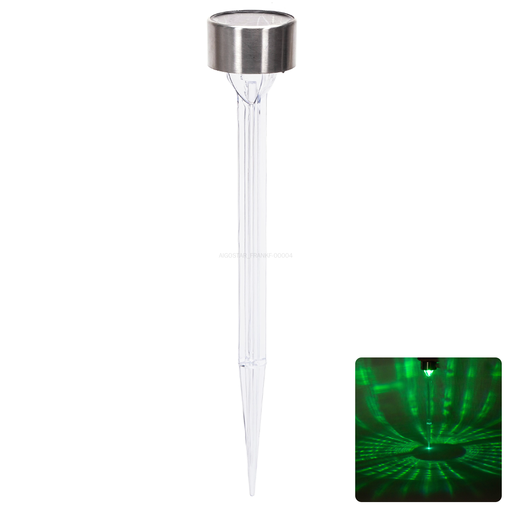
Why this product suits this profile: This solar light with a ground stake can be placed in soft soil or a lawn without any wiring, and its RGB lighting adds colour to flower beds, paths or decorative features.
The product details clearly state the charging time, lighting time and IP44 rating. This makes it easier to match the light to its location and the weather conditions.
RGB lighting, a 200 mAh NiMH battery and a stated lighting time of 8 to 12 hours.
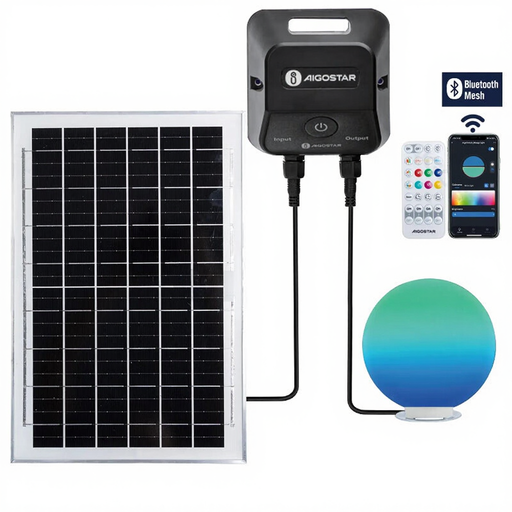
Why this product suits this profile: This floor lamp is designed for anyone who wants to control several light sources and switch between RGB, warm white and daylight settings.
The stated IP65 rating is more useful for planning where to place the light than a vague claim that it’s weatherproof. The Bluetooth Mesh control method is also clearly specified.
A 12 W solar panel, an 8000 mAh lithium battery, a Bluetooth Mesh connection and up to 350 lm, according to the product details.

Why this product suits this profile: This solar ground light is a good choice if you prefer crisp, cool white lighting along paths or around the edges of your garden.
The colour temperature of 6500 K, colour rendering index of Ra≥70 and IP44 rating are all clearly stated, making it easier to plan solar lighting along paths.
A stated charging time of 4 to 6 hours, a lighting time of 8 to 12 hours and an integrated ground stake.
We’ve put together a complete, regularly updated list of products that meet these strict selection criteria and fully comply with the safety regulations applicable in the EU.
For reliable, even performance:
On balconies and patios, models with a base or solar ground lights are often more practical than stake lights. If you’re renting, make sure the lights can be set up without leaving marks, and don’t make any structural changes without permission.
Lifespan depends on the battery, LED, housing, temperature and care. The product details for some of the models mentioned quote LED lifespans of 15,000 or 30,000 hours. This refers to the light source and doesn’t automatically indicate the lifespan of the whole product or its battery.
While they’re on, solar lights draw power from their charged battery and don’t need a direct mains connection. The amount of energy they actually generate depends on the solar panel, sunlight and charging losses. Remember to factor in the purchase price, battery replacement and any spare parts when considering the overall cost.
It depends on the protection rating, operating temperature and battery. A light rated IP44 should be protected from standing water and extreme weather conditions. Frost, snow or prolonged spells of poor weather can reduce the lighting time. Check the manufacturer’s guidance and, if necessary, store more delicate models somewhere dry.