
Lieferung heute & morgen

Qualitätsgarantie

Willkommens-Angebote freischalten: KOSTENLOSE Lieferung | Bis zu 80 % RABATT | Kostenlose 30-Tage-JoyPlus-Testphase
App herunterladen
Solar garden lights don’t need a mains connection and can usually be installed without tools. However, not every solar-powered garden light is right for every outdoor space. If you focus only on design or the stated number of hours, you could easily overlook important details.
Common problems when choosing solar lights come down to three things:
Decorative solar garden lights are often used around flower beds, lawns and patios. Warm white light at around 2700 Kelvin has a subtle effect and is well suited to seating areas or flower beds, for example. Cool white light at around 6500 Kelvin looks more functional and can make the edges of paths easier to see.
RGB solar lights cycle through different colours and are mainly suited to decorative accents. They aren’t necessarily the right choice for evenly lighting a path. Check whether a light offers a fixed colour, an RGB function or adjustable shades of white.
An IP rating consists of two digits. The first indicates protection against solid objects, while the second indicates protection against water. Many decorative solar ground lights and solar stake lights have an IP44 rating. This means, among other things, protection against solid objects larger than 1 millimetre and splashing water from different directions.
IP44 doesn’t mean that a light can be left standing in water. For weather-resistant outdoor lighting, you should also consider the location, ensure the light is securely installed and check the operating temperature specified by the manufacturer. Solar floodlights may have higher protection ratings. Always check the product description carefully.
Claims such as ‘4–6 hours charging time’ and ‘8–12 hours lighting time’ apply under suitable conditions. In autumn and winter, in cloudy weather or when solar panels are dirty, the actual lighting time may be shorter.
Check the following:
Solar path lights with ground stakes can be positioned wherever you need them. For hard ground, paved areas or a permanent, fixed position, solar ground lights with a different type of installation may be more suitable. For rented properties, models without wiring offer a practical advantage, provided the surface allows them to be installed.
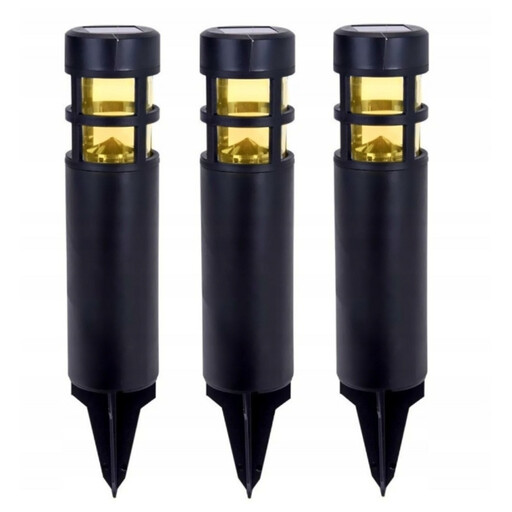
Why this product suits this buyer: This set of three is designed to add the first touches of light along paths, around flower beds or at borders. It can be installed without a mains connection.
The product description clearly states that the lights switch on automatically at dusk and are designed for paths, gardens and flower beds. The three lights make it easier to space them evenly.
Three lights per set; automatic on and off; installs without a direct mains connection.
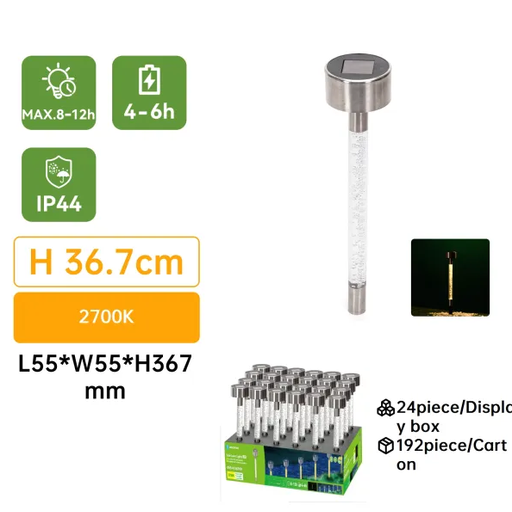
Why this product suits this buyer: Its stated colour temperature of 2700 Kelvin and bubble design make it a good fit for decorative areas such as patios, flower beds and lawns.
The product details specify the light colour, battery, charging time, IP rating and dimensions. This makes it easier to check whether the light is right for your chosen location.
2700K light; IP44 rating; stated charging time of 4–6 hours and lighting time of 8–12 hours under suitable conditions.
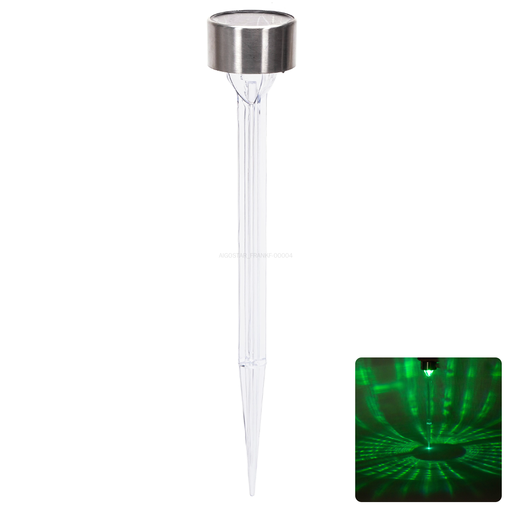
Why this product suits this buyer: The RGB function and silver-coloured finish are ideal if you prefer decorative colour changes to a fixed light colour.
The product details make clear that RGB lighting is the main feature and that this light is intended to create a soft ambience, not to illuminate large areas.
RGB lighting; ground stake installation; stated lighting time of 8–12 hours and IP44 rating.
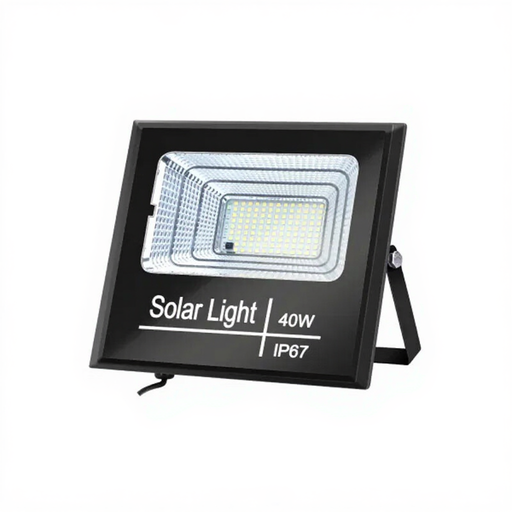
Why this product suits this buyer: The separate solar panel gives you more flexibility over where you position the floodlight and panel, making it suitable for larger garden areas or exterior walls.
Check the IP rating before you buy: the product title states IP65, while the description lists IP67. Clarify this discrepancy before using the light in particularly exposed areas.
40W rating; separate solar panel; 10,000 mAh battery and stated lighting time of up to 12 hours.
We’ve put together a complete, regularly updated list of products that meet these strict selection criteria and the safety regulations in force in the EU.
Position the solar panel where it will get as much sunlight as possible, away from shade, and angle it upwards. For stake lights, the ground should be soft enough to push the stake in, but firm enough to keep it steady. To make sure the light is straight, check its alignment from a few different angles.
Clean the panel regularly with a soft, damp cloth. Don’t use abrasive cleaners. Stop using lights with damaged casings, cables or battery compartments. Take used batteries and electronic components to the appropriate collection points for disposal.
Lighting time depends on the battery, charge level, light mode, time of year and amount of sunlight. Manufacturer claims such as 8–12 hours generally apply under suitable charging conditions. Extended periods of cloudy weather can shorten the lighting time.
That depends on the IP rating. IP44 is designed to protect against splashing water, not immersion. Position the light so that water doesn’t collect around the casing or solar panel, and follow the manufacturer’s instructions.
They don’t need a mains connection while in use. The solar panel charges the built-in battery during the day. The amount of energy generated depends on the location, orientation, weather and how clean the panel is.