
Lieferung heute & morgen

Qualitätsgarantie

Willkommens-Angebote freischalten: KOSTENLOSE Lieferung | Bis zu 80 % RABATT | Kostenlose 30-Tage-JoyPlus-Testphase
App herunterladen
Solar lights promise a simple and eco-friendly way to illuminate your garden, balcony, or patio. No wires, no electricity costs—the concept is compelling. Yet, the reality is often disappointing: lights that only glow faintly after a few weeks, casings that fill with water after the first rain, or a light output barely brighter than a firefly.
As a Joybuy Product Recommendation Officer, I see daily what features distinguish a durable product from a short-lived one. Before you make a purchasing decision, you should know the three most common pitfalls that lead to disappointment.
outdoor LED solar lights. The crucial metric is the lumen (lm) value. Budget models often skimp on the quality of the LEDs, delivering only a diffuse glimmer instead of genuine illumination.To avoid these pitfalls, you only need to look at a few key technical specifications. These will help you objectively evaluate the performance and durability of solar garden lighting.
The IP (Ingress Protection) rating indicates how well a housing is protected against the ingress of foreign objects (first digit) and water (second digit). For outdoor use, the following ratings are relevant:
solar path lights or solar ground lights in exposed areas.The battery stores the energy collected during the day. Its quality and capacity determine the runtime and reliability, especially during the darker months.
The lighting effect is determined by two key metrics that go beyond the simple wattage figure.
Warm white solar lights are the right choice here.colour-changing solar lights): Allows you to set different colours for special occasions or creative garden design.solar light with motion sensor should have 100–500 lm or more.Instead of making a one-size-fits-all recommendation, we have identified products tailored to specific user profiles and requirements.
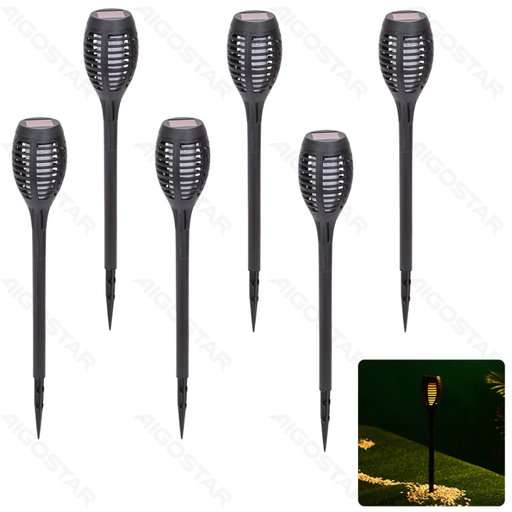
Why This Fits Their Persona: Ideal for beginners looking to create an ambient atmosphere with a practical solar light set. The realistic flame effect in warm white light (2700K) is perfect for effortlessly decorating paths and flowerbeds.
The lights are clearly specified with an IP44 rating, making them suitable for typical garden weather conditions. The stated runtime of 8–12 hours is realistic for the NiMH battery under normal charging conditions.
Complete set of 6 lights for a uniform look; atmospheric, decorative flame effect; easy installation with ground stakes.
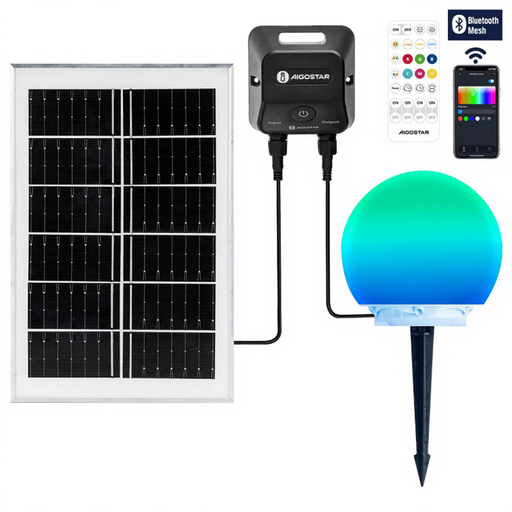
Why This Fits Their Persona: Perfect for users who want full control and custom lighting scenarios. Via Bluetooth-Mesh, more than 200 lights can be controlled simultaneously to stage the garden with dynamic colours (RGB) or adjustable white light (2700K–6500K).
The high IP65 rating makes the light extremely resistant to the elements. The powerful 4000mAh lithium battery and monocrystalline panel ensure a reliable power supply and a long runtime of up to 24 hours.
Smart control via app (RGBCCT); high weather resistance (IP65); powerful battery for long runtime; modern design with a layered light effect.
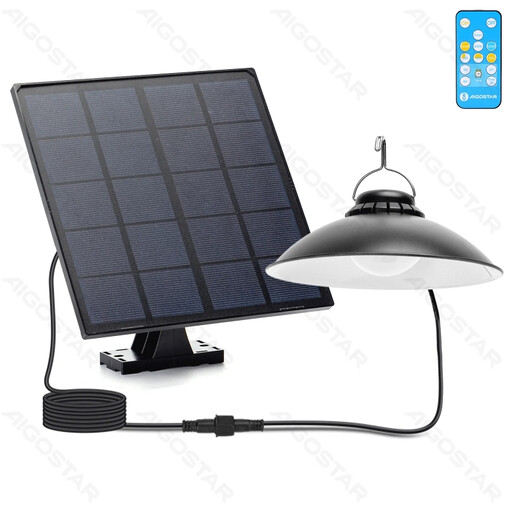
Why This Fits Their Persona: The ideal solution for locations where the light needs to hang in the shade, but the solar panel can be placed in the sun. Perfect as a balcony solar light under an awning, in a gazebo, or a carport.
The 3-meter cable between the panel and the light solves a core problem for many solar solutions. The durable LiFePO4 battery with 5000 mAh and the high brightness of 500 lumens provide reliable and functional illumination.
Separate solar panel for flexible installation; high brightness (500 lm); three selectable colour temperatures; durable and cold-resistant LiFePO4 battery technology.
We have compiled a comprehensive, up-to-date list of products that meet these strict selection criteria and applicable safety regulations.
The lifespan depends on two main components: the LED and the battery. The LEDs themselves often have a very long life, specified by manufacturers like Aigostar at up to 15,000 hours. The battery is typically the first component to lose performance. NiMH batteries usually last 1–3 years, while higher-quality LiFePO4 batteries can achieve a significantly longer lifespan of 3–5 years or more.
Yes, but with limitations. The charging performance of the solar panel is significantly lower on short, cloudy winter days. This results in a shorter runtime at night. Models with large, efficient solar panels (e.g., monocrystalline) and powerful batteries (especially LiFePO4, which are more cold-resistant) perform better in winter than basic models.
The key to optimal performance is the placement of the solar panel. It should be installed in a location that receives at least 4–6 hours of direct, unobstructed sunlight daily. Avoid locations in the shade of trees, buildings, or awnings. Also, ensure that the panel is not illuminated by other artificial light sources (e.g., streetlights), as this can interfere with the dusk sensor and prevent the light from turning on automatically.