
Lieferung heute & morgen

Qualitätsgarantie

Willkommens-Angebote freischalten: KOSTENLOSE Lieferung | Bis zu 80 % RABATT | Kostenlose 30-Tage-JoyPlus-Testphase
App herunterladen
Solar garden lights let you illuminate your outdoor space without any wiring or fixed electrical installation. They’re ideal for paths, flower beds, lawns, patios and driveways. However, solar lights for the garden vary significantly in run time, ingress protection, battery type and operation.
Three common buying mistakes often lead to unsuitable choices:
For paths and driveways, a clearly visible, neutral or cooler light is practical. A light with 6500 Kelvin appears noticeably cooler than a warm white solar light at 2700 Kelvin. Warm white light is often better suited to seating areas, flower beds and decorative accents.
RGB solar lights offer changing colours and are great for seasonal decorations or colour-themed designs. However, they don’t automatically replace functional path lighting. So check whether the product offers only RGB colours or also includes white light.
With smart solar lights, pay attention to the control method. Bluetooth Mesh can connect multiple lights together. Voice control or certain app features may require an additional hub. Always refer to the specifications of the individual model.
Run time depends on several factors: solar cell type, battery capacity, sunlight, brightness and the chosen light colour. An integrated Ni-MH battery is common in many small solar ground spike lights. Smart solar lights often use lithium batteries with higher capacity.
Examples from product data:
Solar ground lights and solar ground spike lights need a spot with as much direct sunlight as possible. Trees, house walls, garden lanterns or awnings can reduce charging performance. The ground spike should be pushed into soft soil or grass. Hard or stony ground risks breakage.
The IP rating is shown by the IP code:
Even with weatherproof garden lights, the solar panel should be cleaned regularly with a soft cloth. Do not open or modify any electronic components. If the housing or cables are damaged, stop using the light.
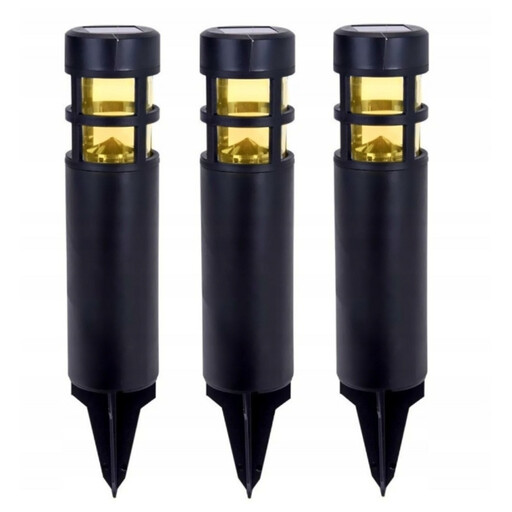
Why this product fits the profile: This set of three solar lights is ideal for smaller paths, flower beds or property boundaries when you need a simple, cable-free installation.
The number of lights is clearly stated. Before ordering, buyers should also check the product page for details on IP rating, battery and run time.
Three lights per set, automatic activation at dusk and wireless installation.
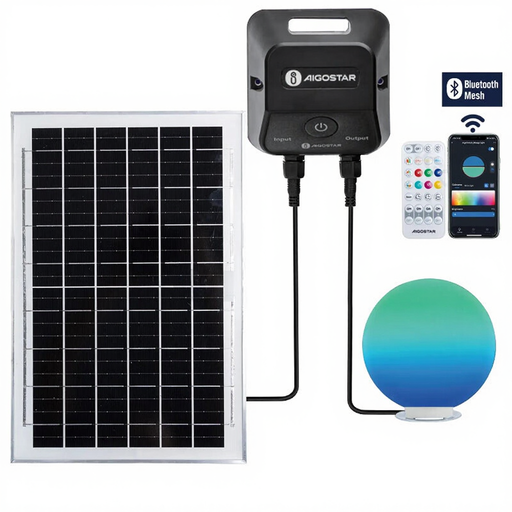
Why this product fits the profile: This larger outdoor light combines RGB and white light, Bluetooth Mesh and a higher IP rating for patios, paths or larger garden areas.
The IP65 rating is clearly stated. This reduces confusion between splash-water protection and a lower protection level; submersion should still be avoided.
8000 mAh lithium battery, 350 lumens, RGB+CCT from 2700 to 6500 Kelvin and Bluetooth Mesh control.
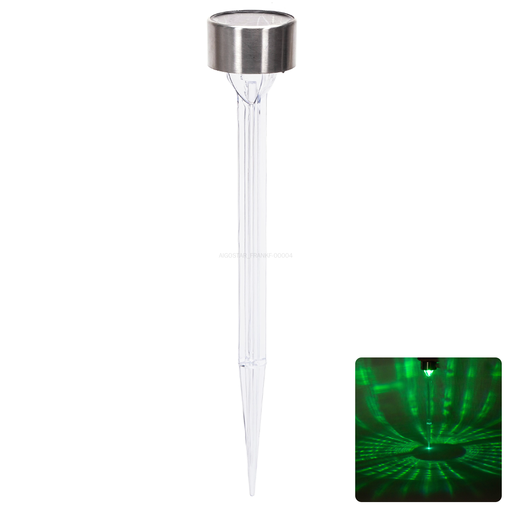
Why this product fits the profile: This RGB solar light is ideal for garden paths, lawns and flower beds when decorative lighting and easy positioning with a ground spike are the priority.
Battery, charging time, IP rating and operating temperature are all clearly specified. This makes it easier to match the light to the conditions in your own garden.
200 mAh Ni-MH battery, RGB light, charging time of around 4 to 6 hours and a stated run time of 8 to 12 hours.
We’ve put together a full, regularly updated list of products that meet these strict selection criteria and comply with all applicable EU safety regulations.
Before installing, observe the location for several hours. A spot with direct sunlight is more suitable for outdoor solar lights than a permanently shaded area. Don’t force the ground spike into hard soil. If necessary, loosen the earth first.
Position the light so that the panel isn’t covered by leaves or decorations. Clean the surface regularly with a soft, slightly damp cloth. Don’t use abrasive cleaning products. In freezing temperatures, follow the manufacturer’s instructions; many models are designed for a range of around -10 to 50 °C.
This depends on sunlight, the panel, the battery, brightness and temperature. Some small models claim 8 to 12 hours under suitable conditions. In winter or during prolonged cloud cover, the run time may be shorter.
Not every solar light is waterproof. IP44 and IP54 protect against splashing water, not against submersion. For more demanding locations, a light with IP65 may be more suitable. Even these shouldn’t be left standing in water permanently.
Solar garden lights charge their battery via the integrated panel and don’t need mains power during normal operation. Running costs can still arise from replacement batteries or replacing a light. So check the battery type, whether it’s replaceable, and the manufacturer’s specifications before buying.