
Lieferung heute & morgen

Qualitätsgarantie

Willkommens-Angebote freischalten: KOSTENLOSE Lieferung | Bis zu 80 % RABATT | Kostenlose 30-Tage-JoyPlus-Testphase
App herunterladen
Solar garden lights provide outdoor lighting without the need for a permanently installed power cable. The solar panel charges during the day, and the light switches on automatically when it gets dark, depending on the model. For homeowners and garden owners, this can make installation easier and avoid connecting to the mains. However, solar garden lights vary considerably in their colour temperature, IP rating, battery, materials and controls.
Claims such as “up to 8–12 hours” generally apply under suitable charging conditions. In shade, during short winter days or cloudy weather, or if the solar panel is dirty, the actual lighting time may be shorter. So check:
An outdoor solar light should have a clearly stated IP rating. IP44 means the casing is protected against solid objects larger than 1 millimetre and water splashes from different directions. However, this doesn’t mean the light can be left standing in water or submerged. If you’re placing it somewhere that gets heavy watering, becomes waterlogged or is exposed to the elements, pay particular attention to the manufacturer’s guidance.
Warm white solar lights at around 2700 Kelvin produce a warm, yellowish glow and are often a good fit for seating areas, flowerbeds and decorative spots. Cool white light at 6500 Kelvin looks noticeably whiter and can make paths stand out clearly. RGB solar lights change between different colours and are better suited to decoration than to providing consistent lighting for visibility.
Polycrystalline and amorphous silicon solar panels convert daylight into electrical energy. In practice, the location matters more than the panel type alone. The panel should face upwards and be clear of trees, walls and parts of buildings. Clean the surface regularly with a soft, slightly damp cloth.
The models selected here have stated charging times of 4 to 6 hours and lighting times of 8 to 12 hours, depending on conditions. These are manufacturer’s figures, not a guarantee for every season or location.
Many LED solar lights use NiMH batteries, while smart models may also use lithium batteries. Battery capacity affects how much energy can be stored. A built-in dusk sensor typically switches the light on in the dark and off in daylight. When choosing a light, also check whether the battery can be replaced and what disposal guidance applies.
Solar stake lights can be pushed into soft ground or a lawn. For hard, stony ground, solar ground lights or models with a suitable base plate may be a better choice. Check:
For steps, low walls or raised platforms, you could also consider solar outdoor step lights.

Why this product suits this profile: Standing 34 cm tall, with two LEDs and a black finish, this light is designed for paths, driveways or flowerbed edges. It can be positioned using its ground stake, with no cables needed.
The description specifies built-in solar charging, an AAA battery and automatic lighting. This makes the key operating details clear.
Two LEDs, ground-stake installation, a weight of 402 g and a built-in AAA battery.

Why this product suits this profile: The combination of stainless steel elements, cool white light and technical details on charging time, IP rating and temperature range makes it easier to compare the options objectively.
The IP44 rating is clearly stated. The product description also advises against submerging the light in water.
6500 K, NiMH battery, stated charging time of 4–6 hours and IP44 protection.
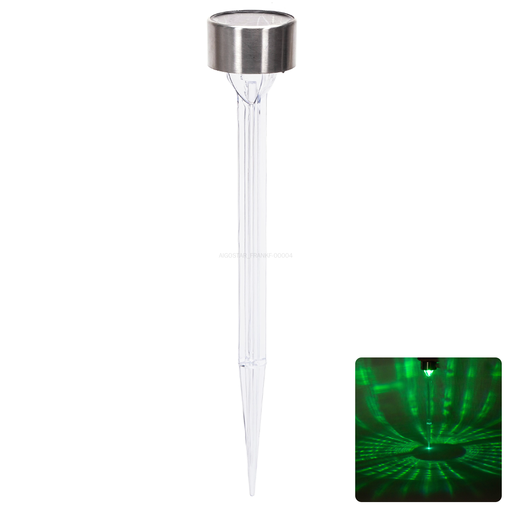
Why this product suits this profile: RGB lighting is a good choice if you want to add different colours to flowerbeds, paths or seasonal decorations.
The product details specify RGB lighting and an IP44 rating. This makes it clear that the light is primarily for decorative colour accents, rather than being described as powerful general lighting.
RGB colour-changing light, a height of 320 mm, NiMH battery and stated lighting time of 8–12 hours.
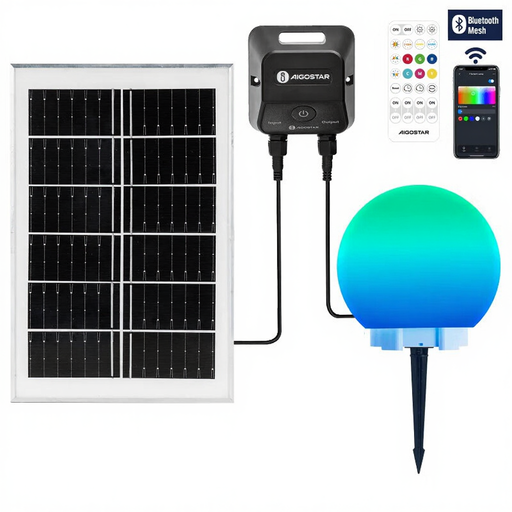
Why this product suits this profile: Bluetooth Mesh, app control and RGB+CCT let you group several lights and choose between warm white, cool white and coloured settings.
The product description specifies the control method, an adjustable colour temperature range of 2700–6500 K, and IP54/IP44 ratings. These details help when planning a connected lighting system.
Bluetooth Mesh connection, app control, RGB+CCT and a built-in lithium battery.
We’ve put together a complete, regularly updated list of products that meet these strict selection criteria and fully comply with the safety regulations in force in the EU.
Choose a spot that gets as much direct daylight as possible. The panel should face upwards and shouldn’t be shaded by trees, buildings or garden furniture. Make sure the ground stake is secure in soft soil, and that the casing isn’t left sitting in damp soil or water.
Lifespan depends on the LED module, battery, casing, weather conditions and care. Some product descriptions state an LED lifespan of up to 15,000 hours. This is a manufacturer’s technical figure and doesn’t mean the entire light will have the same overall lifespan. The battery may lose capacity sooner.
Solar garden lights aren’t powered by a direct electricity supply while they’re in use, so there’s no regular mains electricity connection for the lighting. However, there may be purchase costs, battery replacement costs and disposal costs. Before you buy, also check whether the battery can be replaced and what care the solar panel needs.