
Lieferung heute & morgen

Qualitätsgarantie

Willkommens-Angebote freischalten: KOSTENLOSE Lieferung | Bis zu 80 % RABATT | Kostenlose 30-Tage-JoyPlus-Testphase
App herunterladen
Solar lights are a versatile choice for outdoor spaces because they don’t need an additional power cable. During the day, the built-in battery charges via the solar panel. When it gets dark, the light switches on automatically, depending on the model. Options range from simple solar ground lights and solar path lights to RGB solar lights that change colour.
However, eye-catching designs and long stated run times don’t automatically mean you’ll get the right lighting. Three common buying misconceptions are worth bearing in mind:
First, check how much direct sunlight reaches the spot where you plan to place the light. Under trees, against a north-facing wall or behind a tall hedge, the battery may not charge as effectively. Solar lights with ground stakes are suited to soft ground, such as lawns, flower beds or loose garden soil. Don’t force the stake into very hard ground.
You can regularly clean an exposed solar panel with a soft, damp cloth. Abrasive cleaners may damage the surface. Manufacturer claims such as “charging time 4–6 hours” and “run time 8–12 hours” should be treated as guidelines for suitable conditions.
Colour temperature is measured in kelvin:
A high colour rendering index, for example Ra ≥70, describes how accurately colours appear under the light. For purely decorative solar garden lights, this is usually less important than the light colour and where you position the lights.
When choosing outdoor LED solar lights, check the IP rating, operating temperature range and battery type. IP44 is designed for sheltered outdoor areas and splashes, not for immersion in water. Details such as Ni-MH battery, capacity, charging time and automatic on/off functions can help you compare products objectively.
The materials are also worth considering. Some models are made from plastic with a stainless-steel effect, while others use stainless-steel components. A stainless-steel effect doesn’t mean the housing is made entirely from stainless steel. In frosty or very windy conditions, or if you move the lights frequently, position them securely and use them within the stated temperature range.
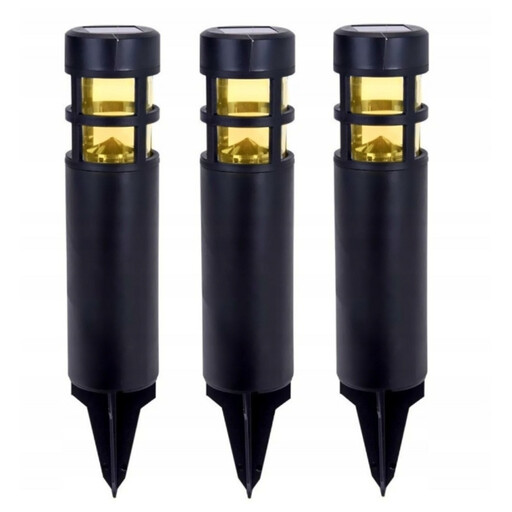
Why this product suits this use: This set of three lights is an easy way to get started with lighting flower beds, small paths or balcony areas. They’re cable-free and simply push into suitable soil.
The number of lights is clearly stated, making it easier to work out before you buy whether three points of light will be enough for the area.
Three lights, automatic switch-on at dusk and cordless use, according to the product description.
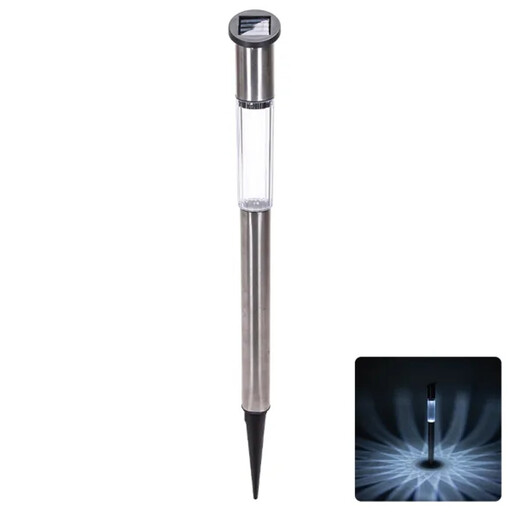
Why this product suits this use: The cool white light at 6500 K is a good match if you prefer paths and lawn edges to be clearly defined.
The product details specify the charging time, run time, IP44 rating and intended temperature range of -10 °C to 50 °C.
Polycrystalline solar panel, Ni-MH battery, 4–6 hours’ charging time and, according to the supplier, 8–12 hours of light in suitable conditions.
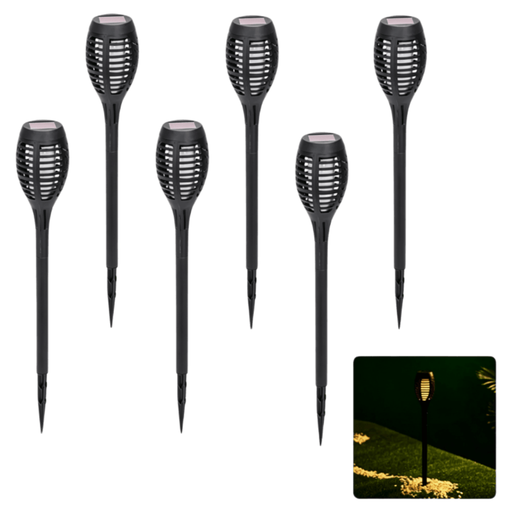
Why this product suits this use: This set of six is designed for larger flower beds, longer paths or patios where you want to create several points of light.
The warm white colour temperature of 2700 K and the stated IP44 rating are clearly specified, making it easier to plan where to use the lights.
Six lights, a flame effect, 2700 K, Ni-MH battery, plus a stated charging time of 4–6 hours and run time of 8–12 hours.
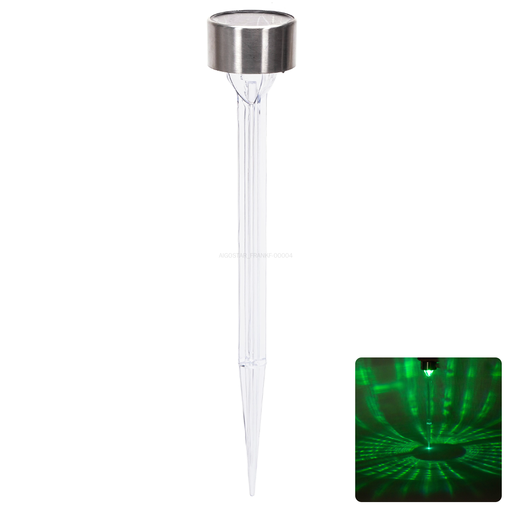
Why this product suits this use: RGB solar lights are a great way to add colour around lawn edges, in flower beds or to decorative outdoor areas.
The RGB function is clearly stated. It’s still important to bear in mind the technical limits, including the IP44 rating, charging time and temperature range.
Colour-changing RGB light, ground stake fitting, Ni-MH battery and, according to the product details, 8–12 hours of run time in suitable charging conditions.
We’ve put together a complete, regularly updated list of products that meet these strict selection criteria and fully comply with the safety regulations in force in the EU.
Many models state a charging time of around 4–6 hours in direct sunlight. In practice, cloud cover, shade, dirty panels and the time of year can all affect the actual charging time. Before using the lights for the first time, fully charge the battery as instructed in the product guide.
Their lifespan depends on the battery, LED, housing, location and how well they’re cared for. Several models state an LED lifespan of up to 15,000 hours. This doesn’t necessarily mean the battery or the entire light will last just as long. Don’t open or burn the battery; dispose of it along with the electronic components in accordance with local requirements.
Solar lights draw their power from the battery charged beforehand, so they don’t need a direct mains connection while in use. This makes them a suitable choice for garden lighting without a mains connection. However, the light output depends on the energy stored in the battery, which in turn depends on the charging conditions at the site.