
Lieferung heute & morgen

Qualitätsgarantie

Willkommens-Angebote freischalten: KOSTENLOSE Lieferung | Bis zu 80 % RABATT | Kostenlose 30-Tage-JoyPlus-Testphase
App herunterladen
Solar lights can illuminate paths, lawns, flower beds and patios without the need for power cables. However, not every budget model will deliver the right results. Location, IP rating, light colour and battery capacity often determine whether a light remains practical over time.
The term “weatherproof” is not very informative on its own. The IP rating is what matters. A light rated IP44 is protected against solid objects larger than 1 millimetre and splashing water from different directions. However, it is not suitable for immersion or for areas where water remains standing.
With solar ground lights and solar path lights, check that water can drain away freely from the chosen spot. Conditions beneath a porch roof are different from those in an exposed driveway.
Claims such as “up to 8–12 hours” generally apply under suitable conditions. Shade from trees or walls, or a poor angle, reduces charging capacity. Runtime may also be shorter in winter or after several overcast days.
Where possible, the solar panel should receive several hours of direct daylight. Keep the panel clean, as dust and pollen can affect how much energy it absorbs.
Decorative solar garden lights usually provide gentle accent or guidance lighting. A few small LEDs may not be enough to brightly illuminate steps, driveways or large seating areas. It’s worth distinguishing between decorative lighting, path marking and functional illumination.
Solar lights with ground spikes are often enough for flower beds. For paths, arrange them at regular intervals, keeping the spacing consistent. An RGB solar light is better suited to colourful accents than neutral illumination.

Why it suits this profile: At 34 cm tall, this light has two LEDs, an integrated solar panel and an AAA battery. It’s designed for simple markers along paths, flower beds or driveways. The ground spike makes it easy to install without a power connection.
Its design and positioning as an individual path light make it clear that it’s intended mainly for guidance lighting, rather than brightly illuminating large areas.
Two LEDs, measures 6.5 × 34 cm and installs wirelessly with a ground spike.
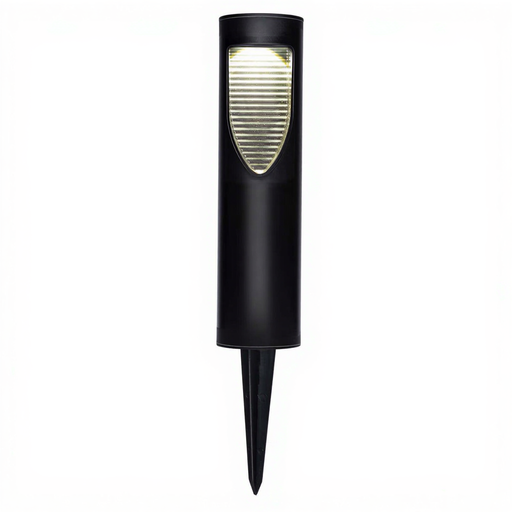
Why it suits this profile: The warm-white SMD LED, black plastic finish and 31 cm height make this light a good fit for understated garden and patio schemes.
The specifications clearly state the light colour, battery type and dimensions. This makes it easier to check whether the light suits your chosen location and existing garden lighting.
Warm-white SMD light and an integrated 600 mAh NiMH battery.
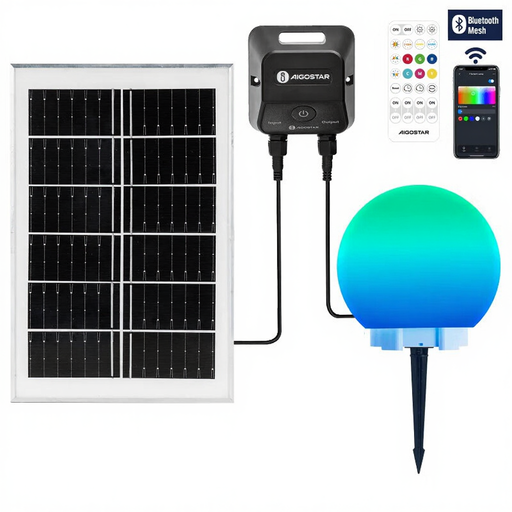
Why it suits this profile: RGB+CCT lighting from 2700–6500 Kelvin, Bluetooth Mesh and app control are designed for users who want to manage several lights or create different lighting moods.
The type of control and light colour temperature range are clearly stated. Before buying, check that the location offers enough sunlight for charging and that the Bluetooth connection will reach.
RGB+CCT lighting, app control, grouping and schedules; rated IP54/IP44.
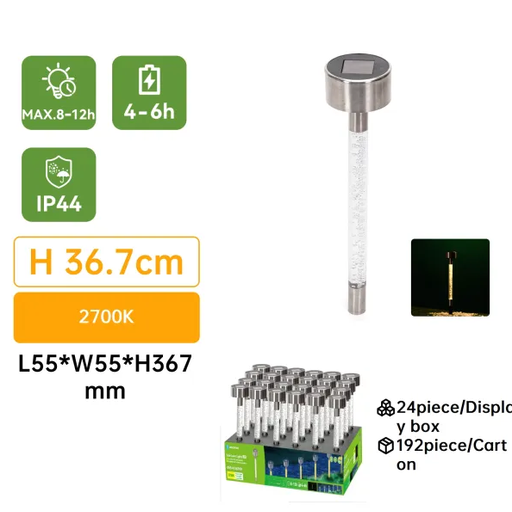
Why it suits this profile: Its Bubble Stick design, warm-white light at 2700 Kelvin and 36.7 cm height make it well suited to flower beds, lawns and decorative path markers.
The IP44 rating indicates protection against splashing water. Avoid placing the light in dips, puddles or spots that stay wet.
2700-Kelvin light, automatic on/off and a stated runtime of 8–12 hours under suitable charging conditions.
We’ve put together a complete, regularly updated selection of products that meet these strict selection criteria and fully comply with the safety regulations in force in the EU.
Runtime depends on sunlight, charging time, battery condition, temperature and the brightness setting. Manufacturer claims such as 8–12 hours should be treated as a guide for suitable conditions.
A spot with several hours of direct daylight is ideal. Charging may be less effective under trees, on north-facing sides or near tall walls. When lighting paths, space the lights so that closely placed ground spikes don’t create trip hazards.
While they’re on, solar garden lights use the energy stored in their battery. They don’t need an external power cable. Their actual performance depends on whether the panel receives enough sunlight at the chosen location and the battery is charged regularly.