
Lieferung heute & morgen

Qualitätsgarantie

Willkommens-Angebote freischalten: KOSTENLOSE Lieferung | Bis zu 80 % RABATT | Kostenlose 30-Tage-JoyPlus-Testphase
App herunterladen
Thoughtful garden lighting can transform balconies, patios, and gardens into atmospheric oases. However, installation can be complex and add to your electricity bill. Solar garden lights offer a practical and energy-efficient alternative. They require no wiring, use the sun's free energy, and switch on automatically at dusk.
This guide will help you find the right solar-powered lights for your outdoor space. We'll introduce various types and provide a selection of products for 2026, each tailored to different requirements.
To make an informed decision, it's important to consider a few technical aspects and functional features.
The intended location determines the most suitable type of light. Stake lights are well-suited for accentuating paths or flowerbeds. Outdoor solar string lights are flexible and ideal for decorating railings, trees, or pergolas. For wide-area patio lighting or solar lighting for balconies, wall lights or larger spotlights can also be a great choice. Consider in advance which areas you want to illuminate and the atmosphere you wish to create.
Since LED garden lighting is exposed to the elements year-round, weather resistance is a crucial criterion. Pay attention to the IP (Ingress Protection) rating.
The quality of the materials, often a combination of durable plastic (like ABS) and stainless metal, also contributes to longevity.
Modern solar lights offer more than just a single source of light. Many models feature colour-changing outdoor lighting (RGB), allowing you to switch between warm white light and vibrant colours at the touch of a button. Most devices come standard with an integrated dusk-to-dawn sensor, which automatically activates the light at nightfall and deactivates it at dawn, significantly enhancing convenience.
Here is a curated selection of products that cater to various needs for decorative outdoor lighting.

Why they stand out: These lights from Grundig combine functionality with flexibility. The set of five globe lights can be easily anchored in the ground using stakes and offers a choice between classic warm white light and a dynamic RGB colour-changing mode.
Benefits:
Who are they for? For users looking for straightforward and flexible lighting for garden paths, flowerbeds, or lawns, who want to switch between a subtle and a colourful atmosphere depending on the occasion.

Why they stand out: These decorative outdoor lights are made of flexible copper wire that can be easily wrapped around objects like branches, railings, or fences. The set includes two string lights, each with 80 LEDs and a high-performance solar panel that can provide a runtime of up to 14 hours.
Benefits:
Who are they for? Ideal for creative decorators looking for versatile and delicate outdoor solar string lights to create a magical atmosphere on a balcony, patio, or in the garden.
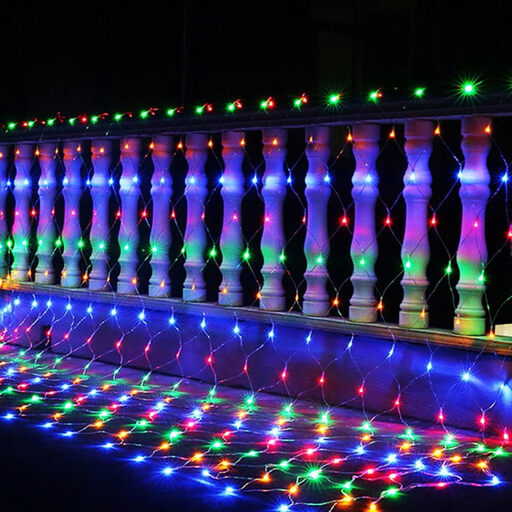
Why it stands out: This product is a mains-powered alternative for areas where a constant power supply is preferred or where sunlight is insufficient for solar operation. The 3x2 metre net light with 200 colourful LEDs is perfect for evenly illuminating large surfaces like hedges, walls, or fa?ades.
Benefits:
Who is it for? For users who need reliable, large-area lighting for events, holidays, or for the permanent decoration of fa?ades or large plants, and who have access to a protected outdoor power outlet.
If the products featured here don't exactly match what you're looking for, or if you're searching for specific designs, you can find more inspiration in our category.
? Explore our range of coloured lights here.
1. How long do solar garden lights stay on? The runtime depends on the amount of sunlight received during the day, the battery's capacity, and the solar panel's efficiency. Typically, on a full charge, they last between 6 and 8 hours. Models with larger panels and batteries can achieve runtimes of up to 14 hours.
2. Do solar lights work in winter or on cloudy days? Yes, solar lights still charge in diffuse light, but with lower efficiency. On cloudy days or during winter, charging performance is reduced, which leads to a shorter runtime at night. For optimal performance, the solar panel should be kept as free as possible from shade and debris.