
Lieferung heute & morgen

Qualitätsgarantie

Willkommens-Angebote freischalten: KOSTENLOSE Lieferung | Bis zu 80 % RABATT | Kostenlose 30-Tage-JoyPlus-Testphase
App herunterladen
Solar garden lights are a practical way to illuminate paths, flower beds, driveways or patios without installing a mains connection. They work simply: a solar panel charges a battery during the day, and the light usually switches on automatically when it gets dark. In practice, though, how well they work depends heavily on their location, IP rating and battery capacity.
A high wattage does not automatically mean the light will appear brighter. When choosing a solar-powered LED garden light, you should also consider lumens, beam angle and mounting height. Decorative solar lights with a low lumen output are suitable for flower beds or paths, but they generally won’t replace a powerful outdoor solar floodlight for a driveway.
The IP code consists of two digits. The first indicates protection against solid objects and dust, while the second indicates protection against water. An IP44 light is protected against splashing water, but it shouldn’t be left standing in puddles or exposed to a powerful jet of water for extended periods. For areas exposed to more demanding conditions, IP65 or IP67 may be more suitable, for example. Always follow the manufacturer’s specific installation instructions.
Claims such as ‘8 to 12 hours’ usually assume the solar panel receives several hours of direct sunlight. In winter, in shaded locations or when the panel surface is dirty, its charging performance may drop. A location under a tree, next to a high wall or beneath a roof will therefore often result in a shorter run time than expected.
Check the type of solar panel, the battery technology and the stated charging time. A separate solar panel can be an advantage with an outdoor solar floodlight, as you can position the light and panel independently. With compact lights that have an integrated panel, choosing the right mounting location is essential.
Things to check:
For solar-powered outdoor lighting, clean the panel regularly with a soft, damp cloth. Abrasive cleaners can damage its surface.
IP44 may be sufficient for a sheltered, decorative garden path light, provided it won’t be exposed to standing water. For freestanding lights in exposed locations, a higher IP rating is a sensible choice. IP65 typically means protection against dust and water jets, while IP67 also covers temporary immersion, under the conditions set out in the relevant standard.
An IP rating doesn’t automatically make a light resistant to frost, impact or incorrect installation. You should also consider cable connections, seals around the housing and the stability of the ground stake.
2700 to 3000 Kelvin produces warm white light, which is well suited to patios, seating areas and decorative settings. 5000 to 6500 Kelvin looks noticeably cooler and creates more contrast. This light colour may suit driveways or functional areas, but could look less subtle among flower beds.
An RGB solar light cycles through different colours and is mainly intended for decorative effects. For guidance or even illumination, white light is usually easier to judge. Also check whether you can adjust the brightness, colour temperature and lighting time.

Why this product suits these needs: This compact solar light with a ground stake is designed for paths, lawns and smaller flower beds, and works without a mains connection.
The product description specifies two LEDs, battery power and automatic activation, so you can see the essential features clearly before you buy.
34 cm tall, with two LEDs, an integrated solar panel and a weight of 402 g.
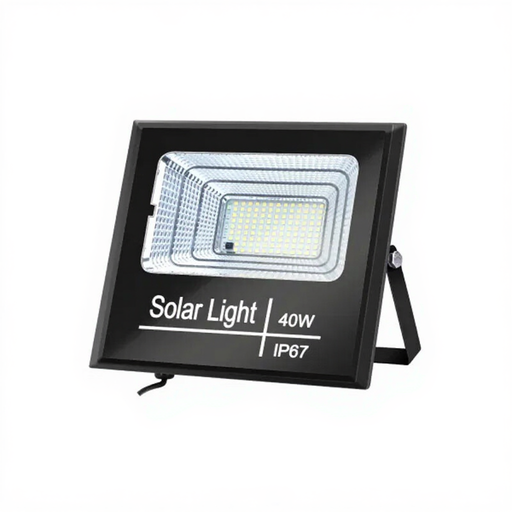
Why this product suits these needs: The separate solar panel gives you more flexibility when positioning it, while the aluminium and glass housing is designed for more demanding outdoor conditions.
The stated IP67 rating and separate panel design address two common weak points: exposure to unsuitable weather conditions and poor light positioning.
10,000 mAh battery, up to 12 hours of stated lighting time and a separate solar panel.
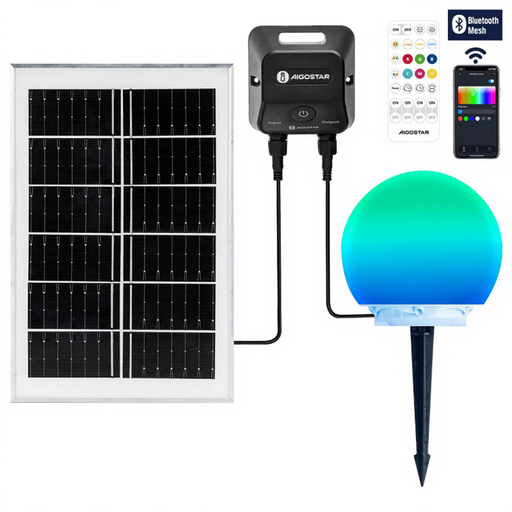
Why this product suits these needs: For patios, paths and larger garden areas, this recessed light offers RGB colours, adjustable white light and app control via Bluetooth Mesh.
The IP67 rating, separate panel and 4000 mAh battery give you specific points to consider for installation and operation, rather than relying on a general marketing claim.
RGB and CCT adjustment from 2700 to 6500 Kelvin, plus control of up to 200 lights according to the product details.
We’ve put together a complete, regularly updated list of products that meet these strict selection criteria and fully comply with the safety regulations in force in the EU.
Their lifespan depends on the LED module, housing, battery, weather conditions and care. Product specifications may, for example, state a nominal LED lifespan of up to 15,000 hours. The battery is a consumable part and may lose capacity after several charging cycles, depending on the model. Clean the solar panel regularly, and store the light as instructed if you won’t be using it for an extended period.
Choose a spot that receives as much direct sunlight as possible. Avoid shade from buildings, trees or screening. An outdoor solar ground light should be securely fitted in the ground and kept away from places where water collects. For a light with a ground stake, soft, firm soil is more suitable than heavily compacted earth or hard stone surfaces.
They don’t need mains electricity during normal use. However, you may incur costs for replacement batteries, damaged components or disposal at the end of the light’s life. If a model has a built-in battery, check whether spare parts and maintenance instructions are available before you buy.