
Lieferung heute & morgen

Qualitätsgarantie

Willkommens-Angebote freischalten: KOSTENLOSE Lieferung | Bis zu 80 % RABATT | Kostenlose 30-Tage-JoyPlus-Testphase
App herunterladen
Solar garden lights are ideal for outdoor areas without a mains electricity supply. They illuminate garden paths, lawn edges, flower beds and patios without the need to lay cables, and can usually be pushed straight into soft ground. However, a few common buying mistakes can lead to disappointment: a light may go out after just a few hours, rust sooner than expected or provide very little light in a shady spot.
Figures such as 4–6 hours’ charging time and 8–12 hours of light apply in suitable conditions. During autumn in the UK, in overcast weather or beneath trees, the amount of energy actually stored may be lower. Ideally, a solar light should therefore receive several hours of direct daylight. Make sure the solar panel isn’t permanently shaded by house walls, hedges or larger plants.
IP44 describes protection against solid objects above a certain size and against splashes of water from different directions. This rating does not make a light suitable for submersion. With IP44 solar lights, avoid waterlogged ground, flooding and areas where water collects. To help IP44 outdoor lights last longer, it’s also worth checking the housing, seals and solar panel regularly.
RGB solar lights, bubble designs and solar torch lights create colourful or flickering accents. However, an even white or warm white light may be more suitable for clearly marking the edge of a path. Before you buy, consider whether you mainly want ambience, visibility or a combination of the two.
When choosing outdoor LED solar lights, look beyond the light colour and check the information on power, colour rendering and light duration too. A higher wattage alone doesn’t tell you how bright a light will actually appear.
Solar ground lights and models with ground spikes can be positioned without electrical installation. The ground should be soft enough to avoid damaging the spike. For hard or compacted ground, a light with a base may be more practical. Check the overall height: a model measuring around 19 to 52 cm may be more or less visible depending on the flower bed, lawn or path edge.
A solar light set is a good choice if you want to space several lights evenly. Before you buy, make sure the number of lights is suitable for the length of your path. If they’re too far apart, you may end up with dark patches; if they’re too close together, you could spend more than necessary.
Many of the models mentioned here use an integrated NiMH battery. Its capacity affects how much energy it can store. Actual run time also depends on sunlight, panel orientation, temperature and the age of the battery.
Clean the solar panel regularly with a soft, slightly damp cloth. Abrasive cleaners can damage its surface. If you won’t be using the light for a long time, store it in a dry place and follow the manufacturer’s care instructions. At the end of their useful life, batteries and electronic components should not go in household rubbish. Take them to the appropriate recycling or take-back point instead.
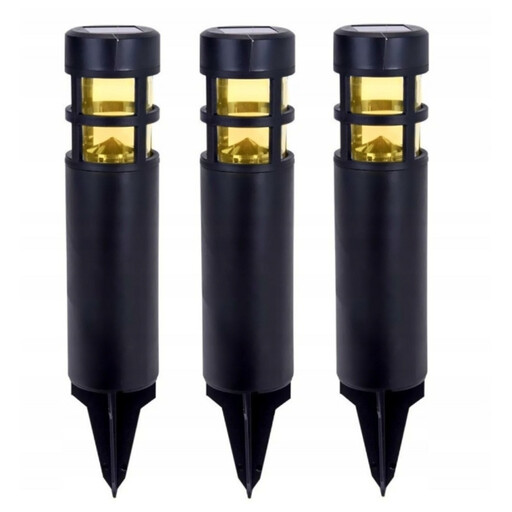
Why this product suits these needs: This set of three is an easy way to start lighting your garden without a mains connection. It can be used along short paths, flower bed edges or small lawns.
The product description states that the lights switch on automatically at dusk and recommends positioning them in direct sunlight. This makes the key requirements clear.
Three lights per set; automatic lighting in the dark; no mains installation needed.
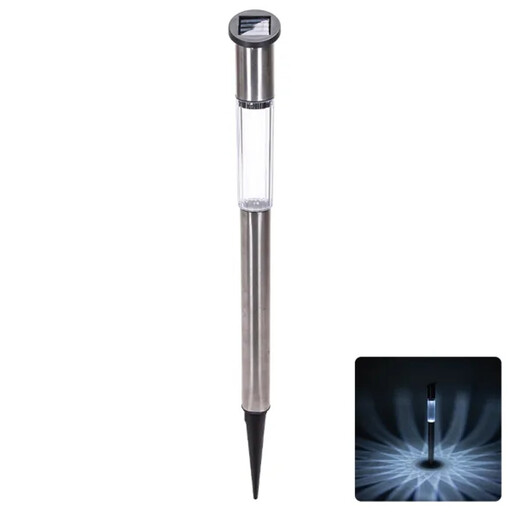
Why this product suits these needs: The stainless steel look, ground spike and cool white light make this a good fit for buyers who value clearly stated technical details and a subtle appearance.
The specifications state a charging time of 4–6 hours, a light duration of 8–12 hours, an IP44 rating and an operating temperature range of -10 °C to 50 °C. This makes it easier to assess the product’s limitations before you buy.
6500 K light; NiMH battery; polycrystalline silicon solar panel; IP44 protection and a stated LED lifespan of 15,000 hours.
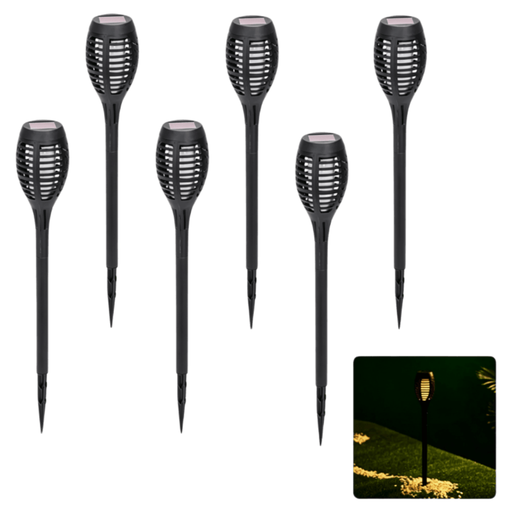
Why this product suits these needs: This six-piece set with a flame effect is suitable for longer paths, larger flower beds or patios where you want a consistent, warm glow.
The product details explicitly state the IP44 rating and clarify that the lights are not suitable for submersion. The 2700 K light colour is easy to distinguish from RGB or cool white options.
Six lights; warm white 2700 K light; stated charging time of 4–6 hours and light duration of 8–12 hours.
We’ve put together a complete, regularly updated list of products that meet these strict selection criteria and the safety regulations in force in the EU.
According to product information, many models need around 4–6 hours of direct sunlight. Actual charging performance depends on the weather, time of year, location and panel orientation. Before using a light for the first time, let it charge fully as instructed by the manufacturer.
Their lifespan depends on the housing, LED, battery, care and weather conditions. Several of the products mentioned are stated to have an LED lifespan of up to 15,000 hours. The battery is a consumable part and may lose performance sooner. Keeping the solar panel clean and unshaded helps ensure consistent use.
Solar lights get their energy from the integrated panel and don’t need to be connected to the mains when in use. This means there are no extra electricity costs during normal operation. However, you may need to budget for replacement batteries, damaged components or a replacement light after extended use.