
Lieferung heute & morgen

Qualitätsgarantie

Willkommens-Angebote freischalten: KOSTENLOSE Lieferung | Bis zu 80 % RABATT | Kostenlose 30-Tage-JoyPlus-Testphase
App herunterladen
By Joybuy Product Recommendation Officer, August 29, 2026
Solar lights promise a simple and cost-effective way to beautifully illuminate your garden, balcony, or patio—all without complex wiring or additional electricity costs. But the reality is often different: lights that only glow dimly after a few weeks, casings covered in rust, or batteries that can't even last a single summer night. These problems are often due to misleading product descriptions and low-quality components.
Before you make a decision, it's important to know the most common pitfalls. Many budget-friendly models cut corners on crucial components, leading to frustration and unnecessary expenses. These include:
This guide will help you avoid these pitfalls and identify the right parameters for your needs.
To get durable and functional off-grid garden lighting, you should carefully examine three technical specifications. These are the primary determinants of the performance and longevity of your new outdoor solar lights.
The IP rating (Ingress Protection) is an international standard that indicates how well an electrical device is protected against the ingress of foreign objects (first digit) and water (second digit). For outdoor use, this is an essential quality indicator.
The synergy between the solar panel, battery capacity, and LED efficiency determines the illumination time. Pay attention to the following details:
The material affects not only the appearance but also the resistance to weathering.
Instead of making a one-size-fits-all recommendation, we have selected products tailored to specific use cases.

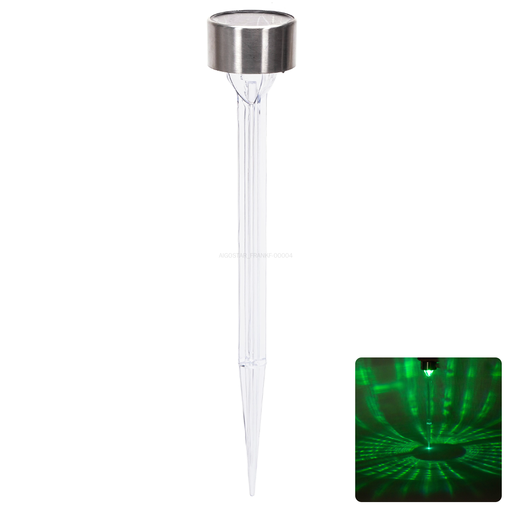
Why This Fits Their Persona: Ideal for users looking for functional and straightforward lighting for paths or flowerbeds without a large budget. The classic design blends discreetly into any garden.
The plastic housing with a stainless steel finish and the specified IP44 rating offer solid protection against weather and rust, which is not a given for many lights in this price range.
Easy, tool-free installation with the ground stake. The polycrystalline solar panel ensures reliable charging for up to 8–12 hours of illumination under suitable conditions.
Why This Fits Their Persona: Perfect for anyone who wants to create a special atmosphere with light. The RGB solar light function enables dynamic colour effects in flowerbeds, at parties, or along patio edges.
RGB lights require more energy. This model uses a polycrystalline solar panel, which allows for more efficient charging than standard panels, thus more reliably achieving the specified runtime.
Automatic colour-changing for atmospheric effects. The combination of a stainless steel look and IP44 protection ensures an attractive and durable decorative light.
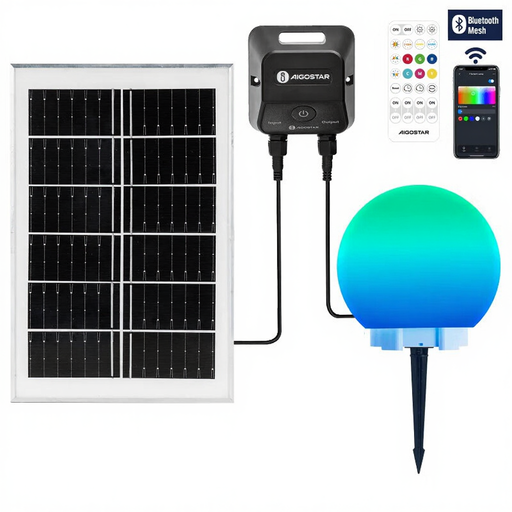
Why This Fits Their Persona: For users who want to intelligently control their garden lighting and integrate it into their smart home system. Full control over colour, brightness, and schedules directly from a smartphone.
This light bypasses the "one-note lighting" of simple solar lamps. Thanks to Bluetooth Mesh and app control, you can adapt the lighting to your actual needs and thus use the battery charge efficiently.
Seamless control of multiple lights as a group. Adjustable colour temperature (CCT) from warm white to cool white, plus a full RGB colour palette for maximum flexibility.
We have compiled a complete, up-to-date list of products that fully meet these strict selection criteria and UK safety regulations.
The lifespan of a solar light depends on two main components. The LEDs themselves often have a very long life of 15,000 hours or more. The battery is typically the component that loses performance first. For most models, you can expect the battery to last one to three years. On many higher-quality lights, the battery (often a standard NiMH type) can be easily replaced, which significantly extends the lifespan of the entire product.
Yes, but with limitations. The illumination time in winter is significantly shorter than in summer. Shorter days, a lower sun angle, and frequent cloud cover reduce the amount of energy the solar panel can absorb. To maximise performance, the lights should be placed in a location that receives as much direct sunlight as possible, even in winter. It is also helpful to regularly clear the solar panel of snow or dirt.
The IP rating indicates the degree of protection a housing provides against the ingress of foreign objects and water. The first digit describes protection against solid objects (e.g., dust), and the second describes protection against water. An outdoor LED solar light with IP44 is protected against solid foreign objects over 1 mm in diameter and against splashing water from all sides. This is sufficient protection for most garden applications, such as along paths or in flowerbeds.