
Lieferung heute & morgen

Qualitätsgarantie

Willkommens-Angebote freischalten: KOSTENLOSE Lieferung | Bis zu 80 % RABATT | Kostenlose 30-Tage-JoyPlus-Testphase
App herunterladen
Solar garden lights promise simple outdoor lighting without a mains connection: charge during the day, switch on automatically after dark. In practice, though, performance depends heavily on location, IP rating and battery capacity. If you focus only on design or the quoted burn time, you could buy a product that barely charges in the shade or isn’t suited to the intended area when it rains.
This guide shows which details really matter for solar garden lights and which models suit different types of use.
Ingress protection is denoted by the IP rating. IP44 protects against solid objects larger than 1 millimetre and splashing water. That’s fine for many solar ground lights, beds and lawns, but it doesn’t mean the light may stand in water permanently or be submerged.
For more exposed spots such as balconies, fences or terrace canopies, IP65 can make more sense. Even then, the specific installation and care instructions remain decisive.
Figures like 8 to 12 hours assume suitable charging conditions. In shade, during short winter days, with dirt build-up or overcast weather, the actual run time can be shorter. Avoid placing a solar light where trees, walls or your own garden lighting cover the solar panel.
RGB solar lights or flame effects are great for ambience and general orientation. For steps, driveways or heavily used paths, it’s even light distribution, adequate brightness and secure positioning that count. Small solar lights with a ground spike will mark out a path, but they don’t automatically replace functional lighting with higher light output.
Polycrystalline and amorphous silicon solar panels convert daylight into electrical energy. What matters less is the label on its own and more the positioning and available panel size. For reliable garden lighting without mains, the panel should ideally get several hours of direct light.
Before you buy, check:
For the models mentioned here, around 4–6 hours’ charging is quoted depending on version. A run time of roughly 8 to 12 hours applies under suitable conditions, according to the product information.
Solar lights often use rechargeable NiMH batteries. Capacity is listed in mAh and is a useful comparison, but it’s not the only factor: panel output, LED consumption and weather also affect runtime.
Also look out for:
Solar lights with a ground spike can be set into soft soil or lawn without cables. In hard or dry ground, don’t force the spike in, as the housing or joints could be damaged. Low-profile solar ground lights with a flat base are better suited to firm, level surfaces.
For choosing weather-resistant outdoor lighting: IP44 is splash protection; IP65 offers higher protection against water jets. Neither rating permits immersion.
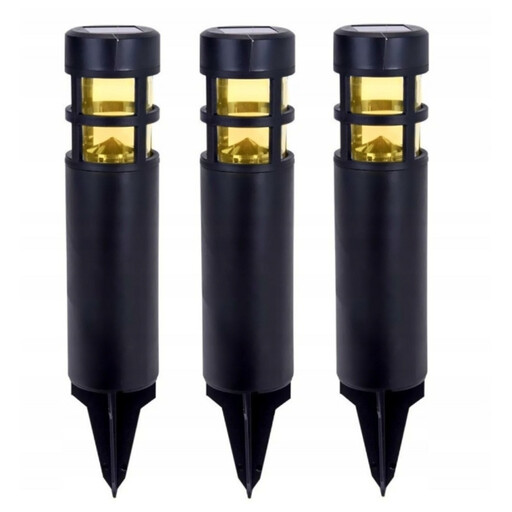
Why this product fits the profile: The 3-piece set makes it easy to create a simple starter setup for beds, lawn edges or short paths without having to assemble individual lights separately.
The quantity is clearly stated. Even so, before buying you should check IP rating, light colour and battery details on the product page, as the short description is limited.
Three lights per set, solar charging and automatic switch-on at dusk.

Why this product fits the profile: The stated 6500 K colour temperature and stainless-steel look suit users who value clearly defined technical specs and a clean, understated path-lighting design.
The IP44 rating is explicitly stated, helping avoid confusion with fully waterproof lights. The location should still be protected from standing water.
Polycrystalline solar panel, NiMH battery, 4–6 hours’ charging and, according to the product details, 8–12 hours of light under suitable conditions.
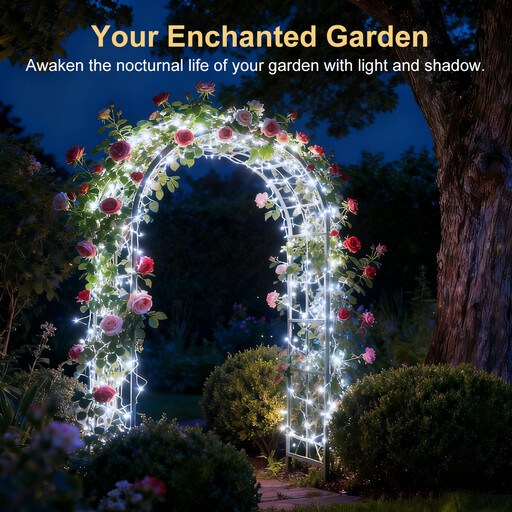
Why this product fits the profile: Two flexible solar string lights, each 8 metres long, suit balconies, railings, trees, fences and terraces when you want broader decorative coverage.
The IP65 rating is higher than many basic IP44 models. The solar panel must still be unobstructed; the light string itself shouldn’t sit in puddles permanently.
80 LEDs per 8-metre string, eight lighting modes, memory function and, according to the product details, 8–14 hours’ light with direct sunlight.
We’ve compiled a complete, continuously updated list of products that fully meet these strict selection criteria and comply with EU safety regulations.
Choose a spot with as much direct sunlight as possible. For lights with a ground spike, the ground should be soft enough while the light itself stands upright and stable. Before first use, it’s best to fully charge the unit according to the product instructions.
For maintenance, simple steps are usually enough:
Depending on model and panel type, the products mentioned here need about 4–6 hours under suitable conditions. According to the product information, solar string lights may require around 6–8 hours of direct sunlight. Shade and overcast weather extend charging time or reduce burn time.
That depends on the IP rating. IP44 models are splashproof and intended for normal outdoor areas, but must not be submerged. A solar light with IP65 is protected against water jets. In flooding, standing water or extreme weather, protect the light and follow the manufacturer’s instructions.
They don’t need a connection to the mains while operating, as the built-in battery charges during the day via the solar panel. This removes direct mains consumption in normal use. However, the battery is a consumable part and, depending on product, charge cycles and weather, can lose capacity over extended use.