
Lieferung heute & morgen

Qualitätsgarantie

Willkommens-Angebote freischalten: KOSTENLOSE Lieferung | Bis zu 80 % RABATT | Kostenlose 30-Tage-JoyPlus-Testphase
App herunterladen
Solar garden lights with ground stakes are a practical option for garden paths, flower beds, lawns and patios without a mains connection. However, decorative product photos and unclear technical details can often lead to the wrong choice. It’s not just the colour and design that matter: location, IP rating, light colour, battery capacity and realistic run time are all important.
IP44 solar lights are protected against solid objects larger than 1 millimetre and splashing water from various directions. However, this doesn’t mean they can be submerged in water or left out in heavy rain for long periods. For products with this rating, choose a location where water is unlikely to collect around the housing, battery or solar panel.
Claims such as 8 to 12 hours assume suitable charging conditions. In winter, on cloudy days, under trees or near house walls, the solar panel will receive less light. Automatic outdoor solar lighting is therefore most reliable when the panel gets several hours of direct sunlight during the day.
Depending on the model, RGB solar lights switch between several colours and are best suited to decorative accents. For softer lighting on a patio, by an entrance or around a seating area, warm white 2700K solar lights are often a better fit. Cool white 6500K solar lights look much more neutral to bluish and can make the edges of paths stand out more clearly. Choose a colour temperature that suits the location.
Solar lights with ground stakes can be pushed straight into soft earth or a lawn. Hard, compacted soil may damage the stake. For even lighting along a garden path, keep the spacing between lights consistent. In flower beds, make sure plants won’t end up shading the panel.
Before installation, check:
The IP44 rating is suitable for many covered or partly sheltered outdoor areas. It is not a substitute for a safe position in places exposed to heavy rain over long periods. According to the product details provided, the models featured here are designed to operate between -10 °C and 50 °C. Do not continue using damaged lights. Batteries and electronic components should be disposed of through the appropriate collection schemes after use.
LED solar garden lights don’t need a mains connection, and the models featured here switch on automatically when it gets dark. According to the product details, charging takes around 4 to 6 hours, depending on the model, while the stated lighting time is 8 to 12 hours in suitable conditions.
Low power consumption doesn’t automatically mean high brightness. Many decorative solar lights are designed for guidance or accent lighting, rather than lighting up large areas completely. For solar lighting in a flower bed, plan to use several lights at suitable intervals.
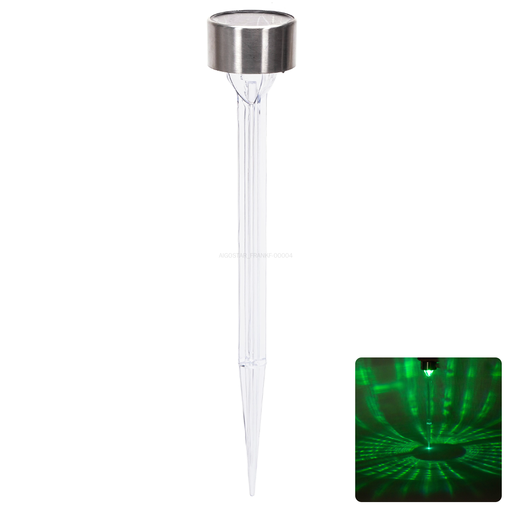
Why it’s a good fit: The RGB function adds colourful accents to paths, lawns or small flower beds. The ground stake makes it easy to install without cables or tools.
The product details clearly state a charging time of 4–6 hours, a run time of 8–12 hours and an IP44 rating, so you can easily compare the key specifications.
RGB lighting, automatic switching on and off, a 200 mAh Ni-MH battery and a stainless-steel finish.
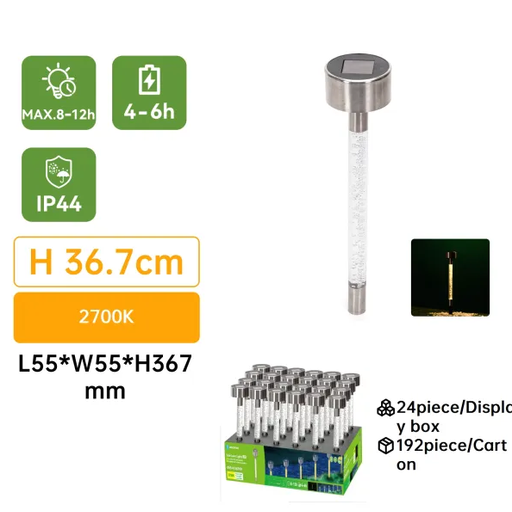
Why it’s a good fit: The fixed 2700K colour temperature creates an even, warm white glow for patios, lawns and flower beds.
The fixed light colour prevents unexpected colour changes. The IP44 rating and stated temperature range make it easy to understand where the light can be used.
Warm white 2700K, a stated run time of 8–12 hours, automatic dusk activation and a compact design.
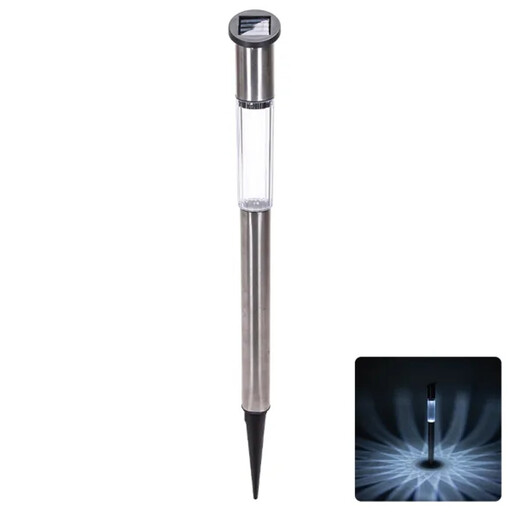
Why it’s a good fit: The cool white 6500K light is ideal if you want paths and boundaries to stand out more clearly.
The 6500K colour temperature is clearly stated, so you can check in advance whether the light suits your outdoor space.
Cool white 6500K, IP44, automatic switching, ground stake installation, and stated charging and run times of 4–6 and 8–12 hours respectively.
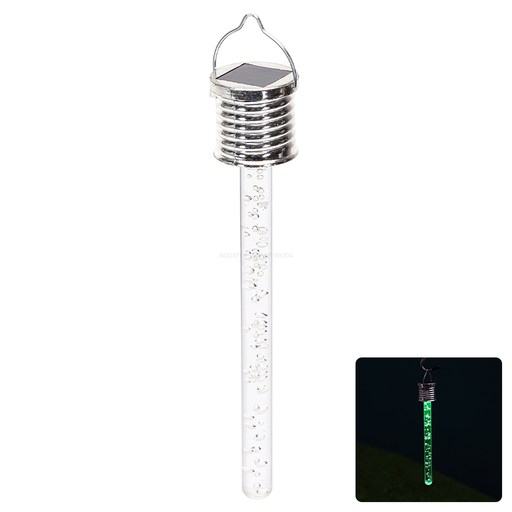
Why it’s a good fit: Its short, lightweight design suits small flower beds, planters and decorative groupings on a lawn or patio.
Its compact dimensions of 34 × 32 × 193 mm and weight of 40 g make it easier to plan where to place the light in smaller spaces.
RGB colour changing, IP44, Ni-MH battery, automatic dusk activation and a stated service life of up to 15,000 hours.
Clean the solar panel regularly with a soft, slightly damp cloth. Dust, pollen and bird droppings can reduce the amount of light it absorbs. Avoid abrasive cleaners, as they may damage the surface. Before winter, check the lights for cracks, loose connections and visible moisture. Do not open, modify or burn the battery.
We’ve put together a complete, regularly updated list of products that meet these strict selection criteria and fully comply with the safety regulations in force in the EU.
In suitable conditions, the models featured here take around 4 to 6 hours to charge, according to the product details. Before using them for the first time, position the panel in direct sunlight for a full day if possible.
The stated run time for the models mentioned is 8 to 12 hours. In practice, the season, cloud cover, shade, dirt on the panel and the condition of the battery all affect how long they stay lit.
They don’t need to be connected to the mains while operating. Instead, they store energy in the built-in battery during the day. There are no ongoing mains electricity costs, although the battery or the entire light may need replacing after extended use if the battery isn’t user-replaceable.