
Lieferung heute & morgen

Qualitätsgarantie

Willkommens-Angebote freischalten: KOSTENLOSE Lieferung | Bis zu 80 % RABATT | Kostenlose 30-Tage-JoyPlus-Testphase
App herunterladen
Choosing the right garden lights can be a challenge. The market offers a wealth of options, but not all of them live up to their promises. False claims about battery life, inadequate weather protection, or complicated smart home systems often lead to disappointment and unnecessary expense. As your Joybuy Product Recommendation Officer, I'll help you identify these pitfalls and make an informed decision that will illuminate your garden with both function and flair.
Before you invest, you should be aware of the typical flaws that often only become apparent after your purchase.
To avoid a bad purchase, focus on verifiable technical specifications. These three parameters are crucial for the longevity and functionality of your garden lighting.
The IP (Ingress Protection) rating is an internationally standardised code that indicates how well an electrical device is protected against the ingress of foreign objects (first digit) and water (second digit). For garden lamps that need to be waterproof, this is the most important value.
The choice of power supply directly impacts installation effort, performance, and reliability.
The quality of the light determines the atmosphere and the utility of your lighting.
Here are three product recommendations tailored to different needs that meet the quality criteria mentioned above.
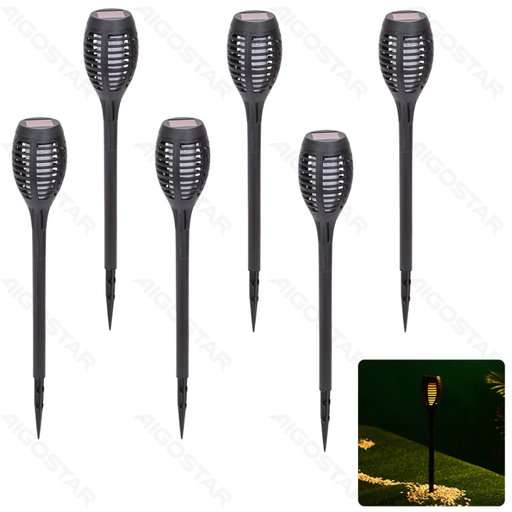
Why it's a great fit: Ideal for anyone looking to create an atmospheric setting without complex installation or high costs. The 6-pack is perfect for lining pathways or decoratively illuminating flowerbeds. The 2700K warm white light colour ensures a cosy ambience.
This product avoids the unrealistic runtime trap with clear specifications: 8–12 hours of light after 4–6 hours of charging in adequate sunlight. The IP44 rating is sufficient for its intended decorative purpose and is communicated transparently.
Effortless installation with ground spikes and an atmospheric flame effect with no electricity costs or wiring.
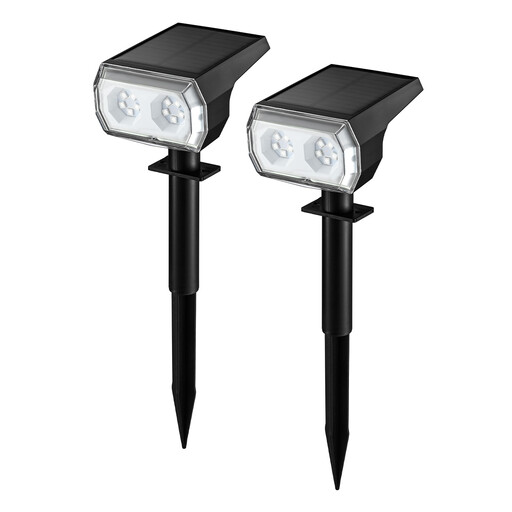
Why it's a great fit: For users who want to specifically highlight trees, shrubs, or objects in the garden—with a splash of colour. These solar spotlights offer the freedom of wireless installation and the creativity of RGB light.
These spotlights counter the low-brightness pitfall of solar lights by concentrating the light (spotlight effect). The RGB function provides a flexibility that simple solar path lights lack, enabling customised garden design.
Targeted, colourful accent lighting powered by solar energy. The spotlights can be flexibly aimed to highlight specific areas.
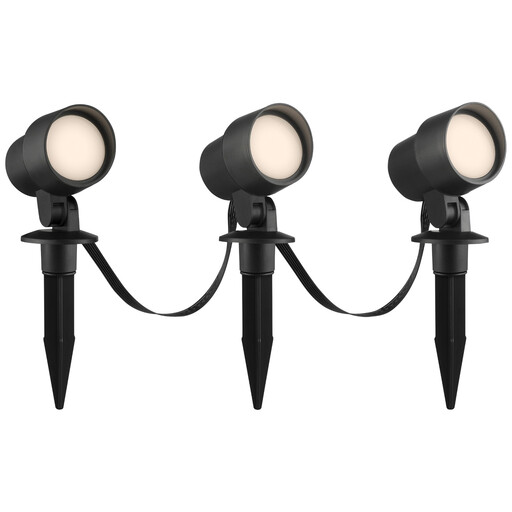
Why it's a great fit: For users who want maximum control and integration into their smart home. This wired set offers reliable performance and can be controlled via app or voice (through Tuya Smart). Ideal for sophisticated and dynamic lighting design.
This set bypasses the solar pitfalls with a stable power supply and avoids the incompatible systems trap by using the widespread Tuya platform. This ensures compatibility with Alexa and Google Assistant as well as reliable operation.
Full control over brightness (dimmable), colour (RGB), and colour temperature (CCT) for a precisely customisable garden atmosphere.
We have compiled a complete, up-to-date list of products that fully meet these strict selection criteria and relevant safety regulations.
The lifespan of a solar light is determined by two main components: the battery and the LED. The rechargeable battery is typically the first component to lose performance and has a lifespan of 1 to 3 years, depending on quality and use. The LED light source itself is far more durable and, as stated for the Aigostar light, can have a rated lifespan of 15,000 hours or more.
That depends on the system. For installations with 230V mains voltage, a qualified electrician is mandatory. However, many modern garden spotlight sets operate on safe low voltage (12V or 24V). These systems come with a transformer that plugs into a standard outdoor socket, and the cables can often be safely installed in the garden without expert knowledge. Always check the product specifications and the installation manual.
IP44 means the light is protected against splashing water from all directions. This is sufficient for lights mounted on a house wall, under a roof overhang, or in other relatively sheltered areas. For lights that stand freely in the garden and are exposed to heavy rain or lawn sprinklers, such as solar path lights or in-ground spotlights, a higher protection rating like IP65 (protection against water jets) or IP67 (protection against temporary immersion) is recommended for a long lifespan.