
Lieferung heute & morgen

Qualitätsgarantie

Willkommens-Angebote freischalten: KOSTENLOSE Lieferung | Bis zu 80 % RABATT | Kostenlose 30-Tage-JoyPlus-Testphase
App herunterladen
Solar garden lights are a practical way to illuminate paths, flower beds, driveways and patios without a mains connection. The solar panel charges the built-in battery during the day, while a dusk sensor automatically switches the light on as daylight fades. However, solar garden lights vary considerably in their design, colour temperature, charging conditions and intended use.
If you focus only on design or the number of LEDs, you may overlook important details. The following advice will help you avoid common buying mistakes and choose the right solar garden lighting.
A solar light can only store enough energy if its panel receives sufficient light during the day. Charging may be less effective beneath dense tree cover, against a house wall that is always in the shade, or on a north-facing side. You can also expect shorter lighting times on cloudy days and in winter.
Before you buy, check whether the intended location gets several hours of daylight. A decorative light with a low output may still be suitable for partial shade, while functional path lighting will need a better-exposed position.
“Suitable for outdoor use” does not automatically tell you how well a product is protected against rain, splashes or standing water. Look for a specific IP rating if one is provided in the product details. If no rating is listed, avoid placing the light somewhere it will be exposed to water for long periods.
The material matters too. Plastic is lightweight and easy to handle, while stability also depends on the ground stake, housing design and type of ground.
LED solar lights are primarily designed for visibility, accent lighting or subtle path lighting. How long they stay lit depends on sunlight, battery capacity, temperature and the age of the battery. A high number of LEDs alone does not guarantee even or far-reaching illumination.
For paths and driveways, make sure the lights are positioned at suitable intervals. For flower beds or decorative areas, a softer glow may be enough.
Warm-white solar lights usually give off a subtle, yellowish glow. They work well in seating areas, flower beds, along property boundaries and as decorative accents. Neutral-white light has a cleaner look and can make it easier to find your way along paths. Choose a light colour that suits your outdoor space and how you plan to use it.
Solar lights with ground stakes can be pushed into suitable soil without tools. They are less suitable for hard or heavily compacted ground. If necessary, loosen the soil carefully first and check that the stake is firmly in place.
Freestanding models need a flat or sufficiently stable surface. Cordless outdoor lighting is a good option for rented properties, as it does not require a fixed electrical installation. Even so, choose a position where the light will not become a trip hazard.
Check whether the battery is built in or replaceable, and which type is used. Some models use Ni-MH batteries, while others specify the battery type in the product description. Clean dust, leaves and pollen from the solar panel regularly, as dirt can reduce the amount of light it absorbs.
Follow the manufacturer’s instructions when disposing of the product. Batteries and rechargeable batteries must not go in household waste. If a device has a built-in battery, do not open the housing yourself if the manufacturer advises against it.
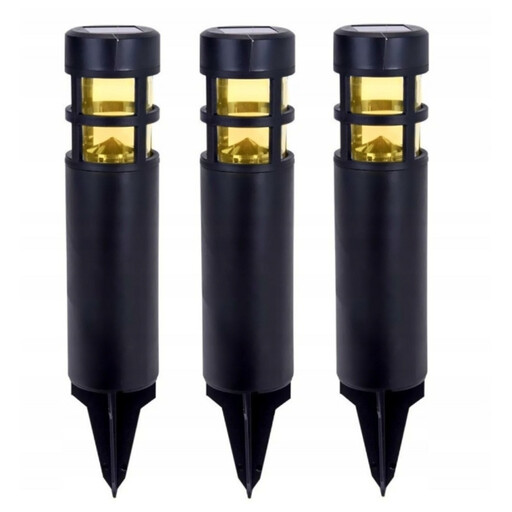
Why this product suits this profile: This set of three is ideal if you want to light several areas of your garden with a coordinated solution, such as a short path, a flower bed or a property boundary.
The product description specifically mentions automatic dusk activation and use on paths, in gardens and in flower beds. Even so, choose a sunny spot before positioning the lights.
Three lights in one set; cordless placement with automatic switching on and off.
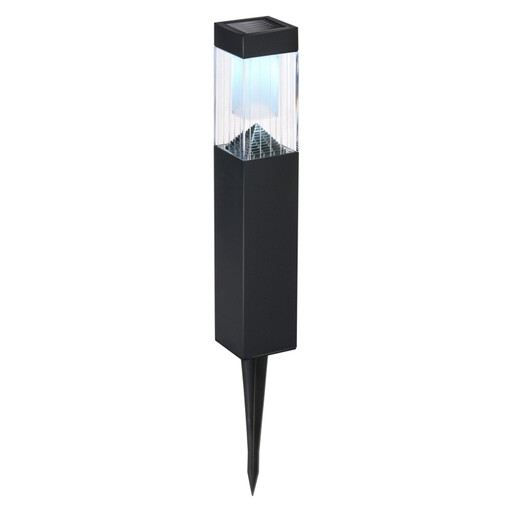
Why this product suits this profile: At 34 cm tall, this black light is a good fit for straight paths, driveways and entrances where a clear marker is needed.
The dimensions, weight of 402 g and ground stake are all clearly specified. This makes it easier to judge the installed height than with product details that omit measurements.
Two LEDs; automatic lighting; powered by an AAA battery, according to the product description.
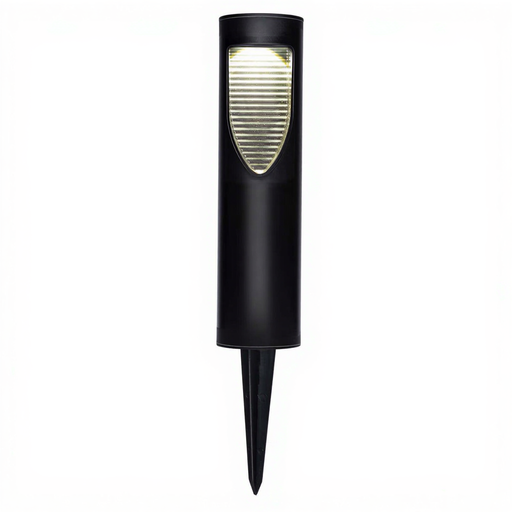
Why this product suits this profile: The warm-white SMD LED is ideal for decorative areas, flower-bed borders and paths where you want a subtle light colour.
The product details list the battery type, 600 mAh capacity and dimensions, and advise against leaving the light submerged for extended periods. This makes it easier to choose a suitable location.
Warm-white SMD LED; built-in rechargeable Ni-MH battery; 8 cm diameter and 31 cm height.
We’ve put together a complete, regularly updated list of products that meet these strict selection criteria and fully comply with the safety regulations in force in the EU.
The solar panel should receive as much direct daylight as possible and should not be obscured by plants, walls or garden furniture. Solar path lights should also be placed far enough from the walking route. For lights with ground stakes, firm ground is important to stop them tipping over in the wind or if they are accidentally knocked.
Their lifespan depends on the housing, battery, charging conditions and weather. If the light starts to dim, the cause may be a dirty panel, short winter days or an ageing battery. Clean the panel carefully and check the manufacturer’s guidance on replacing the battery. Do not open models with a built-in battery if the manufacturer expressly prohibits it.
Solar lights draw their power from the battery charged during the day, so they do not need to be connected to the mains. However, you may need to pay for replacement rechargeable batteries or standard batteries if they can be changed. When choosing a light, consider the battery type and replacement-part guidance alongside the colour of the light and the design.