
Lieferung heute & morgen

Qualitätsgarantie

Willkommens-Angebote freischalten: KOSTENLOSE Lieferung | Bis zu 80 % RABATT | Kostenlose 30-Tage-JoyPlus-Testphase
App herunterladen
Solar lights for the garden provide illumination without power cables or a mains socket. To make sure they work well in everyday use, garden owners should look beyond the design. Key factors include where the lights will be placed, their IP rating, battery capacity and the type of light they provide.
Budget solar garden lights often come with three common pitfalls:
A solar light’s performance depends on its panel, the amount of sunlight it receives and its battery. Manufacturers’ charging and lighting times are generally based on suitable conditions. Shade, short winter days and cloudy weather can reduce the operating time.
The products available include Ni-MH batteries with capacities of 40 mAh, 200 mAh or 600 mAh. A higher capacity can mean more stored energy, but it is only useful if the solar panel supplies enough power. Before installation, position the panel where it has a clear view of the sky and can face upwards.
Automatic controls are useful: several models switch on at dusk and off in daylight. If you’re choosing a solar light with a ground stake, also check that the ground is firm enough to keep it securely in place.
An IP rating indicates protection against solid objects and water. IP44 includes protection against splashing water from different directions. A light with this rating is suitable for many sheltered outdoor areas, but should not be left standing in puddles or submerged.
The VIVREAL solar string lights have an IP65 rating. This means they offer greater protection against dust and water jets than IP44 lights. However, neither the solar panel nor the LED units are designed to be submerged in water.
When choosing weatherproof solar lights, consider the material, cable routing and exact installation location as well as the IP rating. In winter, it may be worth storing away delicate lights or moving them to a more sheltered spot.
Warm white solar lights at around 2700 K create a cosy, yellow-toned glow and often work well on patios, balconies and around seating areas. Cool white light at 6500 K looks more neutral to bluish and can make paths or property boundaries easier to see.
Different styles suit different areas:
If you need consistent lighting to help you find your way, position the lights evenly. For purely decorative garden lighting, the colour, style and changing RGB modes may matter more than maximum brightness.
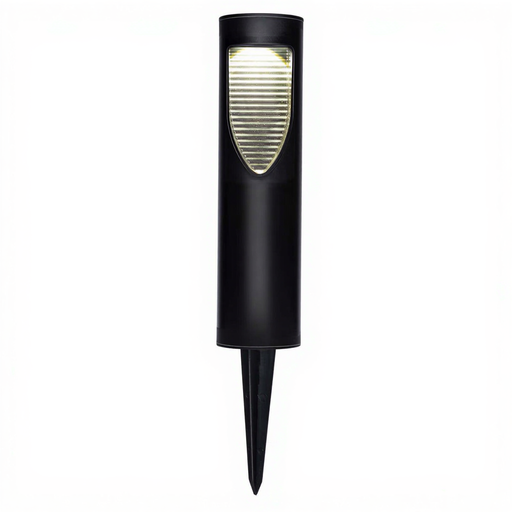
Why this product suits this type of user: This freestanding light is designed for simple path, flower-bed and patio lighting, with no wall mounting or professional electrical installation required.
The product details specify an integrated solar power supply, a 600 mAh Ni-MH battery and a recommendation to position the panel in direct sunlight.
Warm white SMD LED, black plastic casing and automatic on/off switching at dusk and in daylight.

Why this product suits this type of user: This solar path light combines a clear 6500 K light colour with a ground stake, making it suitable for paths, lawn edges and flower beds.
The IP44 rating is clearly stated, making it easier to assess how suitable the light is for outdoor use than a vague claim such as ‘weatherproof’.
Polycrystalline silicon panel, stated charging time of 4–6 hours and operating time of 8–12 hours in suitable conditions.
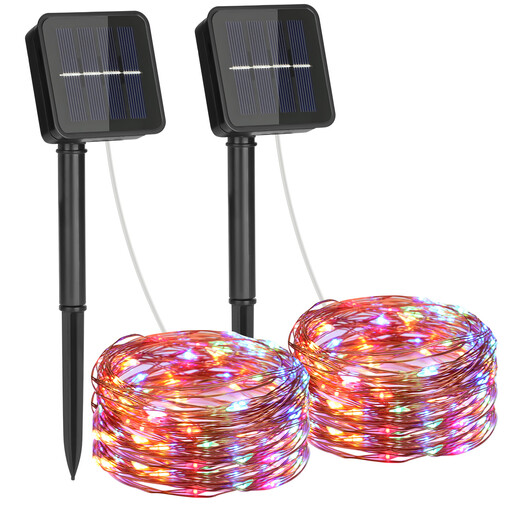
Why this product suits this type of user: Two solar string lights, each 12 metres long, are ideal for pergolas, balconies, railings, patios and seasonal decorations.
The product details specify 120 LEDs per string, eight lighting modes, a memory function and an IP65 rating. Lighting time will still depend on charging conditions.
Flexible copper wire, multicoloured LEDs, a stated charging time of 6–8 hours and lighting time of 8–14 hours.
Before installing or hanging the lights, give the solar panel several hours of direct sunlight. Choose a spot that won’t be shaded by house walls, plants or garden furniture. Solar ground lights and lights with ground stakes need firm ground that doesn’t stay wet.
Dust and pollen can reduce charging performance. A soft, slightly damp cloth is usually all you need to clean the panel. Avoid abrasive cleaners. Do not open batteries or electronic components, or dispose of them in household waste. Follow local guidance for electrical waste and batteries.
We’ve put together a complete, regularly updated list of products that meet these strict selection criteria and fully comply with the safety regulations in force in the EU.
It depends on the panel, battery, time of year and location. The products mentioned list charging times of around 4–8 hours. These figures assume plenty of direct sunlight.
There’s no simple answer. Check the stated IP rating and temperature range. IP44 and IP65 lights are designed for certain outdoor conditions, but must not be left submerged or used outside the manufacturer’s recommendations.
While they’re operating, solar lights draw power from their integrated battery, which charges from the panel during the day. They don’t need to be connected to the mains. Ongoing costs mainly come from replacing the battery or light when needed.