
Lieferung heute & morgen

Qualitätsgarantie

Willkommens-Angebote freischalten: KOSTENLOSE Lieferung | Bis zu 80 % RABATT | Kostenlose 30-Tage-JoyPlus-Testphase
App herunterladen
Solar garden lights don’t need a mains connection and can usually be installed without any electrical work. However, not every light is right for every outdoor space. If you focus only on the design or a high wattage, you may overlook important factors such as sunlight, the IP rating and battery capacity.
Claims such as ‘up to 12 hours’ are based on suitable charging conditions. In a UK garden, trees, house walls, cloud cover and shorter winter days can all reduce the amount of charge the lights receive. So, try to place solar lights somewhere that gets plenty of sun and isn’t shaded during the day. Actual run time also depends on the battery, light output and selected operating mode.
The IP rating describes how well a product is protected against the ingress of solid objects and water. IP44 protects against splashing water, but not immersion. IP65 protects against water jets, while IP67 covers temporary immersion under the specified conditions. Even with a higher IP rating, solar lights shouldn’t be left standing in puddles.
RGB solar lights add splashes of colour to flower beds, lawns or patios. But for steps, driveways and longer paths, clear, even illumination matters more than changing colours. So, consider whether you need decorative lighting or something that will genuinely help you find your way.
IP44 solar lights may be suitable for sheltered areas, such as beside a flower bed or under an eaves overhang. For exposed areas that are more likely to face harsh weather, outdoor solar spotlights with a higher IP rating are a sensible choice. Also check the operating temperature specified by the manufacturer. Some models in this selection are designed to work in temperatures from -10 °C to 50 °C.
The combination of battery type, capacity and solar panel has a greater impact on how the lights perform than a light output figure on its own. A product with a 4 to 6 hour charging time and a stated run time of 8 to 12 hours may be suitable for paths and flower beds, provided the panel gets enough sun. More powerful models use larger batteries, such as 10,000 mAh or 4,000 mAh, and may be designed for larger outdoor spaces.
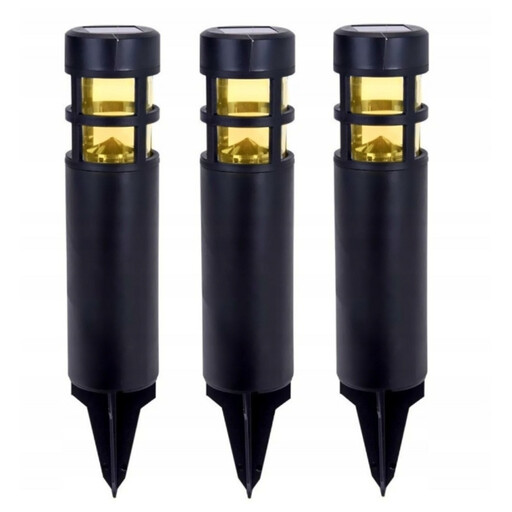
Why this product suits this need: This three-piece set is an easy way to get started with solar garden lighting. The lights can be placed along paths, around flower beds or across small lawns. According to the product description, they switch on automatically at dusk.
The manageable number of lights makes it easier to plan where they’ll go. You’ll still need to find a sunny spot before buying, as the lights aren’t designed to be recharged from the mains.
Three lights in one set, automatic activation at dusk and easy placement outdoors.
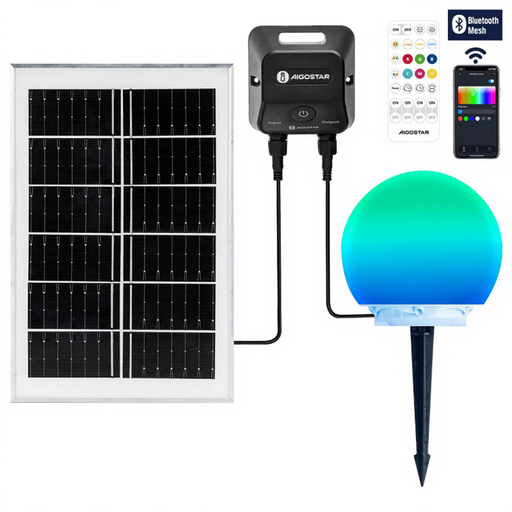
Why this product suits this need: This model is for anyone looking to combine adjustable light colours with a more permanent ground installation. According to the product description, it features Bluetooth Mesh, RGBCCT lighting from 2700 K to 6500 K, a 5 W solar panel and a 4,000 mAh battery.
The stated IP67 rating is relevant for an outdoor light set into the ground. Even so, choose an installation position where water won’t collect around it.
RGBCCT with adjustable white tones, Bluetooth Mesh control and a separate solar panel for more flexible positioning towards the sun.
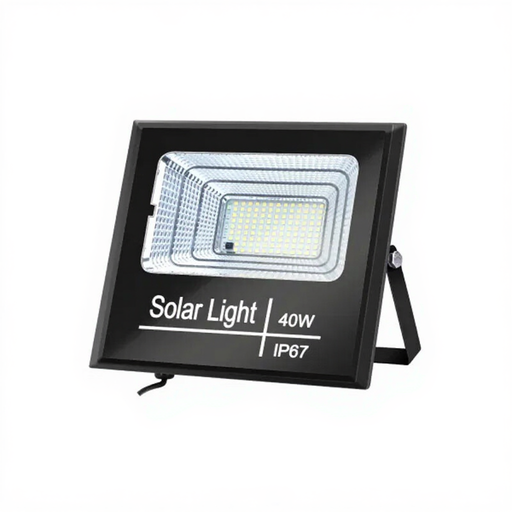
Why this product suits this need: This outdoor solar spotlight is designed for larger areas such as façades, driveways or expansive lawns. Its separate solar panel can be positioned towards the sun independently of the light itself.
The IP67 rating and separate panel help address common issues caused by bad weather and poor light conditions. However, the light should still be installed according to the instructions.
40 W version, 10,000 mAh battery, up to 12 hours of lighting according to the product description, plus aluminium and glass components.
We’ve put together a complete, regularly updated range of products that meet these strict selection criteria and the safety regulations in force across the EU.
Their lifespan depends on the LED, battery, casing, weather and maintenance. Some products state an LED lifespan of up to 15,000 hours. This doesn’t automatically mean the battery will last just as long. Charging cycles, frost and prolonged damp conditions can cause a battery to lose performance sooner.
While they’re operating, they draw power from the battery charged earlier. This means they don’t use electricity from your mains supply during normal operation. The amount of energy they actually generate depends on the available sunlight and the size of the solar panel.
Yes, they can stay outside in winter, provided their stated operating temperature and IP rating are suitable for the location. Shorter days and frequent cloud cover can reduce their run time. If you need reliable lighting for paths for safety reasons, check that the solar lights are bright enough and work reliably.