
Lieferung heute & morgen

Qualitätsgarantie

Willkommens-Angebote freischalten: KOSTENLOSE Lieferung | Bis zu 80 % RABATT | Kostenlose 30-Tage-JoyPlus-Testphase
App herunterladen
Solar lights for outdoor spaces and gardens don’t need a permanent connection to the mains, so you can place them wherever you like. However, not every model is right for every location. Unclear information about IP ratings, battery life or light output can often lead to the wrong purchase.
Three common pitfalls are particularly worth bearing in mind:
The IP rating is shown as an IP code. The first digit indicates protection against solid objects and dust, while the second indicates protection against water.
Also check that the product is rated for the temperatures it will be exposed to. A solar light with a ground stake should sit firmly in the soil without putting unnecessary strain on the housing or solar panel.
Manufacturer claims such as ‘up to 8–12 hours’ assume suitable charging conditions. The key factors are battery type, capacity, charging time and the amount of sunlight each day. A shaded spot under trees or beside a tall wall can significantly reduce performance.
Look out for the following information:
A solar path light should do more than look good in your garden. For paths, having enough lights, spacing them sensibly and securing them firmly in the ground are more important than choosing a particularly striking light colour.
A warm-white solar light of around 2700 K creates a subtle effect and works well on patios, beside seating areas, in flower beds and as decorative outdoor lighting. RGB solar lights offer changing colours for parties, seasonal decorations or accent lighting. For clear visibility along paths, a steady white light may be more practical.
Different styles are available to suit your needs:
The models below vary in light colour, IP rating, controls and design. What matters isn’t a general promise of quality, but whether the product is suited to the place you plan to use it.
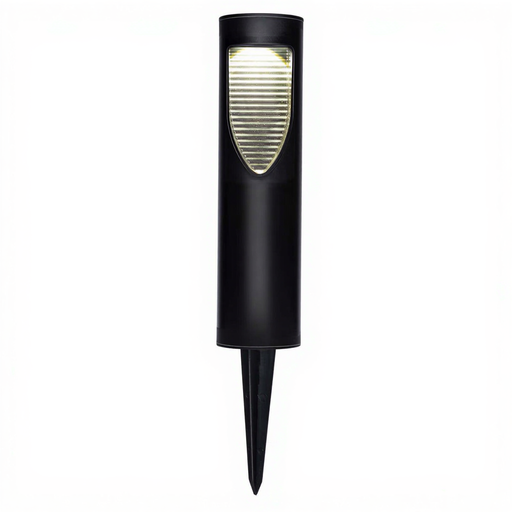
Why this product suits this profile: This compact solar garden light uses warm-white SMD LED lighting and is designed for simple applications along paths, in flower beds or on small lawns. It needs no wall mounting and switches on automatically when it gets dark.
The specifications state the battery type, capacity and design. This makes it easier to compare the light realistically with decorative alternatives, rather than focusing only on a vague run-time claim.
Built-in 600 mAh Ni-MH battery, warm-white SMD LED lighting and freestanding installation, with no professional electrical work needed.

Why this product suits this profile: These solar string lights are designed for patios, pergolas, fences and outdoor spaces for celebrations. Their length and number of LEDs make them well suited to larger decorative displays.
The IP65 rating is clearly stated. Even so, the string lights shouldn’t be left underwater for long periods, and the solar panel needs to be installed in as sunny a spot as possible.
10 metres of string lights with 160 LEDs, warm-white light, eight lighting modes and a stated maximum battery life of up to 12 hours.
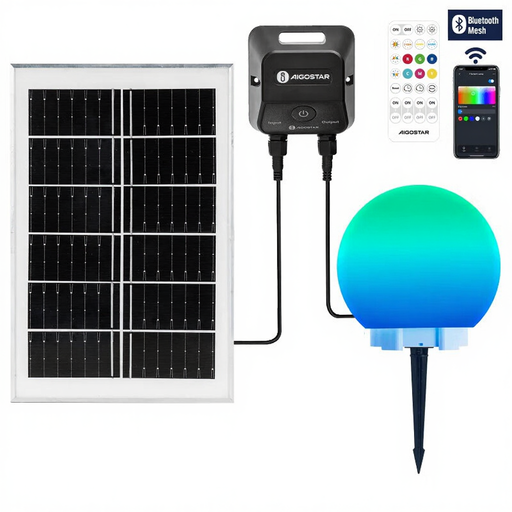
Why this product suits this profile: This controllable RGB+CCT option is designed for people who want to group several lights, set schedules or switch between warm white, cool white and coloured light.
The product description specifies app control, Bluetooth Mesh and IP54/IP44 ratings. This makes it easier to understand both the control options and the limits of its weather resistance.
RGB+CCT from 2700–6500 K, the ability to group several lights, and app-based control of brightness and schedules via the AigoSmart app.
We’ve put together a complete, regularly updated list of products that meet these strict selection criteria and fully comply with the safety regulations in force across the EU.
Choose a spot that gets as much direct sunlight as possible. The panel shouldn’t be shaded by leaves, walls or parts of a building. If you’re installing a solar ground light, make sure it isn’t placed in a dip that stays wet.
Before using the light for the first time, charge the battery as instructed in the product guide. Clean the panel regularly with a soft, slightly damp cloth. Harsh cleaning products can damage plastic surfaces or seals. Clear away leaves and snow if they’re covering the charging surface.
If frost is forecast or the lights won’t be used for an extended period, storing them in a sheltered place may be a good idea, provided the manufacturer recommends it. At the end of their useful life, batteries and electronic components should be disposed of through the appropriate take-back and recycling schemes.
Run time depends on sunlight, charging time, battery capacity, temperature and the brightness setting. The product claim ‘up to’ refers to a maximum under suitable conditions. Run time may be shorter in winter or on heavily overcast days.
It depends on the IP rating shown. IP44 protects against splashes, IP54 offers extra protection against dust, and IP65 is dust-tight and protected against water jets. None of these ratings automatically means the light can be submerged for long periods.
They don’t need to be connected to the mains while in use. The solar panel charges the built-in battery during the day. Ongoing costs mainly come from replacement batteries and replacing damaged or worn components.