
Lieferung heute & morgen

Qualitätsgarantie

Willkommens-Angebote freischalten: KOSTENLOSE Lieferung | Bis zu 80 % RABATT | Kostenlose 30-Tage-JoyPlus-Testphase
App herunterladen
Solar garden lights promise a simple, cost-effective, and eco-friendly way to illuminate paths, create accents, or enhance security. But the reality is often different: lights that fail after the first rain, fade after just a few hours, or have plastic that becomes brittle after one summer. As your Joybuy Product Recommendation Officer, I'll help you recognise the typical pitfalls and make an informed choice.
The market for solar garden lights is vast, but not every product delivers on its promises. Pay special attention to these three common problems to avoid disappointment:
To avoid a bad purchase, you should rely on verifiable technical data, not marketing promises. These three criteria are crucial for the longevity and function of your outdoor solar lamps.
The IP (Ingress Protection) rating indicates how well a housing is protected against the intrusion of foreign objects and water. For outdoor use, the following values are relevant:
The illumination time depends directly on the stored energy. Battery capacity is measured in milliampere-hours (mAh). While simple decorative solar garden lights often manage with batteries under 600 mAh, brighter solar floodlights with motion sensors or long outdoor solar string lights require capacities of 1200 mAh, 2400 mAh, or more to function reliably.
The solar panel is just as important:
Define the exact purpose before you buy. Do you need functional lighting for security or atmospheric decoration?
Here are some product recommendations tailored to specific user profiles that take the above criteria into account.
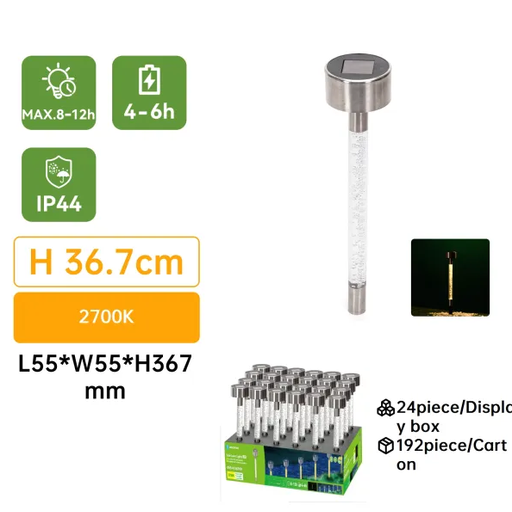
Why This Fits Their Persona: Ideal for users who want to create atmospheric accent lighting for flowerbeds, balcony boxes, or small paths on a tight budget. The installation is incredibly simple and requires no technical knowledge.
The light is designed for decorative purposes, which keeps brightness expectations realistic. The specified IP44 rating is sufficient for placement in a flowerbed, as long as it is not placed in standing water.
Creates a warm white light (2700K) for a cosy atmosphere. Installation via the ground stake is straightforward and takes only seconds.
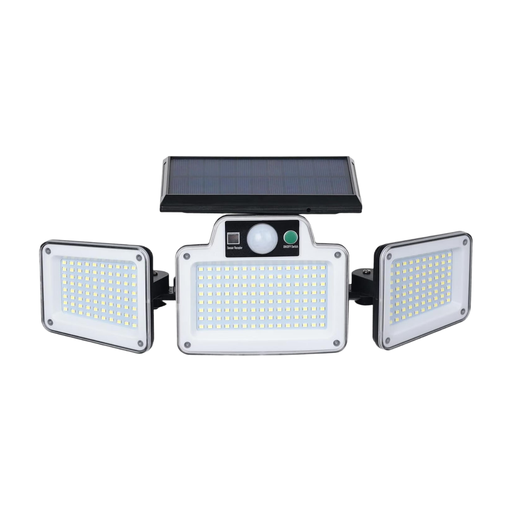
Why This Fits Their Persona: Perfect for homeowners who want to reliably illuminate driveways, garages, or dark corners of the garden. The combination of a motion sensor, high brightness, and flexible positioning primarily serves security purposes.
The separate solar panel with a long cable allows for optimal alignment with the sun, regardless of where the light is mounted. This solves the problem of insufficient charging. The IP65 certification and the 2400mAh battery address the weaknesses of weather resistance and illumination time.
Three adjustable light heads for wide and targeted illumination. Three operating modes (including sensor-only mode, continuous light) can be set via remote control.
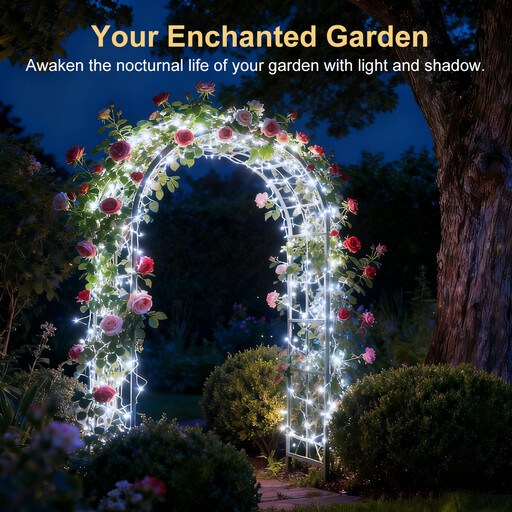
Why This Fits Their Persona: For anyone who wants to creatively stage their patio, balcony, or trees and shrubs for parties or cosy evenings. The flexible wire allows for countless decoration possibilities.
The flexible yet sturdy copper wire is more durable than constructions made of hard plastic. With an IP65 rating, the string light is well protected against rain. The specified illumination time of 8–14 hours is designed for a long summer night.
Eight different lighting modes (from steady to flashing) with a memory function. The set includes two separate 8-meter string lights for flexible application possibilities.
We have compiled a complete, up-to-date list of products that fully meet these strict selection criteria and UK safety regulations.
The lifespan depends on the quality of the components. The LEDs themselves often have a specified lifespan of 15,000 hours or more. The critical component is the battery. NiMH batteries typically last 1-3 years before their capacity noticeably decreases. On many models, the battery (often a standard AA or AAA size) can be easily replaced, which significantly extends the life of the light.
Yes, but with limitations. Modern solar panels (especially monocrystalline ones) can charge even in diffuse light, but much more slowly than in direct sunlight. In winter, the days are shorter and the sun is lower in the sky. This means the illumination time per night can be greatly reduced. Expect only a few hours of light from November to February.