
Lieferung heute & morgen

Qualitätsgarantie

Willkommens-Angebote freischalten: KOSTENLOSE Lieferung | Bis zu 80 % RABATT | Kostenlose 30-Tage-JoyPlus-Testphase
App herunterladen
Solar garden lights offer a wire-free way to illuminate outdoor spaces automatically. However, not every budget model delivers lasting results. Common problems include choosing a poor location, selecting an insufficient IP rating or relying on unrealistic claims about how long the lights will stay on.
If you’re planning to buy solar lights for your garden, don’t focus solely on their design and price. The technical specifications, how you intend to use them and the light conditions at the installation site all matter.
Claims such as ‘up to 10 or 12 hours’ usually assume suitable charging conditions. In winter in the UK, on cloudy days or in a shaded spot, the actual run time may be shorter. A dirty solar panel can also reduce the amount of energy generated.
So check:
‘Suitable for outdoor use’ isn’t a precise technical specification. The IP rating describes how well an enclosure is protected against solid objects and water. IP44 protects against solid objects 1 millimetre or larger and splashing water. IP65 offers additional protection against dust and water jets. IP67 indicates a dust-tight enclosure that is protected against temporary immersion under the relevant test conditions.
However, the IP rating is no substitute for a suitable location. Electrical components shouldn’t be left standing in puddles unless they’re specifically designed for this.
Many decorative garden lights create a soft accent, but won’t illuminate an entire path. For visibility and safety, placement, light distribution and brightness matter more than eye-catching design.
Warm white solar lights with a colour temperature of around 2,700 to 3,000 Kelvin produce a warm, yellowish glow. Daylight white looks more neutral and can make paths stand out more clearly. If you’re considering RGB solar lights, check whether they offer only preset colour changes or also app control, dimming and scheduling.
Having several modes doesn’t automatically make a light more useful. Some models offer only a steady light and various flashing effects. For relaxed patio lighting, a steady light is often more practical.
Always compare charging time and run time together. A short charging time may only be achievable in ideal sunshine. With models that have a separate panel, you can position the panel more easily to catch the sun.
Also check:
Solar garden lights with ground spikes need loose or prepared soil. In very hard ground, don’t force the spike in, as this could damage the housing or connection. For patios and balconies, models with a base or screw fixing are more practical.
Check the material specification carefully if you’re looking for a metallic finish. A silver-coloured plastic light may look like stainless steel, but that doesn’t mean it’s made from it. The housing material, dimensions and IP rating are therefore key considerations when choosing a light.
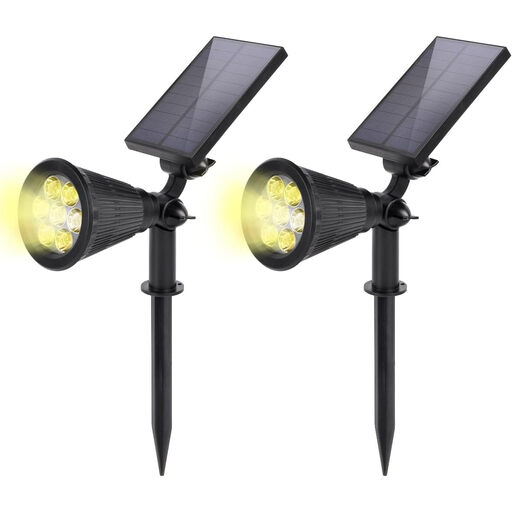
Why this product suits this need: These two warm white lights with ground spikes are suitable for paths, lawns and smaller courtyards. The light head can be adjusted by 90 degrees and the solar panel by 180 degrees. Wall mounting is also an option.
The adjustable components make it easier to direct the light towards the sun and the area you want to illuminate. Automatic operation switches the lights on at night and off during the day.
Two brightness modes, wireless installation and an ABS housing described as weather-resistant by the product listing.
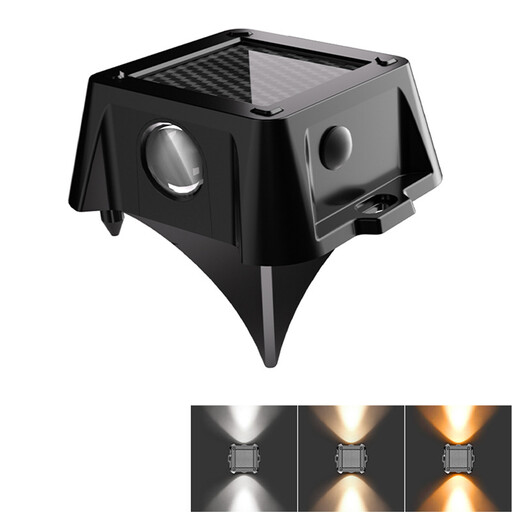
Why this product suits this need: The double-sided LED design is intended for paths, steps, patios and driveways. Three light colours let you tailor the lighting to your outdoor space.
The stated IP67 rating is more precise than a general description such as ‘weather-resistant’. Charging time and run time are listed as 4 to 5 hours and up to 10 hours respectively.
Double-sided light, two mounting options and a robust construction according to the product listing.
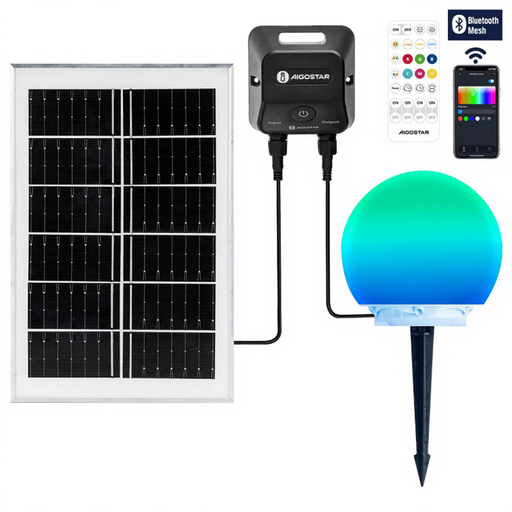
Why this product suits this need: This recessed light is for anyone looking to combine RGB colours, warm to cool white light and Bluetooth Mesh control. The separate solar panel gives you more flexibility when choosing where to position it.
App control offers more than simple flashing modes. The IP67 rating and separate panel make it easier to meet outdoor installation and charging requirements.
RGB+CCT lighting, Bluetooth Mesh connectivity and a 4,000 mAh lithium battery according to the product listing.
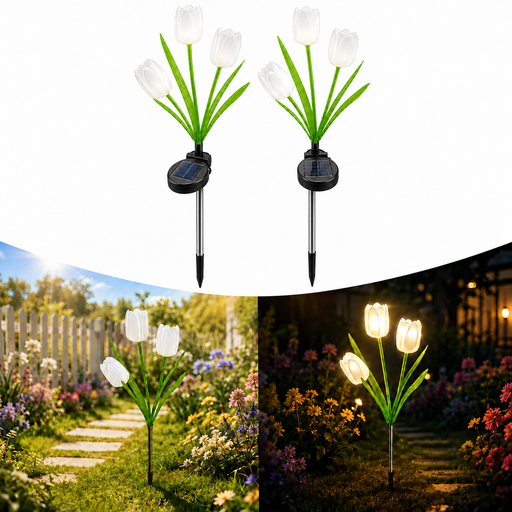
Why this product suits this need: The tulip design adds a decorative touch to flower beds, paths and patios. The focus is more on warm LED light and automatic dusk-to-dawn operation than on illuminating a wide area.
The stated IP65 rating gives you a clearer indication of suitability for many outdoor spaces than a general marketing claim. The lights need neither cables nor an external power supply.
Two lights in the set, an IP65 rating and a run time of around 6 to 12 hours under suitable charging conditions, according to the product listing.
We’ve put together a complete, regularly updated list of products that meet these strict selection criteria and fully comply with the safety regulations in force in the EU.
Fixed 220-volt lights have different installation requirements from low-voltage solar lights. These products should be installed according to the manufacturer’s instructions and, where necessary, by a qualified electrician.
Run time depends on sunlight, battery capacity, lighting mode and temperature. Product claims of around 6 to 12 hours usually assume a fully charged battery and suitable conditions. Lights may stay on for less time in winter or in shaded locations.
Many models are designed for outdoor use. However, you should check the stated IP rating, the permitted temperature range and whether the light is protected against standing water. During prolonged frosts, follow the manufacturer’s instructions and don’t open or modify the batteries yourself.
Solar lights charge their batteries using an integrated or separate solar panel and don’t need to be connected to the mains during normal use. This means they generally have no ongoing electricity costs. Batteries do wear out, however, and may need replacing over time, depending on their design and how the lights are used.