
Lieferung heute & morgen

Qualitätsgarantie

Willkommens-Angebote freischalten: KOSTENLOSE Lieferung | Bis zu 80 % RABATT | Kostenlose 30-Tage-JoyPlus-Testphase
App herunterladen
Solar garden lights promise convenient illumination without cables or a mains connection. In practice, however, the result depends heavily on the location, IP rating, battery capacity and light output. If you focus only on the design or a high wattage figure, you may end up with a light that barely charges in the shade, is not sufficiently protected in the rain or produces merely decorative light.
This buying guide from the Joybuy Product Recommendation Officer explains what homeowners and garden owners should look for when choosing solar garden lights, and which designs are suitable for different uses.
With LED solar lights, wattage alone is not a reliable way to compare brightness. It primarily indicates power consumption. Figures such as lumens, light distribution and beam angle are more informative. A small solar ground light with a low lumen output is suitable for marking a path, but it cannot replace a solar floodlight for a driveway or exterior wall.
The level of protection is shown by the IP rating. IP44, for example, protects against solid foreign objects and splashing water, but is not suitable for immersion. IP65 or IP67 offers a higher level of protection against dust and water, depending on the design. Nevertheless, no solar light should be left permanently in a puddle or installed underwater.
A solar panel needs as much direct sunlight as possible. Trees, walls, canopies and a north-facing position can reduce charging performance. Figures such as “8–12 hours of operating time” therefore only apply under the conditions specified by the manufacturer. In winter in the UK or after several consecutive cloudy days, the actual lighting duration may be shorter.
Pay attention to the battery type and capacity. Ni-MH batteries are common in many compact solar lights. A higher capacity may allow a longer operating time under suitable charging conditions, but it does not automatically indicate a particular level of brightness.
Information about charging time, lighting duration and automatic switching on and off at dusk is useful. For solar lights with a motion sensor, you should also check whether the sensor range, time-out period and sensitivity are suitable for the installation location.
Solar lights with ground spikes are easy to position on lawns and in flower beds. The ground should be soft enough for the spike to sit securely. Solar ground lights or models with a base are more suitable for patios and other hard surfaces.
The IP rating must be appropriate for the surroundings. IP44 may be sufficient on a covered patio, while freely installed solar lights in an exposed outdoor position may require a higher rating. Plastic is lightweight and resistant to corrosion; aluminium or stainless steel may offer a more robust appearance, depending on the construction. The specific manufacturer’s information remains decisive.
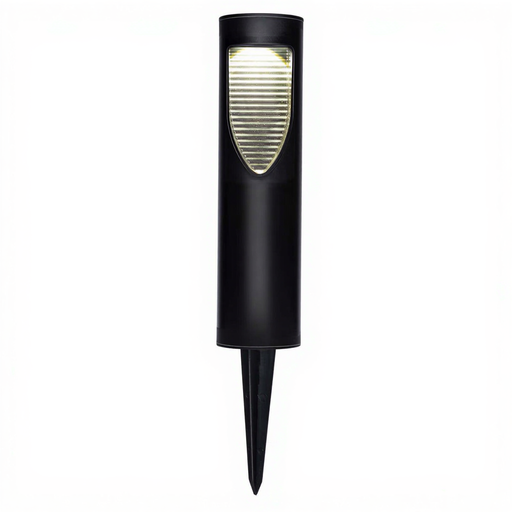
Why this product suits this profile: This compact garden lantern with a warm white SMD LED is designed for simple paths, flower beds and small outdoor areas. It requires no wall mounting and can either be stood up or secured in the ground.
The product details specify the battery, light source, dimensions and automatic dusk switch. They also explicitly state that the model must not be permanently immersed in water.
Black plastic housing, 31 cm height, warm white SMD LED and integrated Ni-MH battery with 600 mAh capacity.
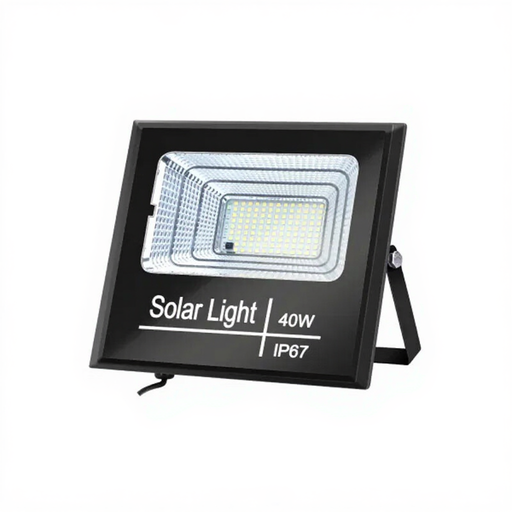
Why this product suits this profile: The separate panel allows more flexible positioning if the intended lighting point itself does not receive enough sunlight. This solar floodlight is suitable for larger outdoor areas, driveways and garden spaces.
The separate panel design reduces dependence on the floodlight’s location. The stated IP67 rating and 10,000-mAh battery are specific points to check rather than general marketing claims.
Aluminium and glass construction, separate solar panel, IP67 rating and up to 12 hours of lighting according to the product description.
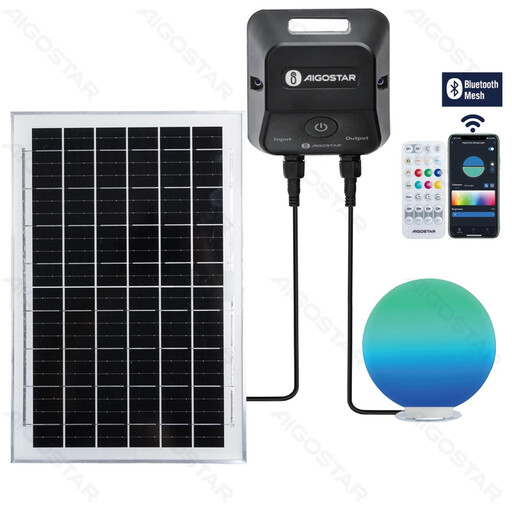
Why this product suits this profile: For users who want to control light colour, brightness and schedules via an app, this model offers Bluetooth Mesh and RGBCCT, with adjustable white light from 2700 to 6500 Kelvin.
The control functions are clearly specified: app control, scheduling, plus brightness and colour selection. Nevertheless, the IP65 rating should be checked against the intended installation location.
10-watt monocrystalline panel, 8-Ah lithium iron phosphate battery, Bluetooth Mesh and RGBCCT light control.
We have put together a complete, regularly updated list of products that fully meet these strict selection criteria and the safety regulations applicable in the EU.
Their lifespan depends on the LED, battery, housing, weather conditions and maintenance. Some product descriptions state a rated LED lifespan of up to 15,000 hours. The battery is a separate consumable component and may lose capacity after many charging cycles, exposure to frost or high temperatures.
In winter, the days are shorter, the sun is lower in the sky and sunlight is more often reduced by cloud cover. As a result, the battery receives less charge. Positioning the panel in an unobstructed location and removing dirt can improve charging conditions, but cannot guarantee the same operating time.
They do not require mains electricity while operating, as the battery is charged via the solar panel during the day. No power cables are therefore needed for their running costs. However, you should still take the purchase price, possible battery replacement and the proper disposal of the battery and electronics into account.