
Lieferung heute & morgen

Qualitätsgarantie

Willkommens-Angebote freischalten: KOSTENLOSE Lieferung | Bis zu 80 % RABATT | Kostenlose 30-Tage-JoyPlus-Testphase
App herunterladen
The right garden lighting not only creates an inviting atmosphere but also enhances safety on pathways and at entrances. Many homeowners are looking for a solution that avoids complex wiring and ongoing electricity costs. Solar garden lights offer a practical and energy-efficient alternative.
This article serves as a guide. As a Joybuy Product Recommendation Officer, my role is to provide you with objective information on various models so you can make an informed decision for your needs. We will examine the crucial features and present a selection of products for different applications.
The variety of solar lights is vast. To find the right solution for your garden, several technical aspects and features are crucial.
First, you should define the primary purpose of the lighting. Are you looking for atmospheric accent lighting or bright illumination for security?
Since solar garden lighting is exposed to the elements year-round, protection against water and foreign objects is essential. The IP rating provides information on this.
The brightness of an LED solar light is measured in lumens (lm). While 10–50 lumens are sufficient for a soft orientation light, security lights should offer at least 300–800 lumens. The runtime depends on the battery's capacity (measured in mAh) and the intensity of sunlight during the day. Pay attention to the manufacturer's specified average runtime, which is usually between 6 and 8 hours.
Based on different requirements, we have compiled a selection of solar lights that serve various purposes.
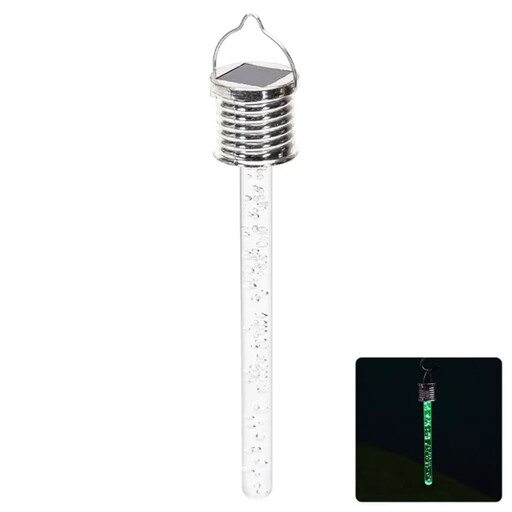
Why this model stands out This light combines a functional ground stake design with a special visual effect. The acrylic rod contains air bubbles that are illuminated by the RGB colour-changing light, creating a dynamic, almost "bubbling" appearance. The amorphous silicon solar panel allows for charging even on cloudy days, which is a key advantage in regions with less consistent sunshine.
Advantages
Who is it for? This model is ideal for users who want to add a decorative and colourful light accent to flowerbeds, garden paths, or balcony boxes. It is designed for atmosphere, not bright illumination.
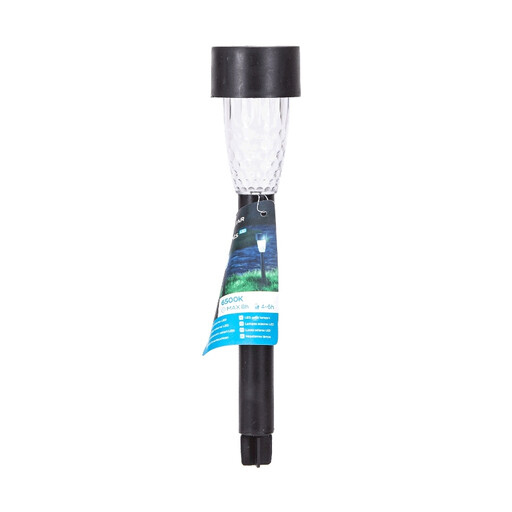
Why this model stands out This solar light focuses on a simple yet effective function. Instead of just creating a point of light, it projects a subtle pattern onto the ground. With a colour temperature of 6500K (daylight white), it provides clear and neutral lighting.
Advantages
Who is it for? Perfect for users looking for reliable and unobtrusive lighting for garden paths, lawn edges, or driveways. The light pattern is a nice detail without being intrusive.
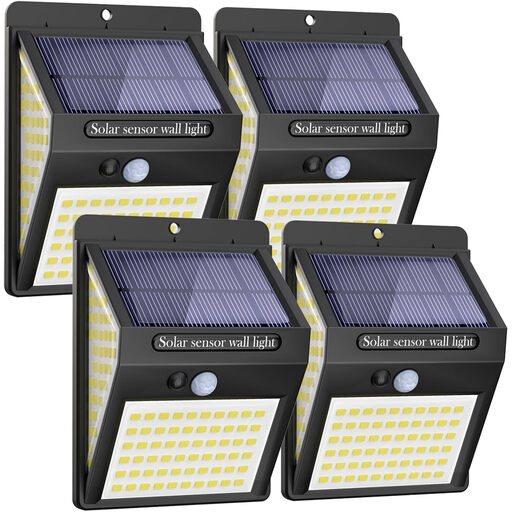
Why this model stands out This solar light set is designed for maximum functionality and security. With 140 LEDs and a very wide illumination angle of 270°, it effectively lights up large areas. The three adjustable modes make it a versatile outdoor solar wall light.
Advantages
Who is it for? This set is aimed at security-conscious homeowners who need a powerful and reliable solar light with a motion sensor to illuminate their property effectively and energy-efficiently.
The models presented cover common use cases. However, if you are looking for other designs, specific technologies, or more outdoor lighting solutions, you can find a wider selection in our category.
? Discover more models in the Sodium Outdoor Lights & Lamps category
1. Do solar garden lights work in winter? Yes, solar lights do work in winter, but with reduced performance. The shorter days and the lower angle of the sun result in less battery charging. Therefore, the runtime per night is shorter than in summer. Models with amorphous solar panels have a slight advantage here, as they charge better even in diffuse light.
2. What is the lifespan of solar lights? The lifespan consists of two components: the LED and the battery. The LEDs themselves are very durable, often lasting 15,000 to 50,000 hours. The battery is the primary consumable part. Depending on its quality and the intensity of use, a battery in a solar light typically needs to be replaced after 1 to 3 years.
3. How do I clean the solar panel for optimal performance? The efficiency of a solar light heavily depends on a clean panel. Dust, pollen, or bird droppings can significantly reduce charging performance. It is recommended to wipe the solar panel every few months with a soft, damp cloth. Do not use harsh cleaning agents or abrasive sponges, as they can damage the surface.