
Lieferung heute & morgen

Qualitätsgarantie

Willkommens-Angebote freischalten: KOSTENLOSE Lieferung | Bis zu 80 % RABATT | Kostenlose 30-Tage-JoyPlus-Testphase
App herunterladen
Solar garden lights illuminate lawns, flower beds, garden paths and driveways without the need for fixed wiring. During the day, the solar panel converts sunlight into energy, and the light switches on automatically at dusk, depending on the model. But design and price aren’t the only things to consider for UK gardens. The location, IP rating, light colour and battery capacity all affect whether solar lights are a practical long-term addition to your garden.
The term ‘weatherproof solar lights’ doesn’t tell you much on its own. Check the IP rating. IP44 means the casing is protected against solid objects larger than 1 mm and splashing water from different directions. This is suitable for lawns, flower beds and paths, as long as the light isn’t left standing in water.
A higher rating may be more suitable for exposed locations, such as an unprotected driveway. An IP44 light shouldn’t be placed in puddles or sprayed with a garden hose.
Claims such as ‘8–12 hours’ are based on suitable charging conditions. A shaded spot under trees, against a north-facing wall or behind a tall hedge will reduce the energy available. In winter, shorter days, the low sun and cloudy weather can also affect performance.
Position solar garden lights where the panel will receive several hours of direct daylight. Keep the panel clean and free of leaves. A stated charging time of 4–6 hours is a technical guide, not a guarantee that the light will run for the same length of time in every location.
Many solar lights for flower beds and paths create a subtle ambience rather than bright illumination. Small solar ground lights or stake lights mark an edge and add definition to the garden. For clearly visible steps, busy driveways or work areas, check the brightness, light distribution and mounting height separately.
The IP rating should suit where you plan to use the light. IP44 may be sufficient for sheltered garden areas and decorative markers. The light still shouldn’t be left standing in water. For secure installation with a ground stake, you’ll need soft soil or prepared ground. The stake may be damaged if you try to push it into very hard or frozen ground.
Colour rendering is sometimes indicated by the CRI or Ra value. A value of Ra ≥70 indicates basic colour rendering, but it doesn’t measure brightness.
Check the battery type and capacity, as well as the position and size of the solar panel. The products listed use integrated, rechargeable NiMH batteries. Actual performance depends on the intensity of the sunlight, panel orientation, temperature and shade.
A soft, slightly damp cloth is all you need for cleaning. Abrasive cleaners can damage the surface of the panel. At the end of their useful life, batteries and electronic components should be disposed of in line with local requirements, not put in household rubbish.
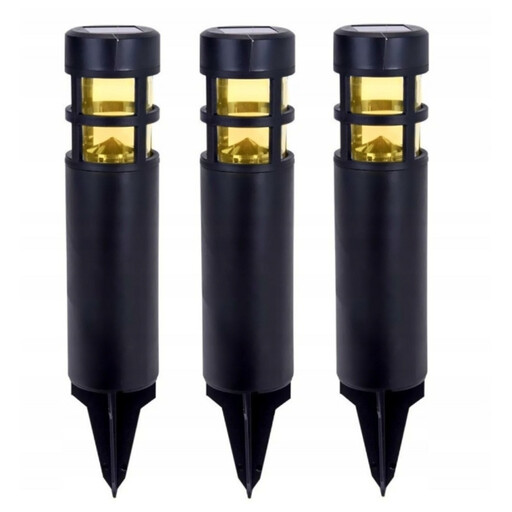
Why it suits this type of buyer: This set of three solar lights makes it easy to mark out flower beds, lawn edges or short garden paths without having to choose several individual products.
The product description clearly states that the set includes three lights and that they switch on automatically at dusk. Before buying, check the current product details for the IP rating and running time.
Three lights in the set, cordless operation and easy installation by pushing them into suitable soil.

Why it suits this type of buyer: The cool-white light at 6500 K is a good choice if you prefer clearly visible markers along paths or lawn edges.
The technical description specifies an IP44 rating, a charging time of 4–6 hours and a stated running time of 8–12 hours. This makes it easy to compare key details before buying.
Polycrystalline solar panel, NiMH battery, ground-spike installation and a stated colour rendering index of Ra ≥70.
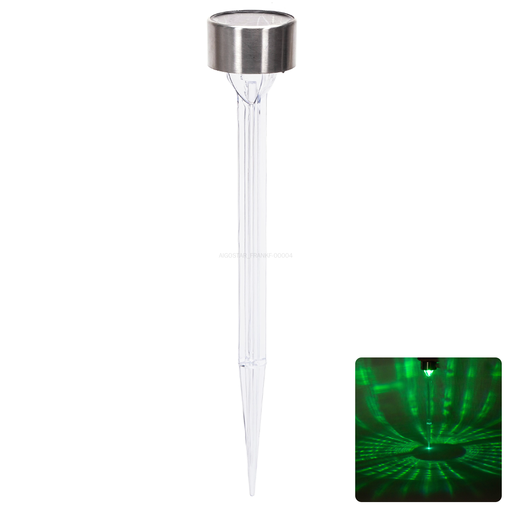
Why it suits this type of buyer: The RGB feature is for anyone who wants to add flexible colour to garden paths, flower beds or lawns without needing a fixed power supply.
The description lists RGB lighting, a polycrystalline panel, 200 mAh battery capacity and an IP44 rating. This makes it clear that the light offers decorative colour changes, rather than being designed as bright security lighting.
RGB lighting, 200-mAh NiMH battery, dimensions of 55 × 55 × 320 mm, and automatic on/off function.
Don’t push garden lights with ground stakes straight into compacted soil. Loosen the soil first, then position each light upright. The solar panel should face upwards and shouldn’t be covered by plants, walls or decorations. For solar ground lights, also check whether they’re suitable for areas people walk on; not every model is designed to be driven over or stepped on regularly.
Before using the lights for the first time, it’s a good idea to charge them fully according to the manufacturer’s instructions. Check that the ground stakes are secure, clean the panels regularly and don’t leave lights with visible damage outdoors.
We’ve put together a complete, regularly updated list of products that meet these strict selection criteria and fully comply with the safety regulations in force in the EU.
It depends on the panel, battery, lighting mode, temperature and amount of sunlight. In suitable conditions, the Aigostar models listed here have a stated running time of 8–12 hours. This may be shorter in winter or after extended periods of cloudy weather.
Choose a spot that gets as much direct daylight as possible. Avoid areas that are in constant shade from trees, house walls or tall shrubs. Paths, flower-bed edges and lawns are suitable as long as the ground holds the stake securely and there’s no standing water.
They don’t need to be connected to the mains while they’re in use. The panel charges the integrated battery during the day. However, you may still have costs for the initial purchase, replacement batteries or replacing damaged lights. Before buying, check the battery details, IP rating and information about spare parts.