
Lieferung heute & morgen

Qualitätsgarantie

Willkommens-Angebote freischalten: KOSTENLOSE Lieferung | Bis zu 80 % RABATT | Kostenlose 30-Tage-JoyPlus-Testphase
App herunterladen
Solar lights for the garden do not require a permanent power connection and can usually be installed without any electrical work. However, not every model is suitable for every outdoor space. A dark garden path, a shady courtyard and a sunny lawn all place different demands on the solar panel, battery, IP rating and installation method.
Claims such as “up to 12 hours” or “up to 24 hours” generally apply under suitable conditions. In the German autumn, in heavy cloud or when the solar panel is shaded, the actual lighting duration may be shorter. So check the following:
A separate panel can be practical for patios, gazebos or house walls if the light itself needs to be installed in a shadier location.
The term waterproof is not precise enough for outdoor lights. The key factor is the IP rating. The first digit describes protection against solid foreign objects, while the second indicates protection against water. A light with IP44 is protected against splashing water, but should not be placed in water or submerged. IP65 provides a higher level of protection against dust and water jets; it is not designed for underwater use either. With IP67, temporary immersion is possible under the specified test conditions, although the manufacturer's instructions remain crucial.
RGB solar lights produce coloured or changing light and are mainly suitable as decorative garden lighting. For finding your way along paths, a consistent white light colour is usually easier to see by. Also pay attention to the brightness rating in lumens, rather than just the power consumption in watts. A low wattage alone says little about the amount of visible light produced.
For a path, distribute the lights evenly instead of creating individual points of very bright light. In flower beds and lawns, solar ground lights or solar lights with ground stakes can be used to highlight plants, edges and small decorative features.
Ni-MH batteries are common in simple solar garden lights. Depending on the design, lithium batteries offer higher capacities and are often found in smart solar lights. The key factor is the combination of battery capacity, panel size, charging time and actual lighting duration.
The panel should receive several hours of direct, unobstructed sunlight wherever possible. Trees, house walls and an unsuitable orientation reduce the energy yield. Clean the surface regularly with a soft, damp cloth. Do not use abrasive cleaning products.
Solar path lights with ground stakes require loose, stable soil. In very hard or frozen ground, the stake may be damaged. This type of installation is usually straightforward on lawns and in flower beds. Pendant lights, on the other hand, require a secure fixing point and a suitable location for the solar panel.
When choosing outdoor LED solar lights, you should check the temperature range, IP rating and battery information. A light designed for outdoor use is not automatically suitable for constant moisture, standing water or every possible installation position.
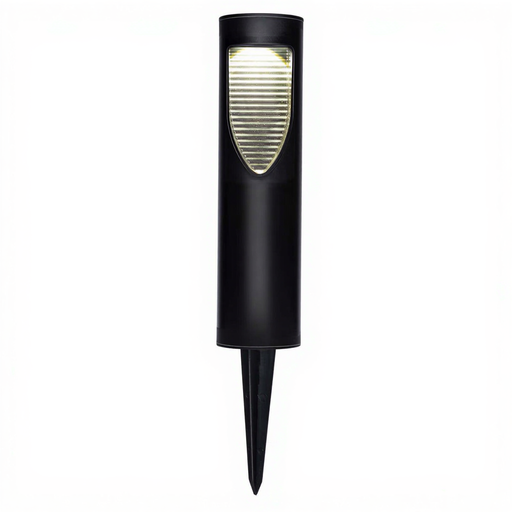
Why this product suits this profile: This freestanding light with a warm-white SMD LED is designed for simple paths, flower beds and small outdoor areas without a wired power connection.
The product details specify an integrated 600 mAh Ni-MH battery and automatic operation at dusk. This makes it easier to assess than unclear runtime claims.
8 cm diameter, 31 cm height, warm-white light and installation without wall mounting or professional electrical work.
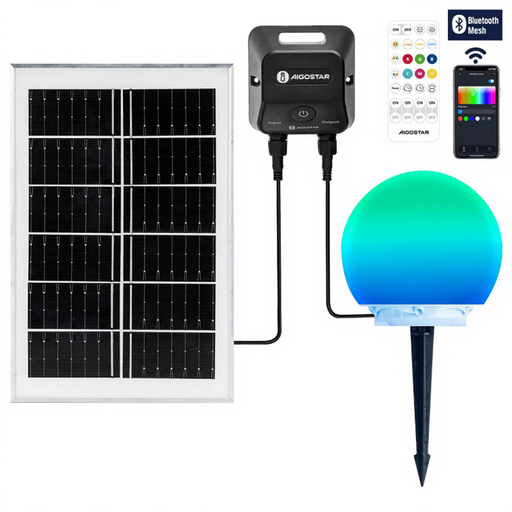
Why this product suits this profile: This recessed light is aimed at users who want to adjust the light colour, brightness and group control via an app.
The specified IP67 rating is clearer than a general description such as “weatherproof”. The separate panel can also be positioned where it receives more sunlight.
RGB+CCT from 2700 to 6500 Kelvin, Bluetooth Mesh control, 4000 mAh lithium battery and, according to the product details, up to 24 hours of illumination.
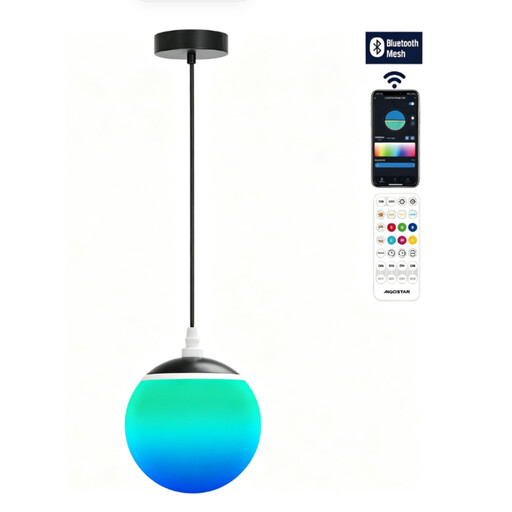
Why this product suits this profile: This pendant light is designed for gazebos, patios and covered seating areas, allowing the panel to hang in the sun while the light is positioned wherever you want it.
The two-part design helps to overcome the problem of a shaded panel. The IP65 rating and temperature range of -10 to 50 °C are specified in the product details.
RGB+CCT, Bluetooth Mesh, separate 6-watt solar panel, lithium iron phosphate battery and, according to the product details, a maximum runtime of 24 hours.
We have put together a complete, regularly updated list of products that fully meet these strict selection criteria and the safety regulations applicable in the EU.
Do not place solar lights with ground stakes directly beneath trees or roof overhangs. In soft soil, the stake should be positioned straight and driven in far enough. For paths, an even spacing is recommended to prevent strongly contrasting areas of brightness.
A motion or dusk sensor can adjust operation automatically. However, check that the sensor is actually included and find out what range is specified. With smart solar lights, you should also check which app is required, the Bluetooth range and whether a hub may be needed. Not every app-controlled function works outside the local wireless range.
Their lifespan depends on the LED, housing, battery, UV exposure and care. According to the product details, LED components may have a long rated service life; the battery, however, is a consumable component. Keeping the panel surface clean and protecting the light from permanently standing water helps support reliable operation.
For reliable charging, the panel should receive several hours of direct, unobstructed sunlight. In winter or during prolonged periods of cloudy weather, the lighting duration may be reduced. Models with a separate panel offer greater flexibility when positioning the panel.
During normal operation, solar lights draw their energy from daylight and store it in the battery. There are no ongoing mains electricity costs for the lighting. However, once the battery reaches the end of its service life, it must be replaced properly and disposed of as a battery or waste electrical and electronic equipment.