
Lieferung heute & morgen

Qualitätsgarantie

Willkommens-Angebote freischalten: KOSTENLOSE Lieferung | Bis zu 80 % RABATT | Kostenlose 30-Tage-JoyPlus-Testphase
App herunterladen
A smart 20 W RGB+CCT solar in-ground light combines wireless installation with colourful illumination, adjustable white colour temperature and smartphone control. For pathways, patios, flower beds or driveways, this may initially sound like a straightforward solution. In practice, however, unclear protection ratings, poorly positioned solar panels and overstated app capabilities often lead to disappointing purchases.
This buyer’s guide from the Joybuy Product Recommendation Centre explains which specifications really matter and which model is best suited to each use case.
The 20 W specification initially describes the electrical power rating or product classification. On its own, it does not indicate how brightly a solar garden spotlight will actually shine. For a practical assessment, lumens, beam angle and illumination range would also be important. If these details are missing, the product should be planned for accent and orientation lighting rather than for fully illuminating an area.
An IP67 outdoor light is protected against dust and, according to its protection classification, can withstand temporary immersion under specified conditions. This does not replace proper drainage in the ground. In a recessed solar light, water and moisture can accumulate if the substrate has not been prepared correctly. A permeable base, stable edging and the manufacturer’s installation instructions are therefore essential.
A separate solar panel can be positioned more flexibly than an integrated module. Even so, it requires as many hours of direct sunlight as possible. Shade from walls, trees or tall hedges reduces charging performance. In Germany, short days, overcast weather and the low winter sun can also significantly affect illumination time during autumn and winter. Runtime claims such as “up to 24 hours” should therefore be understood as best-case performance, not as a guaranteed duration for every season.
For flush-to-ground installations, the protection rating should match the actual location. A light with IP67 should generally be assessed differently from decorative models rated IP44 when used in demanding outdoor areas. IP44 protects against splashing water, but is not designed for standing water or installation in permanently damp soil.
Check before buying:
The Aigostar Smart Solar Ground Recessed Spotlight is specified with a 5 W monocrystalline solar panel and an integrated 4,000 mAh lithium battery. The panel is separate and can be installed in a sunnier location using a longer cable. According to the product description, illumination of up to 24 hours is possible; actual runtime depends on factors including charge level, light colour, brightness and weather conditions.
Ideally, the panel should be positioned where it receives direct sunlight for several hours—not only in the morning or evening. It should also be cleaned regularly to remove dust, leaves and pollen. If the product is stored for an extended period, follow the manufacturer’s battery-care recommendations.
RGB+CCT refers to coloured RGB lighting combined with adjustable white light. For the specified 20 W model, the stated colour-temperature range extends from 2700 K warm white to 6500 K cool white. This allows the lighting to be configured as warm and decorative or as more neutral and functional, depending on the application.
The AigoSmart app is intended to control brightness, schedules, grouping and light colours, depending on the compatible model. Bluetooth Mesh is particularly useful for larger gardens where several lights need to be synchronised. The product description for the 20 W in-ground spotlight states that more than 200 lights can be connected. Nevertheless, users should check before purchasing that all desired devices belong to the same app and Mesh generation. A smartphone also requires a stable Bluetooth connection during setup.
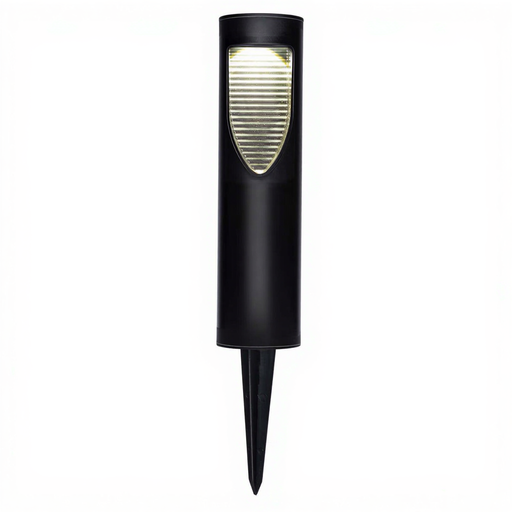
Why it’s a good fit: For homeowners who want to illuminate paths or flower beds discreetly, without an app or complicated setup. The model uses warm-white SMD LED lighting and an integrated solar panel.
The product data describes a simple solar garden light with automatic switching on and off. No RGB or app features are required.
Warm-white light, an integrated rechargeable 600 mAh Ni-MH battery and straightforward installation.
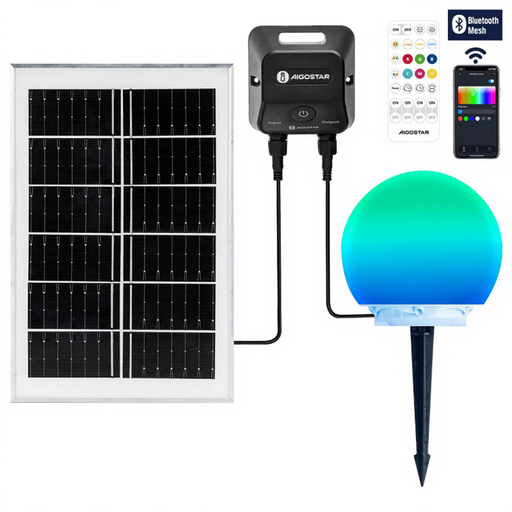
Why it’s a good fit: For users who want to combine colour-changing garden lighting and adjustable white light with smartphone control of multiple fixtures.
The separate panel allows for installation in a sunnier location. However, the stated IP67 rating is no substitute for proper drainage when installing the light in the ground.
20 W configuration according to the product name, RGB+CCT from 2700 K to 6500 K, a 4,000 mAh lithium battery and Bluetooth Mesh control.
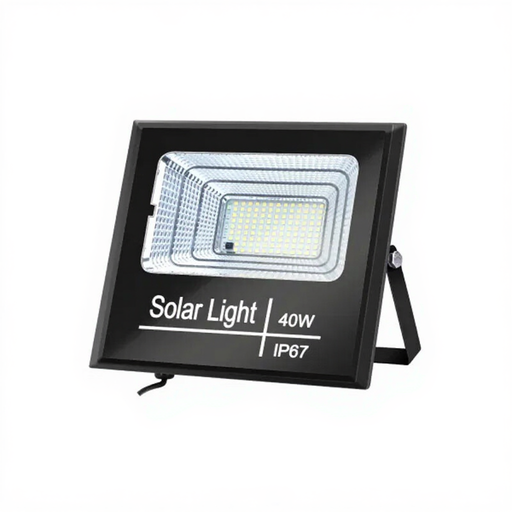
Why it’s a good fit: For driveways, larger garden areas or locations where directional cool-white illumination is more important than RGB functionality.
The product specifications list a 10,000 mAh battery and up to 12 hours of runtime. This makes the light better suited to area illumination than to decorative ground-level accent lighting.
Separate panel, 10,000 mAh battery according to the description and stated IP67 protection; RGB+CCT and app control are not specified.
Explore the complete selection of solar garden lights for different installation types, light colours and outdoor applications.
First, position the solar panel in a location that receives as much sunlight as possible. Then charge the battery according to the instructions or activate the light. For app-controlled models, pairing usually takes place via Bluetooth. If you are installing several devices, add them one at a time and then assign them to a group or Mesh network.
Runtime depends on sunlight exposure, battery capacity, brightness, selected light colour and outdoor temperature. Manufacturer claims such as up to 8–12 hours or up to 24 hours refer to specific conditions. Runtime may be shorter in winter. Continuous bright illumination throughout the entire night should therefore not be planned without an additional power supply.
During normal operation, the energy is generated by the solar panel. This means there are no grid electricity costs for lighting in day-to-day use. However, possible expenses for replacement batteries, damaged components or replacing the light after prolonged use should be taken into account. Service life depends on the battery, electronics, UV exposure and weather conditions at the installation site.