
Lieferung heute & morgen

Qualitätsgarantie

Willkommens-Angebote freischalten: KOSTENLOSE Lieferung | Bis zu 80 % RABATT | Kostenlose 30-Tage-JoyPlus-Testphase
App herunterladen
Solar lights for the garden promise a simple, cost-effective, and eco-friendly way to illuminate paths, provide security, or create an inviting atmosphere. However, the market is flooded with products whose performance often fails to live up to their promises. Many buyers quickly find that their new lights fail after the first heavy rain, barely light up in winter, or offer disappointingly dim brightness.
As your Joybuy Product Recommendation Officer, I'll help you identify these common pitfalls. Instead of falling for marketing buzzwords, you should focus on verifiable technical specifications. This guide will show you the three design and material flaws that frequently lead to disappointment and how you can avoid them by paying attention to a few crucial parameters.
To make an informed decision, focus on the following technical data. These are typically found in the product specifications and provide reliable indicators of the quality and durability of outdoor solar lamps.
The IP (Ingress Protection) rating consists of two digits. The first digit describes protection against foreign objects (like dust), and the second describes protection against water.
The performance of the battery and panel determines how long your light will shine.
The lighting effect depends on colour and intensity.
Based on these objective criteria, we have curated products for various needs and applications.
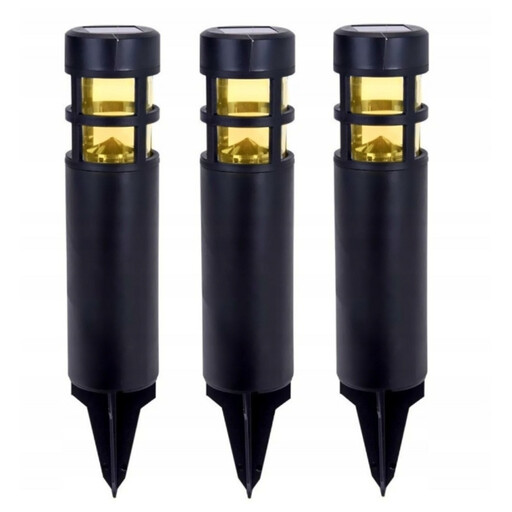
Why This Fits Their Persona: Ideal for users seeking a straightforward and affordable solution for marking garden paths or flower beds. The set provides instant basic lighting without complex installation.
This set avoids the trap of feature overload. It focuses on a single task: automatically lighting up at dusk. The simple design minimises potential points of failure.
Convenient 3-pack for a uniform look. Easy installation with ground stakes. Automatic on/off function.
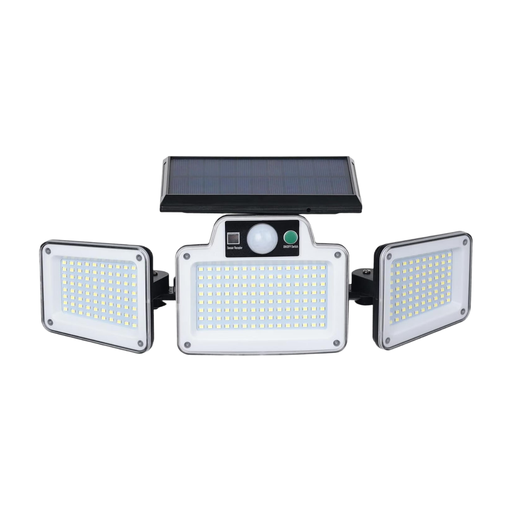
Why This Fits Their Persona: Designed for illuminating driveways, garages, and entryways. The motion sensor and high brightness serve as a deterrent and increase property security.
This solar spotlight tackles the problem of insufficient brightness with 280 LEDs and three adjustable heads. The IP65 rating and 2400 mAh battery are designed for durability and reliable performance.
Separate solar panel for optimal sun exposure. Three adjustable lighting modes via remote control. Wide detection range for the motion sensor.
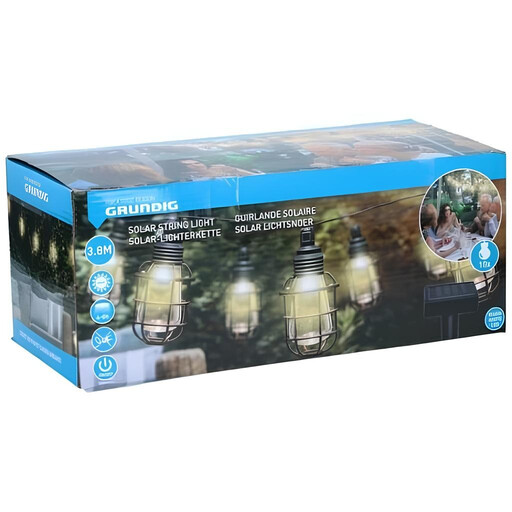
Why This Fits Their Persona: Perfect for creating a cosy and festive atmosphere on balconies, patios, or for garden parties. The lantern design of this outdoor solar string light is a decorative highlight.
The product is explicitly designed to be "weather-resistant" for outdoor use. This addresses the pitfall of decorative lights that are not built to withstand outdoor weather conditions.
Atmospheric, warm light. Flexible installation on fences, trees, or pergolas. According to the manufacturer, it has a runtime of 8-10 hours.
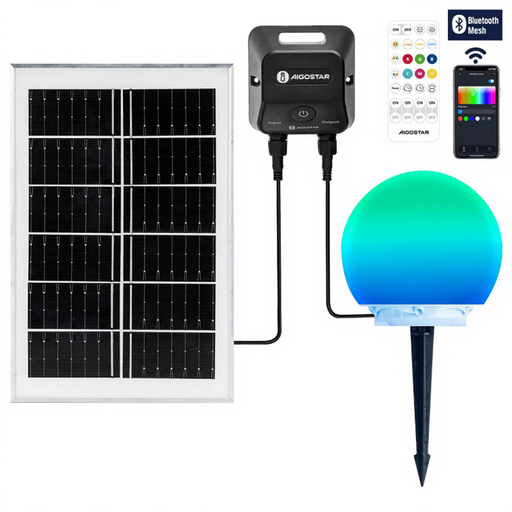
Why This Fits Their Persona: For users who want full control and customisation. The smartphone app allows control over colour temperature, colour (RGB), and brightness to create custom lighting scenes.
This model solves the problem of rigid, one-size-fits-all lighting. Instead of a fixed light colour, it offers the full RGBCCT spectrum (RGB + tunable white), making it extremely versatile.
Control over 200 lights via Bluetooth Mesh. IP65 rating and a powerful 4000mAh lithium battery. Monocrystalline solar panel for high efficiency.
We have compiled a complete, up-to-date list of products that fully meet these strict selection criteria and safety regulations.
Yes, but with reduced performance. Modern solar panels can generate energy even in diffuse light, but significantly less than in direct sunlight. The illumination time during the winter months will therefore be shorter. Models with high-efficiency (often monocrystalline) panels and high-capacity batteries (high mAh rating) are better suited for year-round use.
The lifespan of a solar light is primarily determined by its battery. The LEDs themselves have a very long life (often 15,000 hours or more). However, the rechargeable battery (usually NiMH or Lithium-ion) loses capacity after about 1-3 years (approx. 500-1000 charge cycles). On some higher-quality models, the battery can be replaced, which significantly extends the product's lifespan.
The ideal location for the solar panel is a spot that receives at least 6-8 hours of direct, unshaded sunlight daily. Avoid placing it under trees, eaves, or in the shadow of buildings. Also, ensure that the light is not illuminated by other artificial light sources (e.g., streetlights), as their light can trick the dusk sensor and prevent it from turning on automatically.