
Lieferung heute & morgen

Qualitätsgarantie

Willkommens-Angebote freischalten: KOSTENLOSE Lieferung | Bis zu 80 % RABATT | Kostenlose 30-Tage-JoyPlus-Testphase
App herunterladen
A solar light with a motion sensor is a practical and cost-effective solution for illuminating driveways, gardens, and patios while enhancing security. Installation is straightforward as no wiring is required, and operation incurs no electricity costs.
However, the vast selection on the market often leads to disappointment. Many products fail to live up to their descriptions. Before making a decision, it's crucial to understand the common pitfalls that can lead to a bad purchase.
Common Problems with Low-Quality Solar Lights:
To avoid these problems, it's essential to focus on the technical specifications that truly matter.
Instead of being swayed by marketing promises, you should base your selection on objective technical data. Three parameters are crucial for the performance and longevity of an outdoor solar light.
The IP (Ingress Protection) rating indicates how well an electrical device is protected against the ingress of foreign objects (first digit) and water (second digit). For outdoor use in the UK, where rain, snow, and dust are commonplace, a minimum standard is essential.
Consistently look for an IP rating of IP65 or higher to ensure your investment can withstand the weather conditions.
The brightness of a light is measured in lumens (lm). The required lumen count depends on the intended use:
A solar-powered LED outdoor floodlight should not only be bright but also offer a wide beam angle (e.g., 120° to 270°) to minimise dark spots. The motion sensor is equally important: a detection range of 5–8 metres and a detection angle of at least 120° are practical for most applications.
The best light is useless if its battery drains too quickly. Battery capacity is measured in milliampere-hours (mAh). For a reliable runtime throughout the night, even on overcast days, values of 1800 mAh or higher are recommended.
The efficiency of the solar panel determines how quickly the battery charges during the day. Monocrystalline solar panels generally offer a higher efficiency rating than polycrystalline panels and are therefore better suited for regions with fewer hours of sunlight. A separate solar panel with a long cable can also be advantageous, allowing it to be optimally aligned with the sun while the light itself is mounted in the shade.
Based on these objective criteria, we have curated a selection of products suitable for the specific needs of home and garden owners.
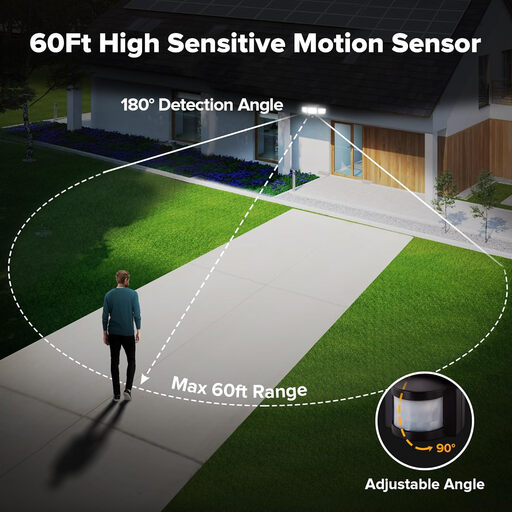
Why This Fits Their Persona: Ideal for homeowners who want to reliably and brightly illuminate large areas like driveways, yards, or the garage perimeter. The high light output primarily serves as a deterrent and for security.
With 3000 lumens per light, it avoids the trap of insufficient brightness. The IP65 certification ensures the necessary weather resistance for unprotected outdoor use.
Three adjustable light heads allow for a very wide 270° illumination angle. The motion sensor has a long range of up to 18 metres.
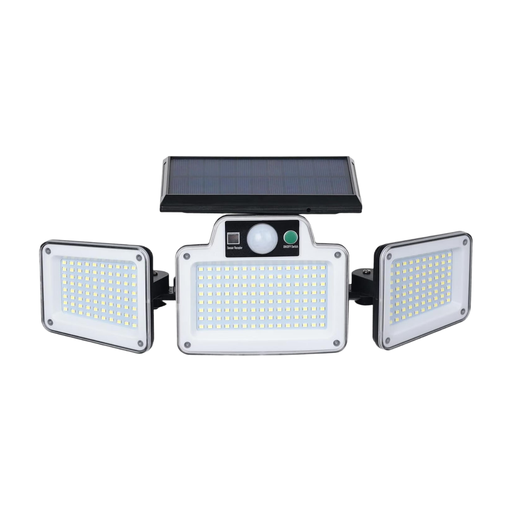
Why This Fits Their Persona: Suitable for users who need to choose a mounting location for the light regardless of sun exposure, such as under an eave or on a north-facing wall. The remote control offers added convenience.
The separate solar panel with a 4.7m cable solves the problem of insufficient charging in shady locations. The 2400 mAh battery and three operating modes help to optimise the light's runtime.
High installation flexibility. The lighting modes can be conveniently switched via remote control, eliminating the need to climb a ladder.
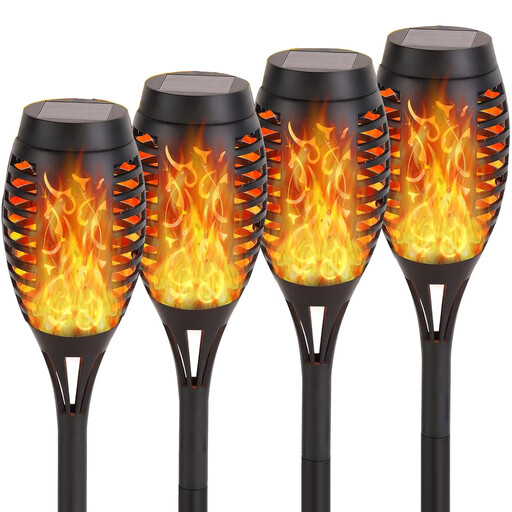
Why This Fits Their Persona: Perfect for garden enthusiasts looking for decorative lighting to create an atmospheric setting for paths, flowerbeds, or patio areas. The focus here is on aesthetics, not maximum brightness.
This solar garden light bypasses the brightness trap, as its purpose is to create an ambient flame effect. The IP65 certification ensures the torches can remain in the garden even during rain.
The realistic, flickering light effect creates a warm atmosphere. The automatic on/off function at dusk and dawn ensures low-maintenance operation.
We have compiled a complete, up-to-date list of products that fully meet these strict selection criteria.
The runtime depends on several factors: battery capacity (mAh), the intensity and duration of sunlight during the day, and the selected operating mode. When charged on a sunny summer day, a good light with a battery of 1800 mAh or more can easily last for 8–12 hours. In power-saving mode or a pure motion-sensor mode, the runtime is significantly longer than in a constant-on mode.
No, installation is typically very simple and requires no electrical expertise. Most models come with the necessary screws and wall plugs. You just need to mount the light on a wall, fence, or post. Since no cables need to be laid, the installation can be completed in just a few minutes.
Yes, solar lights do work in winter, but with reduced performance. The shorter days and lower intensity of sunlight mean the battery may not fully charge. This shortens the runtime per night. Models with efficient monocrystalline panels and large batteries are better suited for winter operation. Using a pure motion-sensor mode instead of a constant-on light also helps to save energy and ensure functionality throughout the night.