
Lieferung heute & morgen

Qualitätsgarantie

Willkommens-Angebote freischalten: KOSTENLOSE Lieferung | Bis zu 80 % RABATT | Kostenlose 30-Tage-JoyPlus-Testphase
App herunterladen
A solar light with a motion sensor promises a simple, cost-effective, and wireless solution for more security and convenience in your outdoor areas. Whether for the garden, driveway, or entrance area, installation is usually straightforward and running costs are minimal. However, the market is flooded with products whose marketing promises often don't hold up in practice. Many buyers quickly find that their new lighting fails in bad weather or that the brightness is insufficient.
As your Joybuy Product Recommendation Officer, I'll help you recognise the typical pitfalls and make an informed decision. We will focus on the technical facts that truly matter.
The 3 Most Common Traps When Buying Solar Lights:
To avoid a bad purchase, you should be guided not by marketing slogans, but by verifiable technical specifications. Three parameters are of central importance.
The IP (Ingress Protection) rating indicates how well an electrical device is protected against the ingress of foreign objects and water. For outdoor use, two values are particularly relevant:
The performance of a solar light depends directly on the interplay between the solar panel and the battery. A large battery with a high capacity (measured in milliampere-hours, mAh) is useless if the solar panel is too small or inefficient to fully charge it during the day. Look for a balanced ratio. Models with an external solar panel connected by a cable offer the advantage that the panel can be optimally aligned with the sun, while the light itself is mounted in the shade. This is particularly advantageous for outdoor lighting for a garage or on north-facing walls.
Brightness, specified in lumens (lm), describes the total luminous flux of a lamp. But the lumen count alone says little about the actual illumination. More important are:
A high-performance outdoor solar floodlight combines a high lumen count with a wide beam and detection angle to ensure maximum security.
Based on these objective criteria, we have put together a selection of products suitable for different use cases.
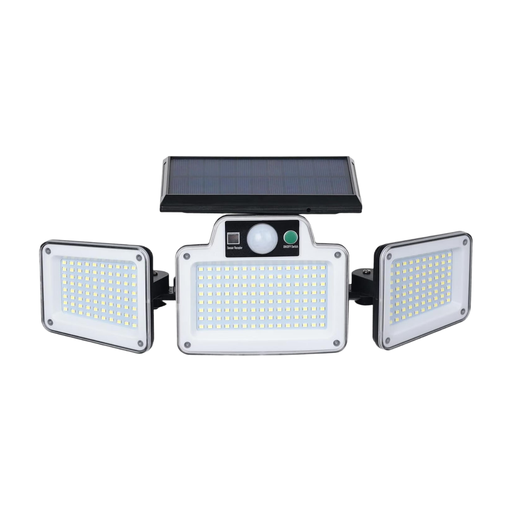
Why This Fits Their Persona: Ideal for large-area surveillance of driveways, yards, or gardens. The three adjustable heads allow for precise light aiming, while the separate solar panel ensures maximum sun exposure even if the light itself is mounted in a suboptimal position.
The IP65 certification ensures robustness against the elements. The long cable to the solar panel bypasses the "Winter Weakness" trap, as the panel can be placed in the sunniest spot, independent of the light fixture.
High flexibility thanks to three adjustable light heads and a separate solar panel. Controlled via a remote with three different lighting modes.
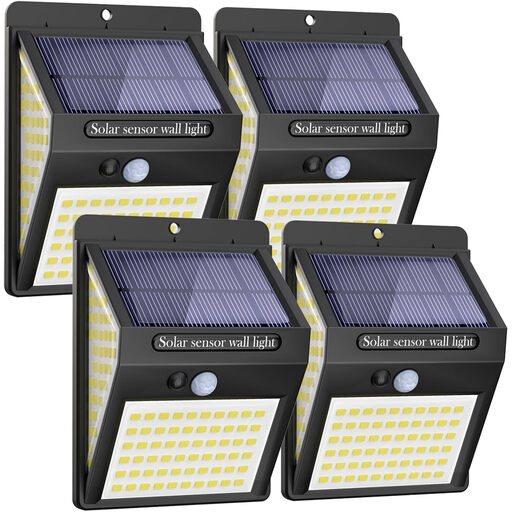
Why This Fits Their Persona: Perfect for anyone looking to affordably equip multiple areas—like the front door, garden shed, and bin area—with automatic lighting. The 4-pack offers extensive coverage at an attractive price.
With an IP65 rating, this model is well-protected against rain and weather. The 270° illumination angle provides wide light distribution, avoiding the "Lumen Deception" by ensuring efficient coverage.
Excellent value for money with the 4-pack set. Three adjustable modes offer flexibility for security or continuous light.
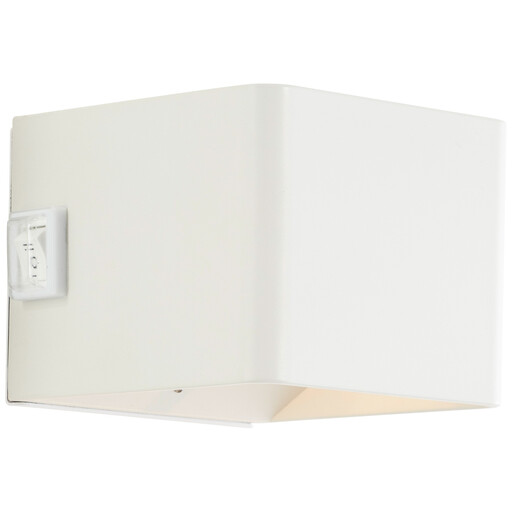
Why This Fits Their Persona: Suitable for balconies, camping, or as temporary lighting in a shed. Ideal for any place where a permanent installation isn't desired or where sunlight is insufficient for a solar solution. The magnetic mount allows for flexible attachment to metal surfaces.
This model completely bypasses the "Winter Weakness" of solar lights, as it features an integrated battery that is charged via USB. This guarantees reliable performance regardless of the weather. The IP44 rating is sufficient for sheltered outdoor use.
Maximum mobility and flexibility thanks to battery operation and a magnetic mount. Independent of sun exposure.
We have compiled a complete, up-to-date list of products that fully meet these strict selection criteria and all relevant safety standards.
The lifespan is primarily determined by the quality of the battery. Lithium-ion batteries, used in most modern lights, typically last for two to four years, depending on charging cycles and ambient temperatures. The LED bulbs themselves are very durable, usually lasting over 50,000 operating hours.
Yes, but with limitations. On short, overcast days, solar radiation is lower, which extends charging time and can reduce the illumination duration per night. Models with high-quality, large solar panels and efficient charging technology are better suited for winter use. A south-facing orientation for the panel, free from shadows, is crucial.
The most important factor is sun exposure. Mount the solar panel in a location that receives direct sunlight for as long as possible, ideally with a south-facing orientation. The motion sensor should be positioned to cover the desired area (e.g., a walkway, front door). Avoid aiming it at busy streets, moving tree branches, or heat sources like ventilation outlets, as these can cause false triggers.