
Lieferung heute & morgen

Qualitätsgarantie

Willkommens-Angebote freischalten: KOSTENLOSE Lieferung | Bis zu 80 % RABATT | Kostenlose 30-Tage-JoyPlus-Testphase
App herunterladen
A well-lit driveway, a safe garden path, or an illuminated patio not only create atmosphere but also enhance security. An outdoor solar light with a motion sensor offers an attractive solution: no electricity costs, no complex wiring, and automatic operation precisely when it's needed. However, the market is flooded with products whose promises often don't hold up in practice. Before you make a decision, it's crucial to understand the common pitfalls that lead to disappointment and unnecessary expense.
Many products look convincing at first glance, but their weaknesses are often hidden in the details. Pay close attention to these three points to avoid a bad purchase:
To make an informed purchasing decision, you should focus on objective, technical features. These three factors are crucial in determining the performance and longevity of your new outdoor light.
The IP (Ingress Protection) rating is an international standard that classifies the suitability of electrical devices for various environmental conditions. For an outdoor light exposed to the elements year-round, a rating of IP65 waterproof is a key quality indicator.
The best solar-powered LED outdoor light is useless if it runs out of energy. The interplay between battery capacity (measured in milliampere-hours, mAh) and the solar panel's efficiency is crucial for its runtime.
Modern solar lights offer more than just "On" and "Off." Various operating modes allow you to tailor them to your individual needs and help save energy.
A wide detection angle (e.g., 180°) and an adequate motion sensor range (5-8 metres) are also important for reliable functionality.
Based on the criteria mentioned, we have identified several products that offer a well-designed solution for different user profiles.
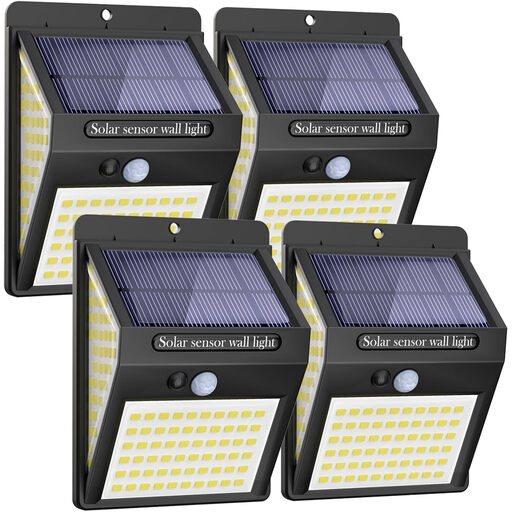
Why this product is a good fit: Ideal for users who want to illuminate multiple areas like garden paths, stairs, or the main entrance affordably and easily. The 4-pack offers excellent value for money for basic and reliable lighting.
With its IP65 certification, it bypasses the pitfall of inadequate weather resistance. These lights are designed for year-round outdoor use.
Three selectable lighting modes offer flexibility for various applications, from pure security lighting to permanent ambient light.
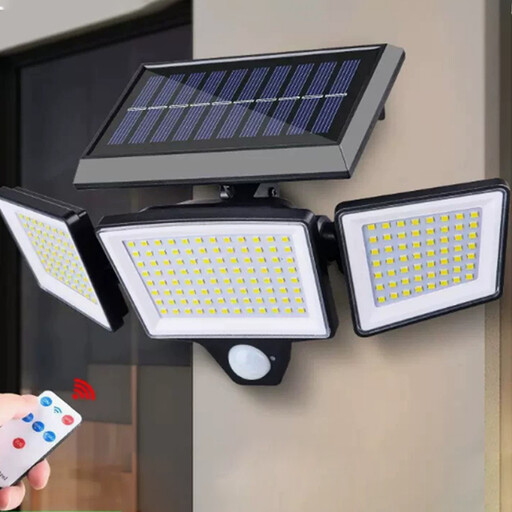
Why this product is a good fit: For those who prioritise maximum brightness and wide-area illumination. Ideal for securing driveways, garages, or large garden areas where powerful light output is needed for deterrence and clear visibility.
This model avoids the pitfall of unrealistic brightness claims by combining high luminosity (3000 lumens, according to the manufacturer) with a solid 1800mAh battery and an efficient panel to ensure that power can be delivered reliably.
The three adjustable heads allow for a wide 270° illumination angle, enabling large areas to be lit effectively without dark spots.
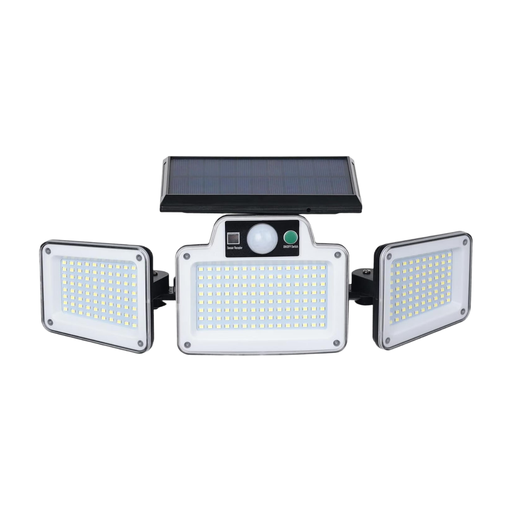
Why this product is a good fit: Perfect for challenging installation scenarios where the ideal location for the light (e.g., under a carport or on a shady north-facing wall) isn't the best spot for charging. The split design offers maximum flexibility.
By featuring a separate solar panel with a long cable (approx. 4.7 m), it elegantly solves the pitfall of inflexible mounting. The panel can be placed in the sunniest spot, while the light is installed wherever it's needed.
The remote control and a powerful 2400mAh battery provide added convenience and reliable, long-lasting performance.
We have compiled a comprehensive, up-to-date list of products that meet these strict selection criteria and safety standards.
Do solar lights work in winter? Yes, but with potentially reduced performance. The shorter days and lower angle of the sun in winter mean less energy is absorbed. Models with high-efficiency solar panels and large batteries have a clear advantage here. Using a motion-only mode (instead of a constant-on mode) also helps conserve stored energy for the dark hours.
How long does a solar light with a motion sensor last? The lifespan is primarily determined by the battery. While the LEDs themselves can last for tens of thousands of hours, the rechargeable battery has a limited lifespan, typically 2 to 4 years, depending on its quality and the number of charge cycles. A robust build and a high IP rating like IP65 also contribute significantly to the overall longevity of the light.
Do I need to hire an electrician for installation? No, and that's one of their biggest advantages. An outdoor solar light with a motion sensor is designed for DIY installation. Since no connection to your home's electrical grid is required, there is no need for any electrical work. Installation typically involves mounting the light and the panel to a suitable wall or post using the included screws.