
Lieferung heute & morgen

Qualitätsgarantie

Willkommens-Angebote freischalten: KOSTENLOSE Lieferung | Bis zu 80 % RABATT | Kostenlose 30-Tage-JoyPlus-Testphase
App herunterladen
Reliable outdoor lighting is fundamental to the security and atmosphere of a home. A solar light with a motion sensor offers a practical and cost-effective solution, as it requires no complex wiring and incurs no ongoing electricity costs. However, the market offers a vast selection, and technical specifications can be overwhelming.
This article serves as a guide. It explains the key features to look for and presents a selection of models for various applications to help you make an informed decision.
To find the right light for your needs, you should consider several technical parameters. These determine the product's functionality and longevity.
The brightness of a solar-powered outdoor LED light is measured in lumens (lm). A higher lumen value means a more powerful light output.
Many models also offer various lighting modes:
Since a solar-powered outdoor lamp is exposed to the elements year-round, its IP rating is a crucial quality feature. The rating consists of two digits: the first indicates protection against solid objects (e.g., dust), and the second indicates protection against water.
For outdoor use, a minimum rating of IP44 (protection against splashing water) is recommended. A higher rating, such as IP65 waterproof, offers complete protection against water jets, making it even more robust against heavy rain and snow.
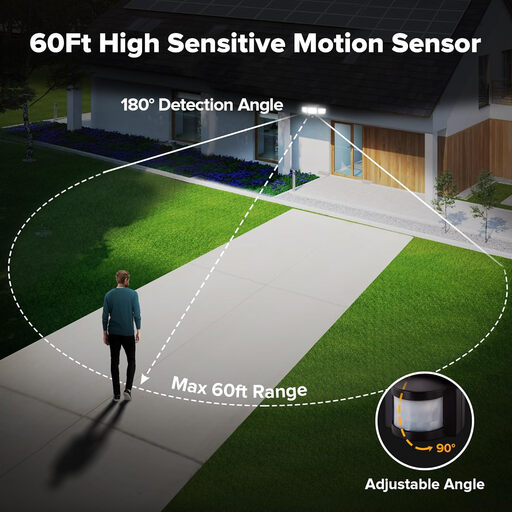
The motion detector is the core component of a security light. Two values are relevant here:
Here is a selection of solar lights suitable for different requirements and locations.
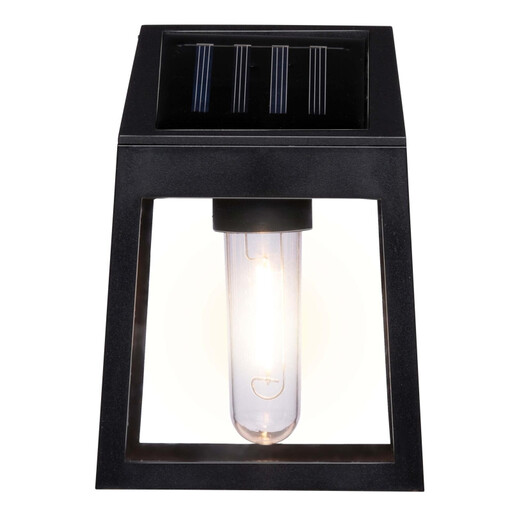
Why It Stands Out: This compact solar wall light from Grundig features a minimalist design and warm white light to create a pleasant atmosphere rather than harsh illumination.
Advantages:
Who It's For: Ideal for users seeking subtle and atmospheric accent lighting for paths, patios, or entrance areas, who place less emphasis on maximum brightness for deterrence.
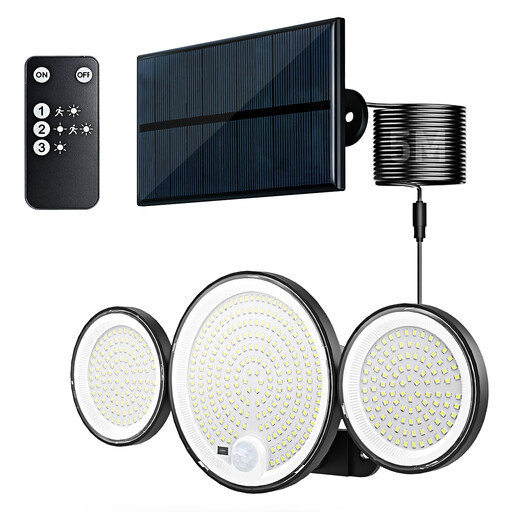
Why It Stands Out: This 2-pack is designed for maximum illumination and security. With three adjustable heads and a high light output, it reliably covers large areas.
Advantages:
Who It's For: Suitable for homeowners who want to comprehensively and brightly illuminate large areas such as yards, driveways, or the surroundings of garages and pools.
Why It Stands Out: With 446 LEDs and a light output of 3500 lumens, this model is among the most powerful solar security lights available.
Advantages:
Who It's For: Users who don't want to compromise on brightness and need a high-performance security light with a sensor for maximum deterrence and visibility.
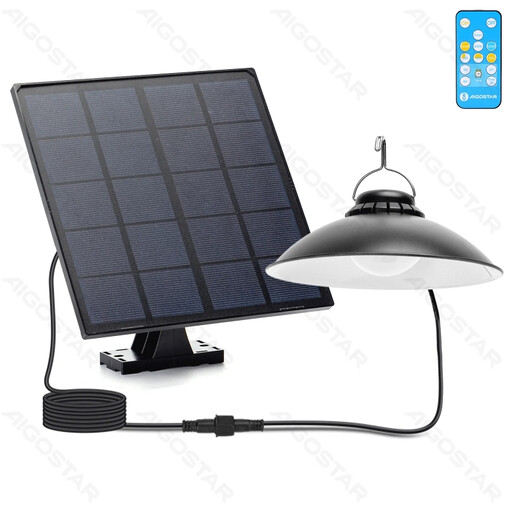
Why It Stands Out: This model separates the solar panel from the light unit with a 3-metre cable. This allows the light to be installed in covered areas (e.g., a garden shed, balcony, or under an eave), while the panel is placed in a sunny spot.
Advantages:
Who It's For: Perfect for illuminating covered outdoor areas, sheds, or gazebos where direct sunlight on the light fixture itself is not possible.
The models presented cover many use cases. If you haven't found the right solution for your specific needs, there are numerous other variations that differ in design, size, and function.
Browse our entire collection of Outdoor Lights to find the perfect solution for your home.
The lifespan depends on two main components: the battery and the LEDs. Modern LED bulbs have a very long life, often exceeding 20,000 operating hours. The battery is typically the component that loses capacity first. With high-quality models, you can expect the battery to last for two to four years before a replacement might be advisable.
Yes, but with limitations. Solar lights also charge on overcast days, but much more slowly than in direct sunlight. In winter, when days are shorter and often cloudy, the illumination time per night may be reduced. Models with an efficient solar panel and a large battery have an advantage here. It is also helpful to choose a mode that conserves energy (e.g., motion-activated only).
The ideal location meets two conditions: the solar panel should receive as much direct sunlight as possible during the day (a south-facing orientation is optimal). At the same time, the motion sensor should be able to effectively cover the area to be monitored (e.g., the walkway to the front door, the driveway). Avoid placing it behind trees, eaves, or other objects that cast a permanent shadow.