
Lieferung heute & morgen

Qualitätsgarantie

Willkommens-Angebote freischalten: KOSTENLOSE Lieferung | Bis zu 80 % RABATT | Kostenlose 30-Tage-JoyPlus-Testphase
App herunterladen
Solar lights promise a simple and eco-friendly way to bathe your garden, balcony, or patio in an atmospheric glow. No cable laying, no electricity costs—the advantages are obvious. But the reality is often different: many buyers are disappointed by lights that fail after the first rain, emit only a faint glimmer for a few hours, or are already defective after one season. To avoid such buyer's remorse, it's essential to know the crucial quality features that often get lost in marketing jargon.
This guide will show you which technical details to look out for and how to find the right solar garden lights for your needs.
Before we turn to the solutions, it's helpful to identify the most common problems. Many budget-friendly offers cut corners on critical components, leading to frustration.
To avoid these problems, you should check three core parameters before buying. These provide reliable information about the expected performance and longevity of the solar outdoor lights.
The IP (Ingress Protection) rating indicates how well an electrical device is protected against the ingress of foreign objects and water. For use in the garden, an IP44 rating is an important minimum standard.
Lights with a lower rating (e.g., IP23) are not suitable for long-term, unprotected outdoor use.
The performance of a solar light depends directly on its energy system. Pay attention to the interplay between the solar panel, battery capacity, and the resulting ratio of charging time to runtime.
The light colour, measured in Kelvin (K), has a major impact on the atmosphere.
Additionally, there are various designs such as LED garden lights with ground stakes, which can be flexibly placed in the ground, or hanging lights for a decorative touch.
Based on the criteria mentioned, we have identified some products that represent a considered choice for specific user profiles and requirements.
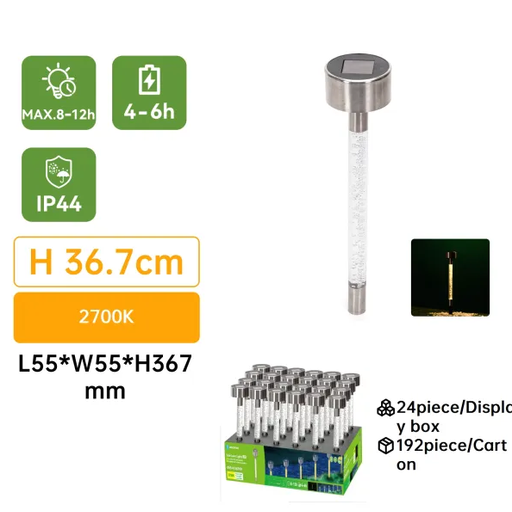
Why This Fits Their Persona: Ideal for users who want to add a single, decorative point of light in a flowerbed, on the lawn, or in a balcony box without much effort. The simple handling and affordable entry point make it perfect for first experiments with solar lighting.
The specified IP44 rating ensures the necessary protection against rain, thus preventing one of the most common causes of failure in budget models.
The warm white light colour (2700K) creates a pleasant atmosphere. Installation via the ground stake is straightforward and requires no tools.
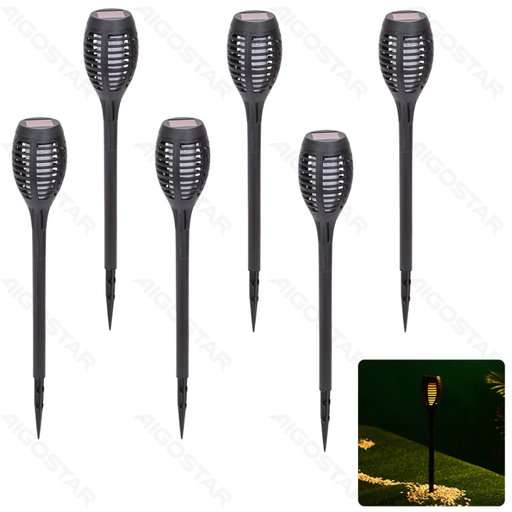
Why This Fits Their Persona: This solar garden light set is ideal for users who want a uniform and atmospheric design along garden paths, flowerbeds, or the patio. The flame effect creates a special mood for garden parties or cosy evenings.
With a battery capacity of 200mAh per light, this set counteracts the problem of short runtimes. The set provides a noticeable effect instead of just a weak point of light.
The realistic flame effect creates a unique atmosphere. The 6-pack allows for a consistent and harmonious design across larger areas.
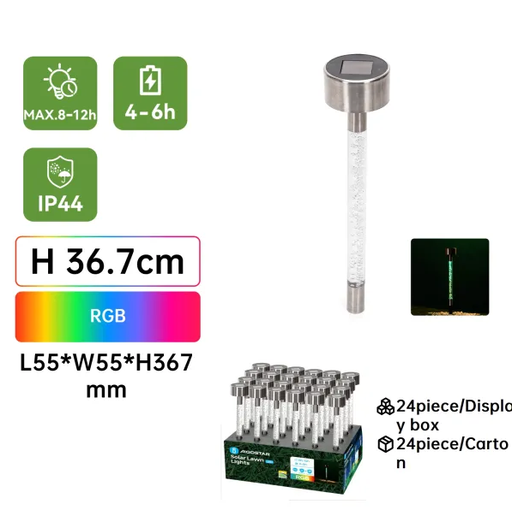
Why This Fits Their Persona: Perfect for users who want more than just white light and enjoy creating dynamic, colourful scenes in the garden. Ideal for setting special accents at parties or simply enhancing the garden decor.
While many cheap RGB lights suffer from poor colour mixing and low durability, this model's IP44 certification provides a more reliable foundation for colourful decorative garden lights.
The automatic RGB colour change provides lively and varied light effects. The silver-coloured stainless steel look gives the light a modern appearance.
We have compiled a complete, up-to-date list of products that fully meet these strict selection criteria and safety regulations.
The lifespan of a solar light is determined by two main components. The LEDs themselves are very durable, with a stated lifespan of often 15,000 hours or more. The battery is the component that typically loses performance first. Depending on quality and usage intensity, a Ni-MH battery usually lasts one to three years. In many models, the battery can be easily and inexpensively replaced, which significantly extends the life of the entire light.
Yes, solar lights do work in less-than-ideal light conditions, but with reduced performance. Models with amorphous solar panels can charge even in diffuse light (e.g., on cloudy days). However, the amount of energy generated is lower, which leads to a shorter runtime at night. To maximise performance in autumn and winter, the lights should be placed in a location that receives as much direct daylight as possible, and the solar panels should be regularly cleaned of dirt or snow.
The IP44 rating is a standard that defines the degree of protection of an enclosure against the ingress of foreign objects and water. Specifically, IP44 means: protection against solid foreign objects larger than 1 millimetre (first digit 4), and protection against splashing water from all directions (second digit 4). For solar garden lighting that is exposed to rain but not submerged in water, this is an appropriate and important standard of protection.