
Lieferung heute & morgen

Qualitätsgarantie

Willkommens-Angebote freischalten: KOSTENLOSE Lieferung | Bis zu 80 % RABATT | Kostenlose 30-Tage-JoyPlus-Testphase
App herunterladen
Lighting for your garden, balcony, or driveway not only enhances your property's aesthetic but also improves security. However, conventional lighting systems often come with high electricity costs and complex installation. Solar garden lights offer a practical and cost-effective alternative. They use solar energy, are wireless, and turn on automatically thanks to integrated sensors.
As your Joybuy Product Recommendation Officer, my mission is to provide you with clear guidance in the market for solar garden lighting. This article introduces different types of solar lights and explains what to look for when choosing, so you can make an informed decision.
Before you decide on a model, you should consider several technical features that are crucial for longevity and functionality.
Since outdoor solar lights are permanently exposed to the elements, high durability is essential. Pay attention to the IP (Ingress Protection) rating. A light with a waterproof IP65 rating is completely dust-tight and protected against water jets from any angle. This means it can easily withstand heavy rain. Housings made of robust materials like ABS plastic or aluminium offer additional protection against corrosion and mechanical stress.
The intended use determines the right type of light.
The runtime depends on the battery's capacity (measured in milliampere-hours, mAh) and the efficiency of the solar panel. Models with larger panels and batteries store more energy and stay lit longer, often throughout the night. An integrated dusk-to-dawn sensor is now standard, ensuring the LED solar light automatically turns on at dusk and off again at dawn.
Here is a selection of products that cover different outdoor lighting needs.
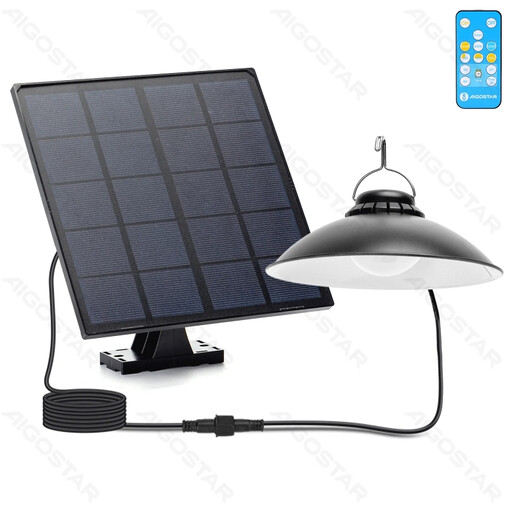
What makes it stand out: This model separates the solar panel from the light unit with a 3-meter cable. This allows for flexible installation: the panel can be placed in direct sunlight, while the light itself hangs in a covered area like a gazebo, porch, or garden shed. The adjustable colour temperature is another key feature.
Advantages:
Who it's for: Users who need reliable lighting for covered outdoor areas such as balconies, patio roofs, carports, or gazebos, where direct sunlight on the light fixture itself is not possible.
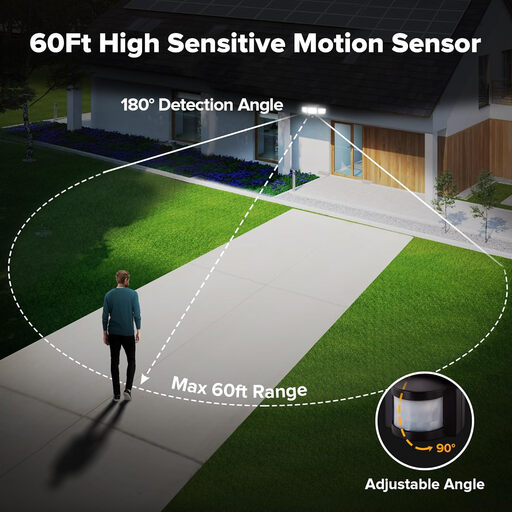
What makes it stand out: This solar floodlight with motion sensor is designed for maximum brightness and wide coverage. With 302 LEDs producing 3000 lumens and three adjustable heads, it effectively illuminates large areas. The motion sensor has an impressive range.
Advantages:
Who it's for: Homeowners looking for powerful security lighting for driveways, garages, backyards, or entryways who value wide-area, motion-activated illumination.

What makes it stand out: This outdoor solar string light combines functionality with a delicate design. The flexible copper wire can be easily wrapped around railings, plants, or other objects. With eight different lighting modes, the atmosphere can be customised to your liking.
Advantages:
Who it's for: Anyone looking for atmospheric and decorative solar balcony lighting or accent lighting for the garden, patio, or festive occasions.
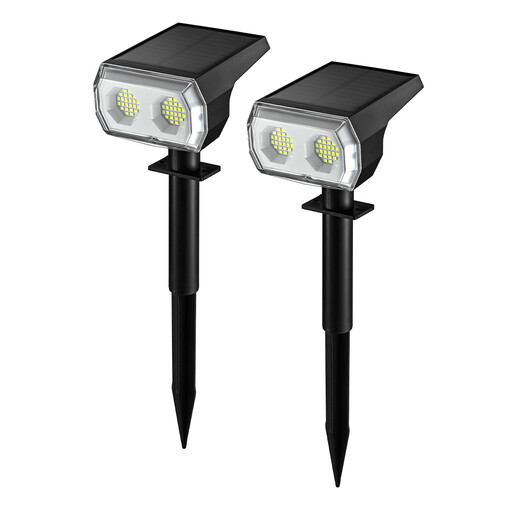
What makes it stand out: These solar spotlights for the garden offer versatile mounting options. They can either be anchored in the ground with the stake or mounted on a wall with the bracket. This makes them a flexible solution for accent lighting.
Advantages:
Who it's for: Garden owners who want to specifically highlight plants, paths, fences, or architectural elements and prefer a flexible, easy-to-install spotlight solution.
Haven't found the right solution for your project yet? The range of solar lights is diverse and offers the right product for almost any need.
? Explore our entire range of solar lighting for more models and applications.
1. Do solar lights work in winter or on cloudy days? Yes, solar panels also charge in diffuse light, but much more slowly than in direct sunlight. This results in a shorter runtime at night during winter or on heavily overcast days. Models with high-quality, large solar panels and efficient batteries perform better in these conditions.
2. What is the lifespan of solar garden lights? The lifespan is determined by two main components: the LED and the battery. The LEDs themselves have a very long life, often over 50,000 hours. The battery is typically the component that loses performance first. Depending on quality and usage, a battery usually lasts two to four years. On some models, the battery can be replaced.
3. Do I need to bring solar lights indoors during the winter? Models with a high protection rating like IP65 are designed for year-round outdoor use and can withstand rain, snow, and frost. However, extreme sub-zero temperatures can temporarily affect the battery's performance. Bringing them inside is not strictly necessary, but it can extend the battery's lifespan in very harsh winter conditions.