
Lieferung heute & morgen

Qualitätsgarantie

Willkommens-Angebote freischalten: KOSTENLOSE Lieferung | Bis zu 80 % RABATT | Kostenlose 30-Tage-JoyPlus-Testphase
App herunterladen
Solar lights promise a simple, cost-effective, and eco-friendly solution for illuminating your garden, balcony, or patio. With no wiring and zero electricity costs, they transform outdoor spaces into atmospheric oases or provide enhanced security. However, the market is flooded with products whose real-world performance often fails to match the promises on the packaging. Many buyers are quickly disappointed when the brightness fades or the lights don't survive the first heavy rain.
As your Joybuy Product Recommendation Officer, I'll help you identify the typical pitfalls. Instead of falling for marketing hype, you should focus on verifiable technical features. We'll show you the three mistakes you should absolutely avoid and what really matters when making your choice.
Disappointment with new garden lighting can often be traced back to three fundamental flaws common in budget or poorly specified products.
To make an informed decision, focus on three technical specifications. These reveal the longevity and performance of your future solar garden lights.
The IP (Ingress Protection) rating is an international standard that classifies the suitability of electrical devices for different environmental conditions. For outdoor solar lights, two ratings are relevant:
The performance of a solar light depends directly on the interplay between the solar panel and the battery.
The ambiance and functionality are determined by the light colour and brightness.
Based on these objective criteria, we have identified some products suitable for different needs and locations.
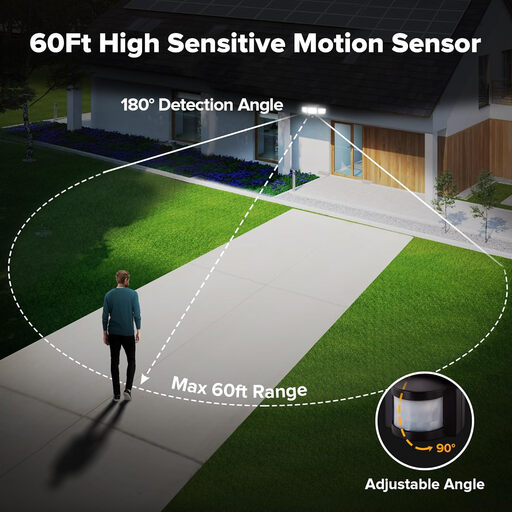
Why it's a good fit: Ideal for anyone wanting to reliably illuminate driveways, garages, or dark corners of the garden. The high brightness and wide detection range of the motion sensor offer a high degree of security.
This model bypasses the pitfalls of low brightness and poor weather resistance with a clear specification of 3000 lumens and an IP65 certification. The 1800 mAh battery is designed for motion-sensor operation.
Three adjustable light heads allow for a wide 270° illumination angle. Three different operating modes offer flexibility between continuous light and motion-activated light.

Why it's a good fit: Perfect for creative decorations in any season. The flexible outdoor solar string lights can be draped around trees, railings, or in jars to create an atmospheric ambiance on the balcony or in the garden.
The string light is IP65 certified, making it resistant to bad weather. The specified runtime of 8-14 hours is realistic, as it depends on weather conditions and the solar panel is designed for efficient charging.
Eight different lighting modes with a memory function offer design versatility. The pliable copper wire is discreet and can be easily shaped as desired.
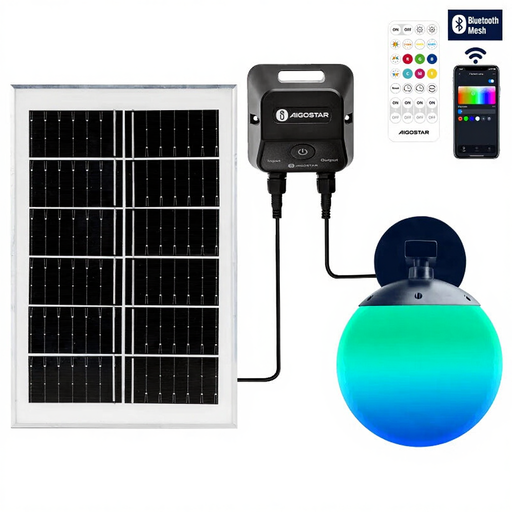
Why it's a good fit: For the tech-savvy who want to control their lighting via an app and adapt it to their mood. The modern design with an up-and-down light effect enhances any house facade or balcony wall.
With an IP65 rating, an efficient monocrystalline solar panel, and a powerful 4 Ah battery, this light is designed for durability and reliable performance. The runtime of up to 24 hours is plausible due to the large battery capacity.
Control of colour (RGBCCT) and brightness via a smartphone app using Bluetooth Mesh technology. Allows for the networking and central control of over 200 compatible devices.
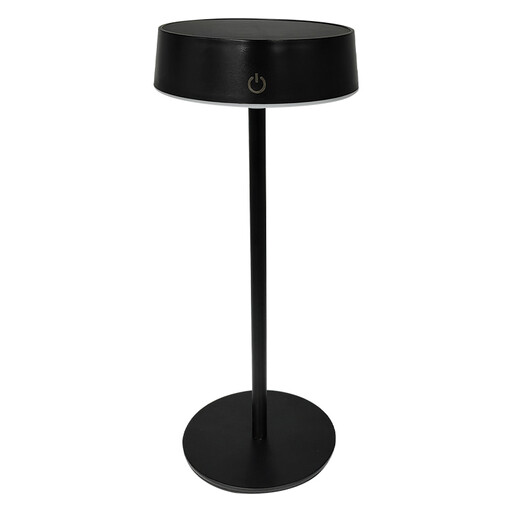
Why it's a good fit: This solar table lamp is a flexible light source for the garden table, balcony, or even for indoor use. Its dual charging function makes it independent of sunshine.
The pitfall of unreliable runtime is bypassed by the dual charging option (solar and USB-C). On cloudy days, the lamp can simply be charged via cable, ensuring constant availability.
Stepless dimming and three adjustable colour temperatures (warm, neutral, and cool white) via touch control. The memory function remembers the last-used setting.
We have compiled a complete, up-to-date list of products that fully meet these strict selection criteria and UK safety regulations.
The lifespan of a solar light depends on the quality of its components. The LEDs themselves can last for many years. The battery is typically the component with the shortest lifespan and may need to be replaced after about 2-4 years, depending on the type and usage. Maintenance is straightforward: keep the solar panel clean by regularly wiping away dust, pollen, and dirt with a soft cloth. This ensures maximum energy absorption.
Yes, solar lights do work in diffuse light, but with reduced performance. The charging time increases, and the nightly runtime shortens accordingly. Models with high-efficiency monocrystalline solar panels and large battery capacities are better suited for use in the darker months. For guaranteed functionality, models with an additional USB charging option are a great choice.
The most important factor is the positioning of the solar panel. It should be placed in a location where it receives several hours of direct, unobstructed sunlight each day—ideally south-facing. Avoid locations in the shade of trees, buildings, or overhangs. Also, be careful not to install the light near other nighttime light sources (e.g., streetlights), as their light can interfere with the dusk sensor and prevent it from turning on automatically.