
Lieferung heute & morgen

Qualitätsgarantie

Willkommens-Angebote freischalten: KOSTENLOSE Lieferung | Bis zu 80 % RABATT | Kostenlose 30-Tage-JoyPlus-Testphase
App herunterladen
Solar lights promise simple, cost-effective, and eco-friendly lighting for your garden, balcony, and pathways. But the market is flooded with products that often fail to live up to their promises. Many buyers are disappointed after a short time when their lights flicker, fail in the rain, or stop working after just one winter. This guide will help you identify the crucial features and make an informed choice.
By a Joybuy Product Recommendation Officer
Before we dive into the technical details, it's important to know the most common marketing traps that lead to poor purchases.
To avoid these traps, you should check three core technical parameters. These provide objective information about the performance and longevity of a solar light.
The brightness of a light is specified in lumens (lm). Don't rely on wattage ratings, as they are not very meaningful for LED solar lights.
The light colour, measured in Kelvin (K), determines the atmosphere. Warm white solar lights (approx. 2700 K to 3300 K) create a cosy, yellowish light. Cool white light (over 5000 K) has a more sterile feel and is well-suited for functional security lighting.
The IP (Ingress Protection) rating indicates how well a device is protected against the intrusion of foreign objects and water.
The battery capacity, measured in milliampere-hours (mAh), determines how long the light can operate on a full charge. A higher mAh value generally means a longer runtime, especially in the darker months.
The quality of the solar module is just as crucial. Monocrystalline solar cells have a higher efficiency than polycrystalline ones and charge the battery more effectively even in diffuse light (e.g., on cloudy days).
Here are some product recommendations tailored to specific needs that meet the quality criteria mentioned above.
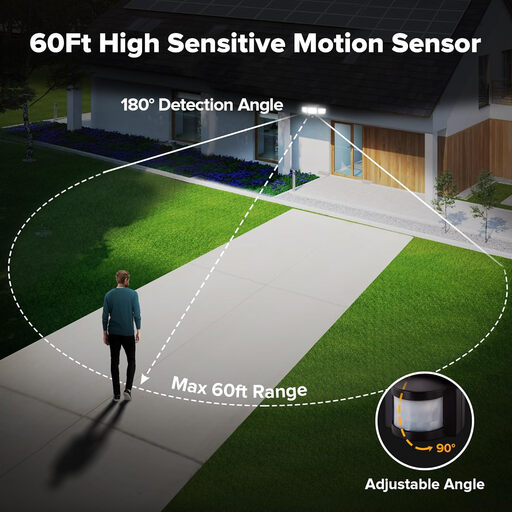
Why This Fits Their Persona: Ideal for securing driveways, garages, or dark corners of the garden. The high brightness and motion sensor provide functional security without complex wiring.
This model avoids the brightness and weather-resistance traps with a clear specification of 3000 lumens and an IP65 certification. The three adjustable heads allow for targeted illumination.
High light output for maximum security; wide motion sensor detection angle (180°); robust construction from ABS plastic.
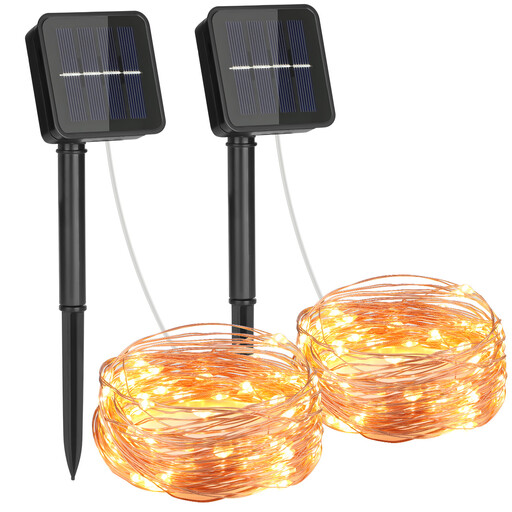
Why This Fits Their Persona: Perfect for creating an atmospheric ambiance on a balcony, patio, or for garden parties. The flexible copper wire of this outdoor solar string light can be creatively draped around plants, railings, or inside jars.
Unlike many delicate decorative lights, this set has an IP65 rating, which qualifies it for year-round outdoor use. The memory function for the last lighting mode is a practical detail that adds convenience.
8 different lighting modes for varied effects; warm white light for a cosy atmosphere; flexible and discreet copper wire.
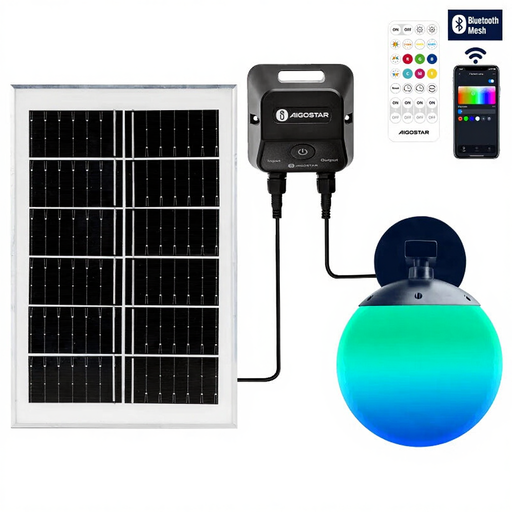
Why This Fits Their Persona: For users who want to intelligently control and customise their lighting. This solar wall light can be controlled via an app, grouped with other lights, and offers a wide range of colours and white tones (RGBCCT).
Instead of just advertising with vague terms like "smart," this product offers verifiable smart features via Bluetooth Mesh and a dedicated app. The IP65 certification ensures the technology functions reliably outdoors.
Control over 200 devices via Bluetooth Mesh; adjustable light colour and temperature (2700K-6500K); up-and-down light effect for modern architecture.
We've compiled a full, up-to-date list of products that fully meet these strict selection criteria and all relevant safety regulations.
The lifespan of a solar light depends on the quality of its components. The LEDs themselves can last for many years. The critical factor is the battery, which can lose capacity after 2 to 4 years, depending on the type and usage. Maintenance is simple: regularly clean the solar panel of dust and dirt with a soft, damp cloth to ensure maximum charging efficiency.
Yes, but with reduced performance. Modern, high-quality solar panels (especially monocrystalline ones) can generate energy even in diffuse light, just less than in direct sunlight. In winter, the days are shorter and the sunlight is weaker, leading to a shorter runtime at night. Models with large batteries (high mAh rating) have an advantage here.
Generally, no. Since outdoor solar lights operate on low voltage and are not connected to the public power grid, no permit is required for their installation. However, when placing very bright solar floodlights with motion sensors, be careful not to excessively illuminate neighbouring properties to avoid causing a nuisance.