
Lieferung heute & morgen

Qualitätsgarantie

Willkommens-Angebote freischalten: KOSTENLOSE Lieferung | Bis zu 80 % RABATT | Kostenlose 30-Tage-JoyPlus-Testphase
App herunterladen
Outdoor solar lights are a practical solution to illuminate your garden, balcony, or pathways without wiring or additional costs. The selection is vast, but not all products live up to their advertising claims. As your Joybuy Product Recommendation Officer, I'll help you separate the wheat from the chaff and avoid common purchasing pitfalls, ensuring your investment pays off in the long run.
Many buyers are disappointed when their new off-grid garden lighting loses its brightness after just a few weeks or fails after the first heavy rain. This is often due to three common pitfalls:
To make an informed decision, you should check three technical parameters. These will reveal the true performance and durability of a solar light.
The IP (Ingress Protection) rating indicates how well an electrical device is protected against the ingress of foreign objects (first digit) and water (second digit).
The performance of a solar light depends directly on the combination of its solar panel and battery.
These two values define the lighting effect and are crucial for the intended application.
Instead of a one-size-fits-all recommendation, we've curated products for different needs and user profiles.
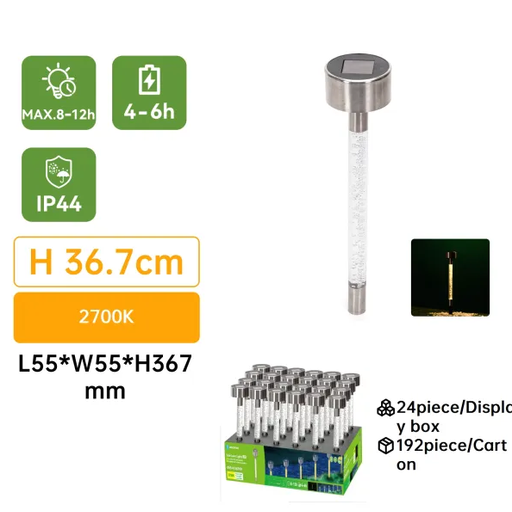
Why it's a good fit: Ideal for users who want to add decorative light accents to their balcony, flowerbed, or along a small path on a tight budget. Installation is tool-free via a ground stake.
The product provides clear, realistic specifications (IP44, 40mAh battery, 4-6 hr charge time for 8-12 hr of light). It is positioned as a decorative ambient light, which prevents false expectations about its brightness.
The decorative bubble design inside the stake creates an atmospheric, warm white light (2700 K) that fosters a cosy ambience.
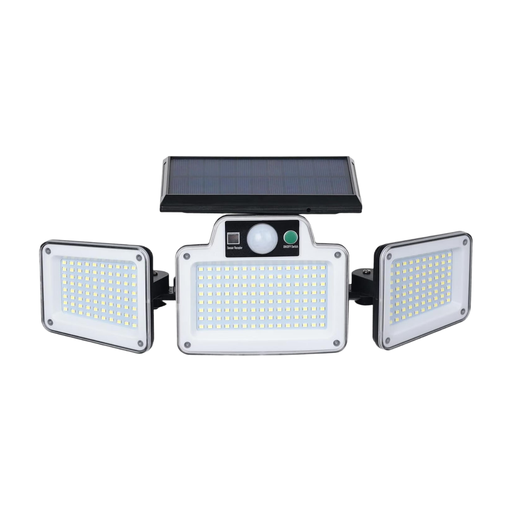
Why it's a good fit: Designed for reliable illumination of driveways, garages, and dark corners. The motion sensor enhances security while conserving energy.
It avoids the vague brightness pitfall with 280 LEDs and the weather-resistance pitfall with an IP65 rating. The three clearly defined modes offer functional control instead of empty promises.
Three flexibly adjustable light heads allow for wide and targeted illumination. The 2400 mAh battery ensures sufficient power, and the remote control offers added convenience.
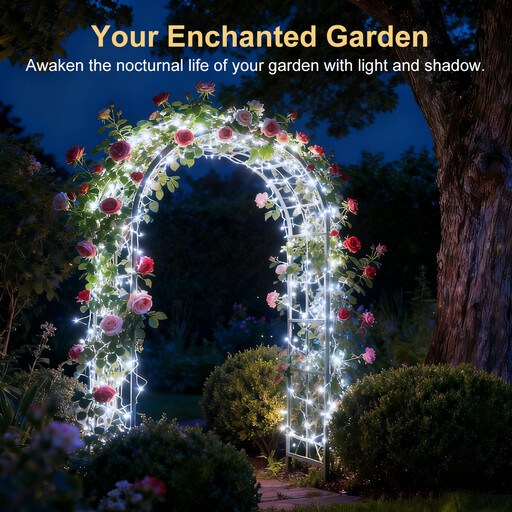
Why it's a good fit: This outdoor solar string light is perfect for creatively decorating trees, fences, balcony railings, or party tents. The flexible copper wire can be easily shaped as desired.
The high IP65 rating ensures durability even in bad weather. Furthermore, a realistic ratio of charging time (6-8 hrs) to runtime (8-14 hrs) is provided, which is important for planning events.
The set includes two string lights, each 8 metres long with 80 LEDs. Eight different lighting modes with a memory function offer varied and easily recallable light effects.
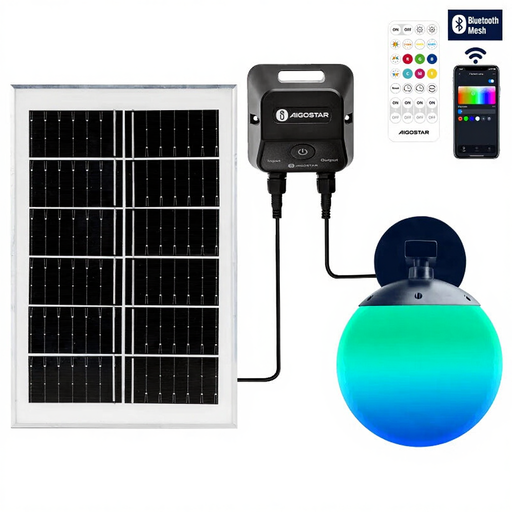
Why it's a good fit: For anyone who wants to control their lighting via an app and integrate it into a smart home system. Offers full control over colours, brightness, and schedules.
This product goes far beyond a simple on/off function. The product details clearly define the technology (Bluetooth Mesh), control methods (App), and capabilities (RGBCCT, networking of over 200 devices).
Bluetooth Mesh technology allows for the control of a large number of lights. The RGBCCT function permits the setting of millions of colours as well as white tones (2700K-6500K) for impressive up-and-down lighting effects.
We have compiled a complete, up-to-date list of products that fully meet these strict selection criteria and UK/EU safety regulations.
The lifespan of the LEDs themselves is very long, ranging from 15,000 to 30,000 hours. The component that typically loses performance first is the rechargeable battery. Depending on quality and frequency of use, a battery lasts about 1 to 3 years. On many higher-quality models, the battery (often a standard size like AA or AAA Ni-MH) can be easily replaced, which significantly extends the life of the entire light.
Yes, solar lights do work in winter and on cloudy days, but with some limitations. The charging performance is reduced due to lower solar radiation and shorter days. This results in a shorter runtime at night. Models with high-efficiency monocrystalline solar panels and large batteries are better suited for winter use than basic versions.
The ideal location for the solar panel is a spot that receives at least 6 to 8 hours of direct, unobstructed sunlight daily. Avoid shadows from buildings, trees, or roof overhangs. For models with a separate panel and light, you have more flexibility: the light can be placed in the shade while the panel is positioned in the sun. Clean the panel regularly to remove dust and debris to maintain charging efficiency.