
Lieferung heute & morgen

Qualitätsgarantie

Willkommens-Angebote freischalten: KOSTENLOSE Lieferung | Bis zu 80 % RABATT | Kostenlose 30-Tage-JoyPlus-Testphase
App herunterladen
Outdoor solar lights promise a simple, cost-effective, and eco-friendly way to illuminate gardens, balconies, and pathways. However, the market is flooded with products whose performance often fails to live up to their promises. Before you invest, it's crucial to understand the typical pitfalls, which often only become apparent after a few weeks or the first heavy downpour.
This guide will help you separate the wheat from the chaff. We focus on the critical technical features and show you what to look for to find durable and functional solar-powered garden lighting.
Many buyers experience disillusionment after a short time. The reasons are often the same and can be avoided with a targeted product selection.
To avoid a bad purchase, you should focus on verifiable technical specifications. These three criteria are decisive for the performance and longevity of your outdoor solar lights.
The IP (Ingress Protection) rating indicates how well a device is protected against the ingress of foreign objects (first digit) and water (second digit). For outdoor use, the following values are relevant:
Don't be fooled by wattage ratings. The relevant values for light quality are:
The combination of the battery and solar panel determines how long and reliably your light will shine.
Here are some recommendations tailored to different needs and locations.
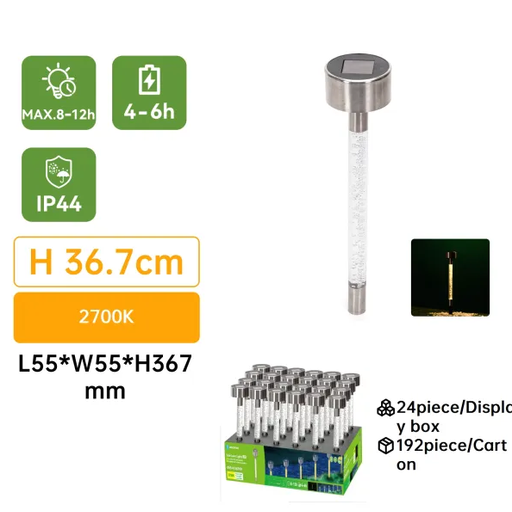
Why This Fits Their Persona: Ideal for renters or homeowners who want to create an atmospheric ambiance on their balcony or in flowerbeds without any hassle. The ground stake installation is straightforward and requires no tools.
The product description sets the right expectation: this is ambient lighting with a warm white light (2700 K), not a bright security light. The IP44 certification is sufficient for use in sheltered areas like balconies or under eaves.
Decorative bubble design for visual accents. Easy installation with solar lights with ground stakes. Automatic operation from dusk till dawn.
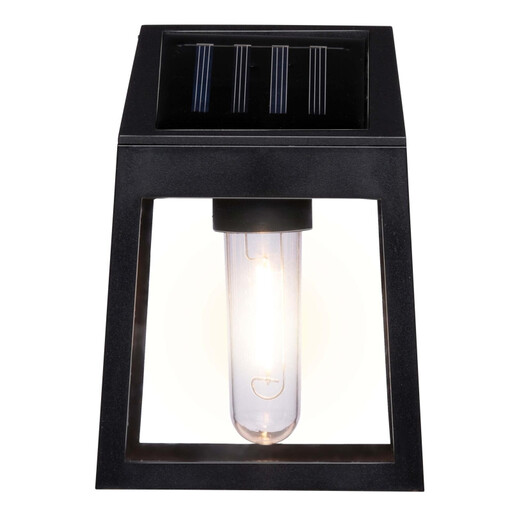
Why This Fits Their Persona: Perfect for homeowners looking for a reliable and discreet solar wall light to illuminate entrance areas, fences, or dark corners. The focus is on security and functionality without the need for wiring.
This light is designed as a functional wall light, not a dim decorative one. The description emphasizes its practical benefit for increasing security. The Grundig brand name implies a certain level of product quality, avoiding the trap of no-name products with unclear specifications.
Compact, minimalist design. Automatic operation for effortless lighting. Integrated 600mAh Ni-MH battery for reliable energy storage.
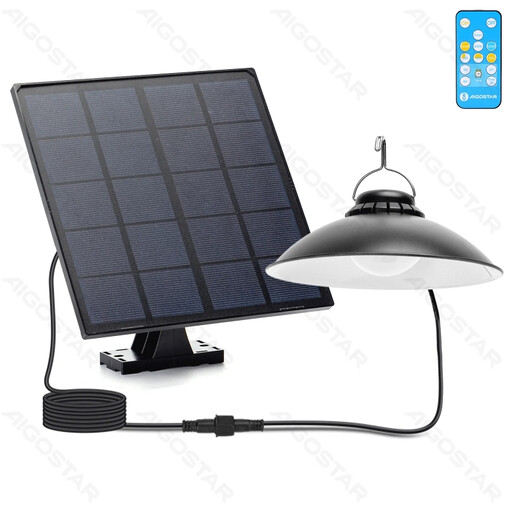
Why This Fits Their Persona: For users who need powerful and versatile lighting for garden sheds, covered patios, or workshops. The separate solar panel allows the light to be mounted indoors while the panel is placed outside in the sun.
This model addresses all three core problems: it offers a high brightness of 500 lumens, a very robust IP65 certification, and a durable LiFePO4 battery. The description also clarifies that "50W" is an equivalence value, ensuring transparency.
High brightness for functional illumination. Adjustable light colour (3000K/4000K/6500K). Long-lasting battery technology and high weather resistance.
We have compiled a complete, up-to-date list of products that fully meet these strict selection criteria and safety requirements.
1. What is the lifespan of outdoor solar lights? The lifespan heavily depends on the quality of the components. High-quality models with a robust housing and a LiFePO4 battery can last for several years. With cheaper models using Ni-MH batteries, the battery often needs to be replaced after 1-2 years, if possible. The LED itself has a very long lifespan, up to 15,000 hours or more.
2. Do solar lights also work in winter or on cloudy days? Yes, but with limitations. Modern solar panels can generate energy even in diffuse light, but the charging performance is lower than in direct sunlight. This results in a shorter illumination time at night during winter or on very cloudy days. Optimal placement of the panel, facing south and without shade, is crucial.
3. Do I need to bring my solar lights indoors during winter? This depends on the IP rating. Lights with IP44 are splash-proof and should be protected from heavy frost and continuous snow cover to extend their lifespan. Models with IP65 or higher are significantly more robust and can generally be left outside all year round. However, it is advisable to occasionally clear the solar panel of snow and dirt.