
Lieferung heute & morgen

Qualitätsgarantie

Willkommens-Angebote freischalten: KOSTENLOSE Lieferung | Bis zu 80 % RABATT | Kostenlose 30-Tage-JoyPlus-Testphase
App herunterladen
By the Joybuy Product Recommendation OfficerLast updated: July 28, 2026
Outdoor solar lights promise a simple, cost-effective, and eco-friendly way to illuminate gardens, balconies, and pathways. Installation is straightforward, and there are no electricity costs. Yet, the reality after purchase is often disappointing: the light is too dim, the unit fails after the first rainfall, or the battery life barely lasts a summer evening.
This guide reveals the three most common pitfalls when buying solar lights and explains which technical features you should look for to make an informed decision.
Many products on the market fail to meet the basic expectations for reliable outdoor lighting. Watch out for these typical shortcomings to avoid a bad investment.
To avoid the problems mentioned above, you should check three core technical parameters before buying. These are the primary determinants of the performance and longevity of your new solar garden lights.
The brightness of an LED solar light is measured in lumens (lm), not in watts. Watts only indicate energy consumption.
Brightness is directly related to battery capacity, measured in milliampere-hours (mAh). A high-capacity battery (e.g., 1800 mAh or more) can store more energy and power the light for longer, especially for brighter models or during the darker months.
The IP (Ingress Protection) rating indicates how well a light is protected against the entry of foreign objects (first digit) and water (second digit).
For long-lasting performance in the UK climate, a rating of at least IP65 is advisable for most applications.
Modern solar lights offer more than just automatic on/off functionality.
Instead of making a one-size-fits-all recommendation, we have identified products that meet specific needs and avoid the pitfalls mentioned earlier.
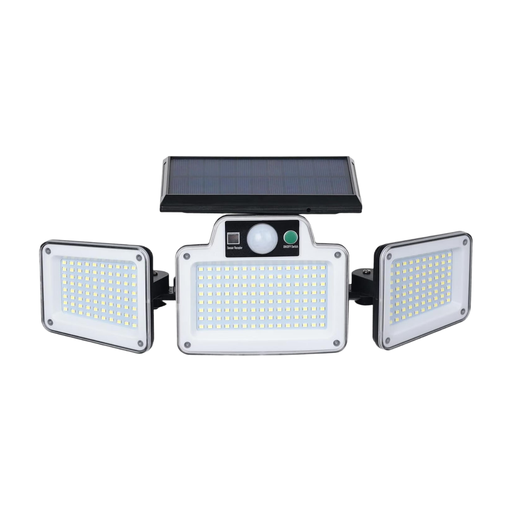
Why This Fits Their Persona: Ideal for homeowners who want to reliably secure driveways, garages, or the garden. The flexible alignment of the light heads allows for targeted illumination of critical areas.
Avoids the low-brightness trap with 280 LEDs and a powerful 2400mAh battery. The IP65 certification ensures weather resistance, while the three lighting modes prevent inflexible operation.
Three individually adjustable light heads for wide and targeted illumination. Remote control operation and a separate solar panel with a long cable for optimal sunlight exposure.
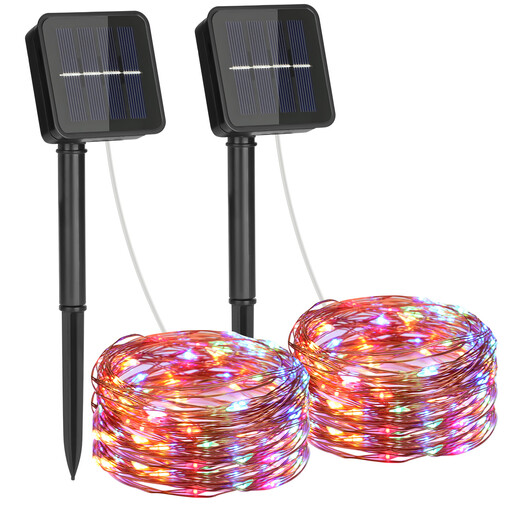
Why This Fits Their Persona: Perfect for users wanting to create an atmospheric setting on their balcony, patio, or for garden parties with outdoor solar string lights. The flexible copper wire allows for creative decorations.
Evades the poor weather resistance trap with an IP65-certified design. The 8 different lighting modes with a memory function offer significantly more variety than simple, static decorative lights.
Two sets of string lights, each 12 metres long with 120 LEDs, offer excellent value for money. The upgraded solar panel provides a runtime of 8 to 14 hours.

Why This Fits Their Persona: A practical solution for anyone looking to illuminate a garden path or flower beds on a tight budget. The 5-pack set makes it easy to create continuous pathway lighting without much effort.
Solves the problem of single, dim light points by providing a set of five lights. The choice between warm white light and an RGB colour-changing mode offers more flexibility than simple, single-colour models in this price range.
Extremely simple installation with ground stakes, requiring no wiring. The weather-resistant design and integrated dusk-to-dawn sensor ensure low-maintenance operation.
We have compiled a complete, up-to-date list of products that fully meet these strict selection criteria and rigorous safety standards.
The lifespan of a solar light depends on its components. The LEDs themselves have a very long life, often 30,000 hours or more. The solar panel can remain functional for over 10 years. The most critical component is the rechargeable battery, which, depending on its quality and usage intensity, typically loses capacity after 1 to 3 years and will need to be replaced.
Yes, solar lights do work in winter and on cloudy days, but with reduced performance. The shorter days and lower angle of the sun reduce the charging efficiency of the solar panel. This results in a shorter runtime at night. Models with high-efficiency monocrystalline solar panels and large battery capacities are better suited for year-round use.
The IP rating classifies the degree of protection a housing provides against the ingress of foreign objects (first digit) and water (second digit). For outdoor use, IP44 (protection against splashing water) is the minimum. For lights that are exposed to the elements without shelter, a higher rating like IP65 (protection against water jets) or IP67 (protection against temporary immersion) is recommended to ensure a long lifespan.