
Lieferung heute & morgen

Qualitätsgarantie

Willkommens-Angebote freischalten: KOSTENLOSE Lieferung | Bis zu 80 % RABATT | Kostenlose 30-Tage-JoyPlus-Testphase
App herunterladen
The right lighting can transform a garden or balcony into an atmospheric oasis. However, laying power cables is often complex and costly. Solar lights for the garden offer a flexible and energy-efficient alternative. They harness the power of the sun to provide light after dark—completely without a power connection.
Given the vast selection of models, making a choice can be challenging. This article serves as a practical guide. It explains which technical features matter and presents a selection of different solar lights for various applications to help you navigate the options.
To make an informed decision, several technical aspects should be considered. These determine not only the longevity but also the functionality of the lights.
Since outdoor lights are exposed to the weather, their resilience is crucial. The IP (Ingress Protection) rating indicates how well a device is protected against the intrusion of foreign objects and water.
The colour of the light has a major impact on the atmosphere. Warm white light (approx. 2700–3300 Kelvin) is often perceived as cosy and inviting, making it ideal for seating areas or as solar path lights. Cool white light appears brighter and more modern.
Additional features expand the range of applications:
The performance of a solar light depends directly on the quality of the solar panel and the capacity of the battery. A larger, more efficient panel can store more energy, even on cloudy days. The battery capacity, specified in milliampere-hours (mAh), determines how long the light can operate on a full charge. Models with high-quality components offer more reliable performance, even in autumn and spring.
Here is a curated collection of solar lights that cater to different needs—from decorative string lights to intelligent path lighting.
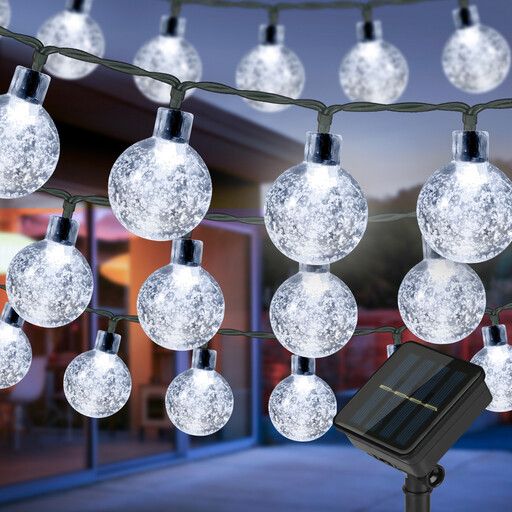
Why it stands out: This outdoor solar string light creates a magical atmosphere with 60 LED globes over a length of 11 metres. The crystal bubble design provides an appealing light refraction. With eight different lighting modes, from a soft glow to dynamic flashing, the mood can be flexibly adjusted.
Advantages:
Who is it for? Ideal for users who want to decoratively and atmospherically illuminate their solar-lit balcony, terrace, garden, or even trees and shrubs, especially for parties or cosy evenings.
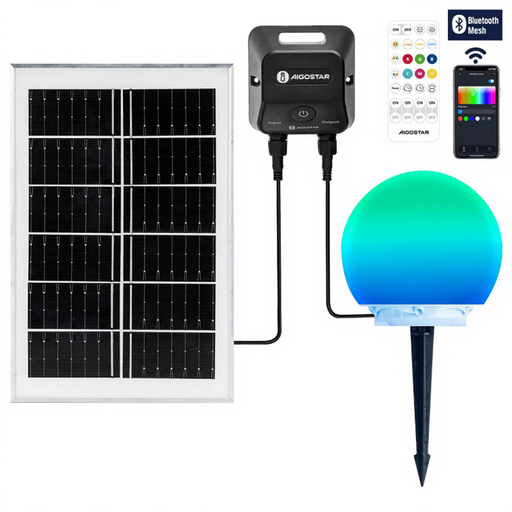
Why it stands out: This smart ground light combines solar power with modern Bluetooth Mesh technology. Over 200 lights can be networked and controlled synchronously via an app. The RGBCCT spectrum allows for millions of colours as well as adjusting the colour temperature from warm white (2700K) to cool white (6500K).
Advantages:
Who is it for? Perfect for tech-savvy users who want a fully customisable and expandable lighting system for paths, flowerbeds, or the terrace and who value intelligent control.
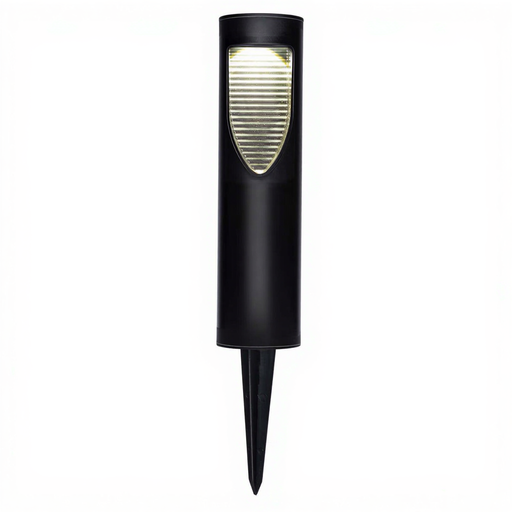
Why it stands out: This light focuses on the essentials: reliable and straightforward lighting for garden paths or flowerbeds. As a classic solar path light with a ground stake, it is installed in seconds. The SMD LED produces a pleasant, warm white light that provides guidance and safety.
Advantages:
Who is it for? For anyone looking for a pragmatic, cost-effective, and low-maintenance solution for illuminating paths, driveways, or flowerbeds, who can do without additional features like colour change.
The products presented already cover a broad spectrum. But the world of outdoor lighting is diverse, and requirements are individual. Perhaps you are looking for a special wall light with a motion sensor or a different type of decorative lamp.
Browse our wide selection of Photocell Light Bulbs to find the right solution for your home and discover more innovative lighting ideas.
The runtime in winter is generally shorter than in summer. This is due to the shorter days and the lower angle of the sun, which means the solar panel can absorb less energy. However, high-quality models with efficient panels and large batteries can still provide several hours of light per night, even in the darker season.
Models with a high protection rating like IP65 are designed for year-round outdoor use and can withstand rain and snow. However, in extreme conditions such as severe frost or prolonged snow cover, it may be wise to bring the lights inside to extend the battery's lifespan. The solar panel, in particular, should be kept free of snow and ice to remain functional.
Look for a combination of several factors: a high IP rating (at least IP44, preferably IP65), sufficient battery capacity (specified in mAh), the quality of the material (e.g., robust plastic or stainless steel), and the type of LED (SMD LEDs are often more durable and efficient). Customer reviews can also provide useful insights into real-world performance.