
Lieferung heute & morgen

Qualitätsgarantie

Willkommens-Angebote freischalten: KOSTENLOSE Lieferung | Bis zu 80 % RABATT | Kostenlose 30-Tage-JoyPlus-Testphase
App herunterladen
Thoughtful garden lighting not only creates an inviting ambiance on warm summer evenings but also enhances safety and navigation along paths and stairs. However, installing conventional lights is often complex and costly, requiring trenching for cables and access to power outlets. Solar lights for the garden offer a flexible and energy-efficient alternative. They harness the sun's energy during the day to automatically illuminate your space after dusk.
This article serves as your practical guide. We'll explain the key features to consider when making your selection and showcase various models for different applications. Our goal is to provide you with the information you need to make an informed decision for your solar garden lighting.
The market offers a vast array of models that differ in function, design, and technology. To find the perfect light for your needs, three criteria are especially important.
The primary difference between light types is their brightness, measured in lumens (lm).
Since outdoor LED solar lights are exposed to the elements year-round, their material and construction are crucial for durability. Models made from stainless steel or robust ABS plastic are more resistant to corrosion than basic plastic versions.
A key indicator of weather resistance is the IP rating. It consists of two digits:
The following ratings are common for outdoor use:
Most solar lights have a built-in panel. This design is compact and easy to handle. The drawback: the entire light fixture must be placed in a sunny spot.
A solar light with an external panel offers more flexibility. The panel connects to the light via a cable, allowing you to mount the panel in an optimally sunny location (e.g., on a roof or wall) while placing the light itself in the shade—ideal for covered patios, balconies, or garden sheds.
Based on the criteria above, we have curated a selection of solar lights for various requirements.

Why it stands out: This light combines a classic design with functional illumination. The tall stainless steel ground stake ensures a stable footing and an elevated light position, perfect for lighting up garden paths.
Benefits:
Who is it for? For users seeking a reliable and straightforward lighting solution for paths, lawns, or garden borders. The clear, white light is primarily designed for orientation.
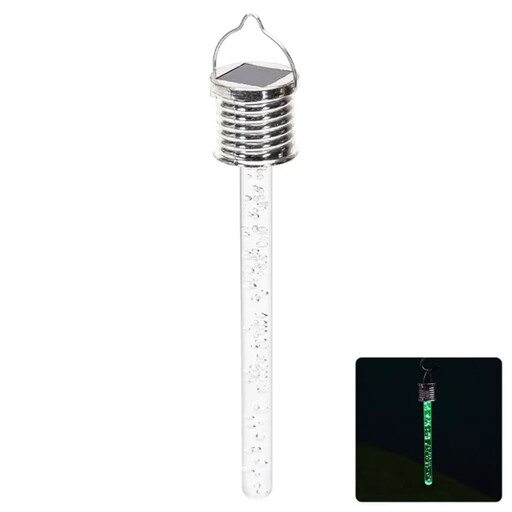
Why it stands out: This light adds a purely decorative accent. The acrylic rod with trapped air bubbles, combined with the RGB colour-changing feature, creates a dynamic visual effect.
Benefits:
Who is it for? For anyone looking to add targeted, colourful light accents. It's perfect for decorating balcony boxes, flower pots, or as a playful element in a perennial garden.
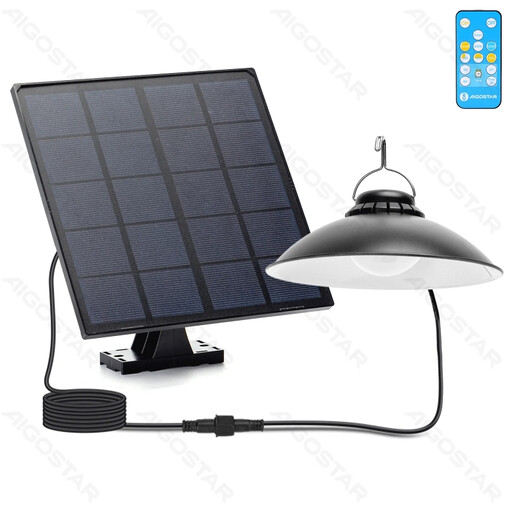
Why it stands out: The separation of the light and solar panel makes this model extremely versatile. It delivers a high brightness of 500 lumens and enables illumination in spots without direct sunlight.
Benefits:
Who is it for? Ideal for functional illumination of garden sheds, covered patios, gazebos, carports, or balconies. It's the perfect solution for anyone needing a bright, reliable light source in a location that is itself in the shade.
The products featured here cover common use cases for solar lights. If you're looking for a wired, low-power solution for stairs or wall ledges, our range of Outdoor Low-Voltage Step Lights might also be of interest. Discover more ways to design your outdoor space here.
The lifespan of a solar light is determined by two main components: the LED and the battery. The LEDs themselves are very durable, often with a rated runtime of 15,000 hours or more. The battery is the component that typically loses performance first. Depending on its quality, type (e.g., NiMH, LiFePO4), and frequency of use, a replacement may be necessary after 1 to 3 years.
Yes, solar lights do charge on overcast days, but much more slowly and less efficiently than in direct sunlight. In autumn and winter, this results in a noticeably shorter runtime at night. Models with high-quality panels (e.g., amorphous panels) tend to have slightly better charging performance in low light.
The IP (Ingress Protection) rating classifies how well an electrical device is protected against the intrusion of solid objects (first digit) and water (second digit).